









It seems we can’t find what you’re looking for. Perhaps searching can help.
Sign Up for newsletter!
Subscribe to get the latest eBook!

Hotline
(+84) 28 7108 9908





 2
2
 3,774
3,774 0
0 1
1 2 9,772 0 1
 2 9,762 0 1
 2 9,723 0 1
 2 9,659 0 1 2 9,762 0 1 2 9,723 0 1


With no exception, brands transform as always to keep up with the digital age’s swift trends. To complete the digital transformation, investing in brand touchpoints is a concept that worth-considering. Most generally, the brand touchpoint is the simultaneous interference from both businesses and customers, creating the highest attraction for the business and providing the best customer experience.
However, some people argue that the concept of brand-touchpoint is vague and quite broad because any existing factors can potentially affect the movement of brand touchpoint for better or worse. This argument will be recognized if businesses do not know where to start creating a touchpoint. Brand touchpoints stem from business core-values, the level of customer experience, and a little bit of difference when needed.
System assets help businesses grow in both quantity and quality. A standardized system not only allows products to shape within the unified normative framework but also ancillary services. A complete digital transformation of a brand does not stop at the product level. Developing and continuously improving the system are the keys to meet the second requirement of the brand touchpoint: user experience. The apt system helps businesses get in touch with product-and-service convenience and can create an isolated ecosystem to make brands transform.

That was how Apple had been successfully producing a technology-product ecosystem that made a stunning attraction for users. Simply put, the term ecosystem in this context implies a group of products that can interact with each other in harmony to optimize customers’ convenience. Apple has generated an almost-efficient technology ecosystem that performs seamless interactions. However, what makes Apple enthusiasts completely satisfied is the personal ID system with high privacy and data security.
To take another example, Nike has wholly changed their business since their growth stalled, and the earlier business model was no longer sufficient. The mandatory change in the brand requirements has shifted to using an online business network to interact directly with consumers. The online trading system completely replaces the traditional product-distribution through intermediaries, as well as exclusive distributors. Nike also combines the accompanying member programs with trendy and fashionable items, creating a close connection with customers. As a result, the transforming system contributed to an increase in ecommerce revenue by 38% in November 2019 (data provided by Brands Vietnam).
To transform successfully in the digital age, make sure that the brand is honest and authentic. All information about the business can be delivered more quickly than ever in the internet era. A restaurant with a 1-star review will undoubtedly make customers turn away. Therefore, providing authentic information will make users feel secure and reliable when using products. Brand honesty helps create a pure life for products while contributing to the user experience’s seamlessness, making the brand touchpoint in harmony. Transparency in product quality and working manner will create a unique touchpoint system.
That viewpoint may sound strange, but most customers in the digital age need simpler products, services than cumbersome and complicated ones. Simplicity and minimalism in branding still can create brand touchpoints while focusing on the pillar values of the brand, such as strengths, target customers, differentiation, missions, quality, and messages. These keys, eliminating other complex elements, will be more focused and orientated for businesses in the long run. Simplicity and minimalism make businesses quickly adapt to the ever-changing digital age.

Product-centric is still an essential factor in most campaigns. However, customer-centric will be the necessary combination to enhance user experience, which making brands transform. Products exist in the world with the ultimate goal of meeting customer needs. Therefore, identifying customer needs is a crucial starting point for a digital transformation campaign.

That is how the Maggi brand cleverly introduces cuisine recipes combining with soy-sauce on their website. This action increases convenience for cooking lovers. Customers feel more excited when their everyday-cooking gets more of the brand-attention though buying only one soy-sauce bottle.
In general, customer-centric is a long-term transformation requiring businesses to have a proper awareness of their target customers. This awareness should also form in every staff of the company to make brands transform. Besides, this customer-in-center philosophy acts as a value connecting businesses with their customers; but not a task to be completed and to get rid of.
The digital age witnessed rapid and unpredictable changes requiring businesses to have timely adaptive solutions. Products are not only produced for quality but for customer convenience. Other customer needs are also considerable except for products themselves, namely membership programs, accompanying promotional gifts. Customers also tend to shop more on ecommerce websites, which leads to a requirement to manage information, data, and technology platforms. Epidemics also become dangerous, increasing unforeseen risks for businesses.

Utilizing the challenges will be sure leverage when brands transform into the digital age. Besides, people are still the critical factor, no matter how advanced technology is. Therefore, businesses first need to focus on the internal structure: human resources, processes, products, and customer services to complete the transformation.
The COVID-19 crisis has globally worsened since the Government issued a social-distancing-order as the number of confirmed coronavirus cases continues to increase. However, recently, the ecommerce industry has had a speedy growth, as people now prefer to shop online while staying home. This time is much higher challenging for every business in Vietnam and an opportunity to make brands transform themselves.
At SECOMM, we will accompany clients on every ecommerce step to ensure comprehensive solution-providing for their ecommerce transformation. The brands transform successfully in a digital age when they are operated with a sustainable website platform. We will be the starting point for this revolution. Contact Us for more detail.
2 5,420 22 1
The variety of products published on every ecommerce website is always diversity-guaranteed to meet almost the market needs. However, ensuring the criteria of goods quality has been an unresolved question up to now, becoming one of the barriers to the ecommerce industry. The burning issues of low-quality products, counterfeit consumer goods are eventually uncontrollable and exist in the market. Those effects can be derived from a couple of factors that can be analyzed from the perspective of the sellers, ecommerce enterprises, and consumers.
The low-quality of goods has come from the traditional trading model operated offline, and merchants inevitably take responsibility in that case. Although consumers can contemplate the offline model seriously, the product quality is still sellers’ responsibility and control. Uncontrollable-quality sources become a critical issue when merchants provide goods with a profitable price to get much higher returns by selling fake or inferior quality products with very attractively “low” prices. In the flourishing process of online business, those unsolved issues have the chance to spread across the online-offline frontier and lose control.
When the quality issue emerges, e-firms are the first to be impacted. Those types, namely B2C and C2C, act as middlemen for merchant support to sell products on ecommerce exchanges.
Consequently, those enterprises restrict the source of inferior products and entirely rely on consumer feedback to address the issue in a very passive way. The quality barrier prevents enterprises from gaining consumer trust to maintain their loyalty.
The spread of low-quality goods partly comes from consumer awareness. In the e-market, there is still a consumer group preferring inexpensive or on-sales items to other high-price and authentic products to save the living cost or try a variety of products. They tend to choose low-price items neglecting the origin and information while never complaining about the lack of product-clarification. Low-awareness behavior gradually contributes to the growth of uncontrollable-inferior products and as a result, the development of barriers to the ecommerce industry.
The growth of poor quality products depends on many factors and the responsibility of sellers, businesses, and consumers for the sake of a healthy and trustworthy market.
The need to change buying behavior from offline to online is also one of the barriers to the ecommerce industry in Vietnam. To certainly clarify, take a look at three fundamental behavior-levels happenings when consumers make a purchase.

The first group is pure traditional shoppers, who tend to see and touch what to buy. They wholeheartedly believe their eye-process can ensure more quality and conformity of the product. Therefore, they never trust any online items because of unmanageable-value. As a consequence, changing the buying habit of this group is the most challenging requirement.
The second group is hybrid buyers combining traditional and modern buying styles. That hybrid group tends to select-for-best. For instance, they can quickly add a book or ten pens to their cart because it is more convenient than buying at the bookstore. However, they will directly go to a clothing store to choose an item that fits their size and ensure the fabric quality. That behavior similarly happens when they buy shoes, bags, or other fashion items. In brief, hybrid customers have changed their buying habits in the most popular fields over the years. Hence, there will be much higher requirements for unique products such as fashion items, technology devices, motorcycles, and cars in some cases.
The last group tends to complete online shopping. They take advantage of online shopping as a convenient and speedy tool, helping them save more time during the shopping process. However, this group still has some challenges: maintaining trust-worthy and credibility to upgrade target consumers to loyal customers.
While the increasing mobile-usage has somewhat raised the online shopping demand, the user-habit transformation is a worth-factor that needs better solutions in long-term strategies or it will be one of the barriers to the ecommerce industry. In particular, the significant element affecting ecommerce user-habit is the story of quality-expectation and the reliability of online stores.
Long-term productive resources in the ecommerce market are also one of the considerable barriers to the ecommerce industry. For this purpose, the ongoing need includes warehouse management, branding & marketing, payment & shipping processes. Consequently, all of the elements should require enterprises to keep the non-stop funding on continuous losses.

Along the same lines, small and medium-sized enterprises can not afford long-term competition versus the ecommerce giants in the market. For instance, international names like Alibaba, JD.com, or Amazon create an enormous distance for other SMEs to overtake.
In general, the capital investment race invisibly makes large ecommerce businesses more robust and extensive. Meanwhile, it oppositely generates more barriers to the ecommerce industry in Vietnam due to the lack of sufficient capital in the long term. Following this, depending on each organization, there will be many issues when operating an e-business. Therefore, it is necessary to have the most comprehensive outline and meticulous ecommerce study to set the oriented developing goals.
2 9,369 0 3
To discuss the establishment of ecommerce businesses in Vietnam, firstly, it is necessary to look at the development of the website systems. Years ago, the websites primarily displayed information on the Internet for easy access from audiences. Gradually, it has become a competent tool in creating brand identity, improving reliability, and supporting businesses to collect one-click testimonials from their visitors.
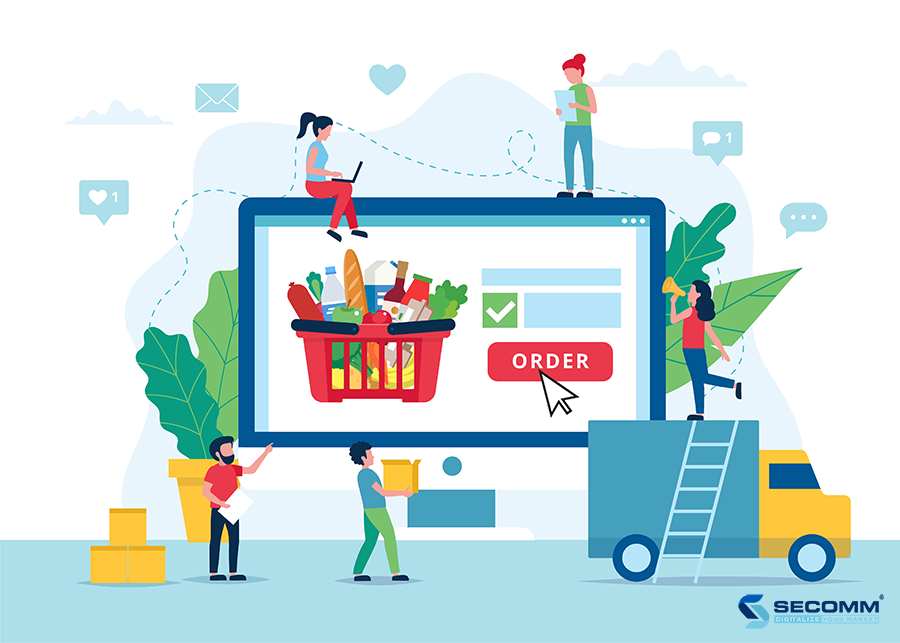
Over time, businesses want to increase productivity by selling products while saving costs and facilities. On the other hand, customers also need to buy products faster without directly going to the store. That is the reason leading to the birth of ecommerce.Today, the flash development of ecommerce allows businesses to easily access the market while increasing the opportunity to maximize user experience. In Vietnam, the ecommerce market has only been growing in recent years but has made a breakthrough with prominent brands like Shopee, Tiki, and Lazada.
Magento has excellent functions, which highly create flexibility and adaptability, accommodating all sizes of ecommerce businesses in Vietnam. However, Magento is not very friendly for beginners. Instead, the platform has a massive range of features that are adaptive for almost the user-community.
WooCommerce is not an autonomous platform to build an ecommerce website. It is a type of plugin running on WordPress. In other words, WooCommerce will optimize ecommerce functions for the website community based on the WordPress foundation. Thus, enterprises can start an online development plan in a more accessible and faster way.Utterly different from Magento, WooCommerce is more comfortable to use, especially suitable for beginners. Plus, it also possesses enough extensions handling almost basic tasks from product management to payment methods that can bring a website to the top ecommerce business in Vietnam.
Pick up enormous scores from users; Shopify possesses the functions to integrate SEO, supporting the website system work, and customize fluidly. It also provides services based on the SaaS model with the main control center.
Haravan is an open platform allowing easy website creation with similar characteristics to Shopify and WordPress. The platform possesses various features providing more conveniently supportive sales-management tools, especially the multi-channel sale on ecommerce websites, namely Lazada, Shopee, and Tiki.
The website system is a prerequisite to be maintained, updated regularly and continuously because it is the only interface connecting businesses and customers. For ecommerce businesses in Vietnam, designing a web system plays a crucial role in contributing to the success of an online business or its failure. This design phase is usually performed by the UI/UX team responsible for both visual and user experiences on the websites.
With the experience of developing ecommerce websites, SECOMM developers can apply most of the current platforms to meet our partners’ needs, especially ecommerce businesses in Vietnam. We always value the quality of our work and provide the most appropriate solutions to the occurring issues. Promptness, timeliness, and quality are the consistent goals that we always aim at in the process of operation.
2 4,945 0 1
One of the factors stimulating e-business growth is the high demand for the internet, in which Vietnam is the top-country in terms of internet users. Therefore, online selling has a fast-growing rate with impressive recorded statistics and contributes to the country’s market economy in many ways. The following is the large-scale blooming of e-business in Vietnam.
Besides, online businesses can easily access the market while just using about 1/10 of the marketing channels’ cost. Low advertising costs have increased the popularity of online sales, which grows not only on the domestic scale but also globally.

Since 2016, e-businesses in Vietnam have undergone significant breakthroughs by cooperating with international partners, making businesses participate in the e-business market, and marking the premise for the outstanding growth of e-businesses at present.
The Amazon penetration into the Vietnam market has come up with new opportunities for a huge community of e-business in Vietnam. The country has a strong potential for traditional handicrafts, which are considered unique and ideal for selling online. With that strength, Vietnam will promote domestic products to international markets at competitive prices.
Under the support of Amazon Global Selling, Vietnam brands can integrate with international e-markets with significant growth, which is a step toward the digital economy in Vietnam.
Vietnam has expertise in producing goods, so Amazon Global Selling’s participation meaningfully contributes to accelerating the market-expanding process for both international partners and consumers. That contribution can boost the working process for Vietnamese businesses and the ecommerce market share of the economy.
Besides wide-open opportunities, e-business in Vietnam quite faces significant challenges from the Amazon advent. Firstly, Amazon makes domestic ecommerce in the face of fierce competition. The Vietnam market had welcomed Alibaba previously.
Nevertheless, it was not overly ambitious because large enterprises had their proven capability in this field, namely Shopee, Tiki, Sendo. However, the long-term race invisibly extends a boundary for SMEs to cross over or get close to the same level.

Secondly, publishing products in the international ecommerce field increases expenses. The more giants join the ecommerce game, the more earnestly and competitively the race of spending money becomes. However, plenty of e-businesses focus on the spending process of selling 1 billion dollars of goods without having correct forecasts on long-term expenses. In the long run, over-spending will require more investment, affecting the bottom-line growth, namely the businesses’ net profits.
On the other hand, the origin and quality of goods need to be guaranteed. Regarding the current ecommerce market in Vietnam, fake or counterfeit products have not been solved thoroughly up to now. As a result, selling on Amazon will face restrictions if businesses can not control their goods’ quality. Simultaneously, it requires policies from the government to promote ethical businesses within the Vietnamese economy.
In general, Amazon has created a new breeze for e-business in Vietnam. It plays a vital role in stimulating market competitiveness, improving product quality, and user experience for great customer-oriented support. However, to do that, businesses need to have the right strategies in addressing challenges and difficulties to shorten the cooperation process with both partners and international customers.
2 7,019 0 2
Several conflicting opinions often appear, which leads to much suspicion about the actual benefits that content brings to businesses. The doubts possibly stem from different issues when implementing client research or positioning the development orientation. A B2B effective online content strategy results from a meticulous and thorough investigation of all aspects of the business, including the market, competitors, clients, entrepreneurial potential, and much more.

Those factors are the initial steps for the content strategy. When the letters’ sequence creates their miracles, businesses smoothly fulfilled the original objectives to reach out to the developing goals. As a result, content shapes everything that the industry puts out, prompting customers to take action with the services or products they desire.
In other words, SEO will have no result if supportive content does not exist. With a diverse and high-end content system built in advance, SEO specialists can easily optimize the website rankings and reliability on search engines with more strategic approaches. Besides, businesses can use BLOG to develop an abundant content base, attracting more users to visit the website.
Business needs to research accurately and specifically about the target audience to implement an effective online content strategy. Content creators also need to determine who they are writing for, what they are writing for, and what value are they seeking?

First, find out information about businesses to identify audience target with the following fundamental questions:
The buying process
Sales goals are also an important step to prepare for an effective online content strategy. These include business goals and content goals. In particular, business goals play as the direction for specific objectives and targets in businesses, including criteria on sales, market share, growth, revenue, and profit. Besides, the content target is a part of the marketing objective, a supporting factor for the business goals in developing the speed of goods/services distribution, brand positioning, value in use of the products, and loyal client creation base for the brand.
Specific content targets will create a solid foundation for a content strategy from the simplest and most basic targets. The following proposed targets will be:
It is acutely worth reminding that simultaneously achieving all the goals is impossible. That is a greedy view. Instead, prioritizing the most important ones in the short/long term and dividing the targets according to each stage of business growth.
In the next step, concretize the above primary goals with specific factors based on the S.M.A.R.T principle. This process will help to set more oriented goals.
S refers to “specific”. The primary goals mentioned above need to be more specific. To specify them, ask some of the questions by using the “6W” formula, namely:
Who?
What?
When?
Where?
Why?
M is “measurable”, which means the goals in detail. Those quantitative factors can be data collection, revenue, sales performance, customer satisfaction, and customer experience surveys.
A means “applicable”. No matter how specific the goals are, they need to be feasible and appropriate to the team-ability. Sometimes, to accomplish these goals, the staff need to improve their skills or undergo training processes. These are all essentials to approach closely to the previously measured goals. From that basis, marketers can estimate a suitable figure for the target. For example, if the sales revenue increases by 5% last month, setting a goal to increase sales performance by 10% this month. Oppositely, setting the 30% increase target would be unreasonable. Although there will be differences and characteristics of every single industry, measurable goals require a meticulous research process in general.
R is the beginning of “realistic” or “relevant”. To set the goal of studying abroad in Australia, make sub-objectives such as studying IELTS, finding a study abroad counseling center, applying for a VISA. However, studying Korean is not related to the whole abroad goals; it can not join the study plan. That plan is an underlying visual instance for a better understanding of relevant and real goals.
T, talks about time. The limit of time is essential to proceed with the on-time plans and break down the goals into actionable tasks. Time-bound brings a consistent and effective online content strategy in all aspects.
Unique and innovative ideas impressively contribute to an effective online content strategy. However, they are all a plus, not compulsory. In other words, creative ideas are supportive tools that help businesses grow faster, but more than a creative-content factor needed to accompany enterprises with long-term development. To do so is to gain the foundation of Marketing understanding that distributes creative content into suitable channels.

Generally, novelty can attract potential target audiences. Here are some of the suggestions to be more creative when brainstorming ideas to run an effective online content strategy:
B2B enterprises do not just need only one effective online content strategy. However, the effective one produces a substantial range of benefits for business, from improving the website-popularity to increasing sales revenue.
SECOMM, with expertise understanding, always seeks prudent solutions in both web structure and content system for partners in the working process. With well-trained staff, we understand how an effective online content strategy impacts brands. We hope to convey new values from old platforms and build fresh ideas from the hybrid of information based on materials.
2 4,340 21 1
The first workshop of TECH TALK 2020, in other words, had a great sharing time making the team connect closely. Thus, Secommers not only have time together but also got new Magento knowledge. Thanks to the framework of Ms. Ivy, the team had the opportunity to share those foundation topics:

 2 3,316 10 1
Given the characteristics of the current Vietnamese market, digital transformation has received positive attention from enterprises. However, this process still faces many cultural barriers, strategies, and implemented technologies that make the process and model transformation not entirely useful.
The corporate culture foundation is a crucial determinant contributing to the model transformation progress. Culture concepts refer to quite large factors of human resources (HR) thinking and perception existing inside the business, including:
The most significant problem creating cultural barriers is the traditional business ideology that developed businesses cannot collapse by digital transformation requirements or any other peripheral factor. It was not until being trapped by the outdated technology that they found they significantly fell behind the bustle of a much more modern market.

For corporate culture, leadership is the core value creating a complete preparation process to start a digital transformation strategy. The leadership factor plays a decisive role in the business’s strategic changes, simultaneously helps all employees understand and adapt to these changes fully and quickly. In particular, key leadership positions such as CEO, CTO, and other decentralized management levels are the driving force behind implementing more micro changes for each employee. Finally, rely on individual conversions to shape the overall change-process in the digital transformation strategy.
To satisfy all the above conditions, an organization needs prolonged-vision leaders of the current business models. It is complacency and “resting on their laurels” that make the traditional models stumble into the old path and have difficulty maintaining the position they once had in the market.
The HR potential is the next factor in becoming a cultural barrier in the process and model transformation. A significant change often encounters many difficulties when it comes to impacting HR awareness.

No matter how strong the HR is, it will be disrupted in the beginning if employees don’t fully get preparation for a ready-to-change and adaptive mindset. Lack of staff training in digital transformation strategy is likely to face harsh objections from the inside if forcing them to suddenly change their working style while they do not have enough time to adapt to new workflows. Simultaneously, the HR potential will also be a dangerous weapon that demolishes the digital transformation results if it is not prioritized and used accurately.
Among the two human factors, the coherence and connection between them also play an essential role in corporate culture. Connectivity includes the spiritual values businesses build to promote consensus, cooperation, and trust to turn strategies into realistic actions. The discrete connection or the disparity in digital capabilities reduces both efficiency and progression of the whole process and model transformation strategy.
There are two behavior tendencies in businesses making technology a barrier to process and model transformation strategies: being afraid of technology-changing mindsets that lead to obsolescence and technology-overusing that lead to wasting cost and time.
Up to 80% of SMEs in Vietnam use old technologies in the 1980s (statistics from the Vietnam Chamber of Commerce and Industry – VCCI) report. In addition to objective reasons such as lack of staff, skills, lack of a robust digital platform, it is much more significant that limited thinking and understanding in technology application are fundamental causes impacting the digital transformation process.
Indecision in adopting technology is also a negative factor. Technology overuse can create unnecessary conflicts with the process and model transformation. These techs will not bring optimal efficiency but a waste of budget and time to recover. Technology is a driving tool for digital transformation, and at the same time, it is also a rule-setter for businesses in the digital market. However, it is more important to decide which technology is suitable for which model instead of determining how many technologies to apply.
Technology solutions can solve lots of problems with data and process optimization inside a business. In the very beginning, they need to fully and comprehensively redefine existing processes, and at the same time, model them into maps and charts to identify:
Analysis and control of the entire processes help businesses find out weaknesses and facing-problems, then apply more appropriate technology solutions to optimize the process and model transformation.

At present, a business has hundreds of requirements with suitable technology-types for their concurrent process and model. However, companies can develop solutions based on combining the big-four technology platforms in digital transformation: Big Data, cloud computing, artificial intelligence, and the Internet of Things. These tech-types possess lots of outstanding benefits that businesses can apply to create the most suitable digital solutions:

Human and cultural solutions will effectively address corporate sustainability, change, and develop a digital transformation mindset for all employees in strategies and initiatives products/services to increase advantages over competitors.
Businesses can complete the process and model transformation with technology and cultural solution-orientations. Therefore, technological solutions will maximize their business operation efficiency. They also contribute to stimulating businesses to be always requirement-active in the digital age. And these positive results are based on a sustainable digital culture possessing robust and responsive leader-generations combining with high-quality human resources.
2 3,169 1 1
A huge range of Magento functions not only conquers the interest of the web developer community but also reigns the world as one of the leading ecommerce platforms. Talking about its various highlight power, the ecommerce market is probably the place to get benefits from this platform.
With the amazing benefits of PWA, Magento developers cannot afford to miss this special opportunity. Then, Magento PWA Studio was born as an interface solution for ecommerce websites based on the Magento platform. With fast page load time, optimal performance, Magento PWA Studio has provided the best user experience, making ecommerce web pages more reliable and consistent across devices.
One of the salient advantages of Magento is the ability to add more extensions depending on specific user needs flexibly. That highlight makes Magento very suitable for different online businesses with various commerce activities. With this feature, website developers can integrate most extensions, including free or paid versions, to customize Magento with the best performance.
One of the important functions of the open-source platform is to integrate features supporting SEO maximization. Magento is considered to be a platform that implements SEO tools completely from product catalogs to independent products.
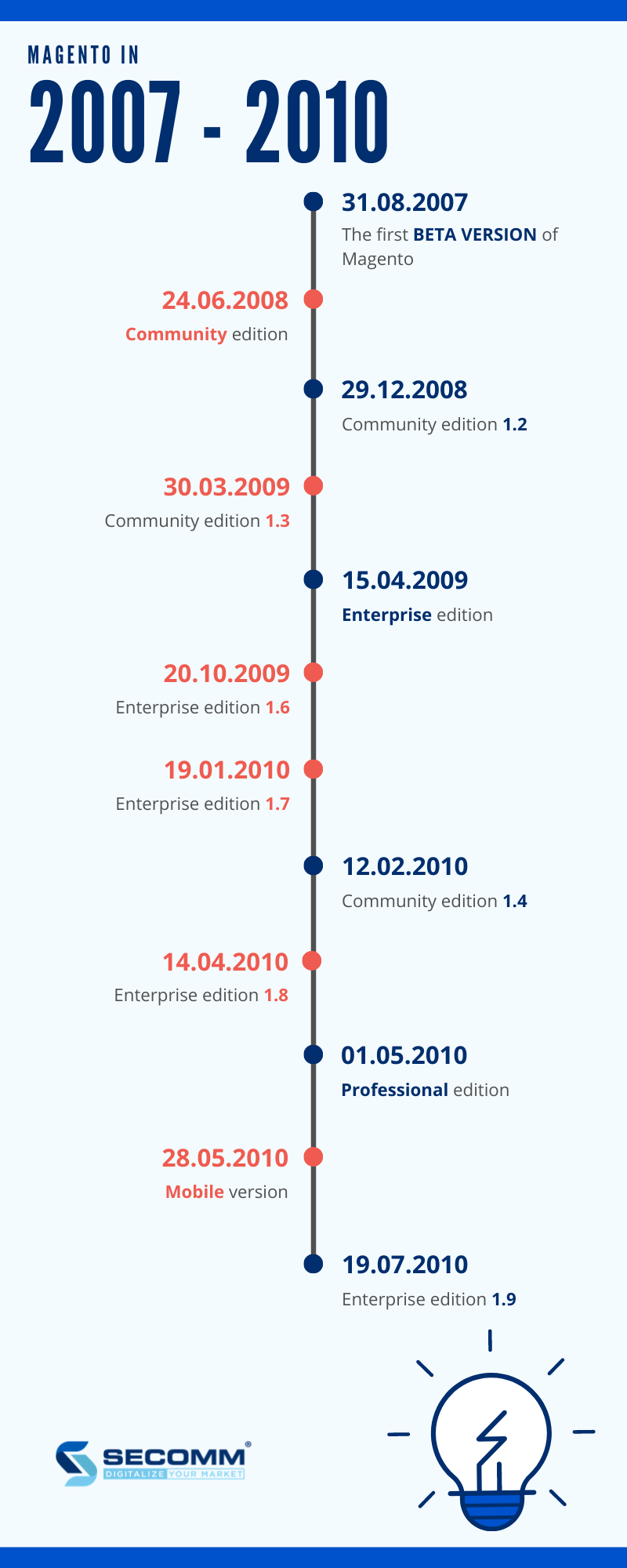
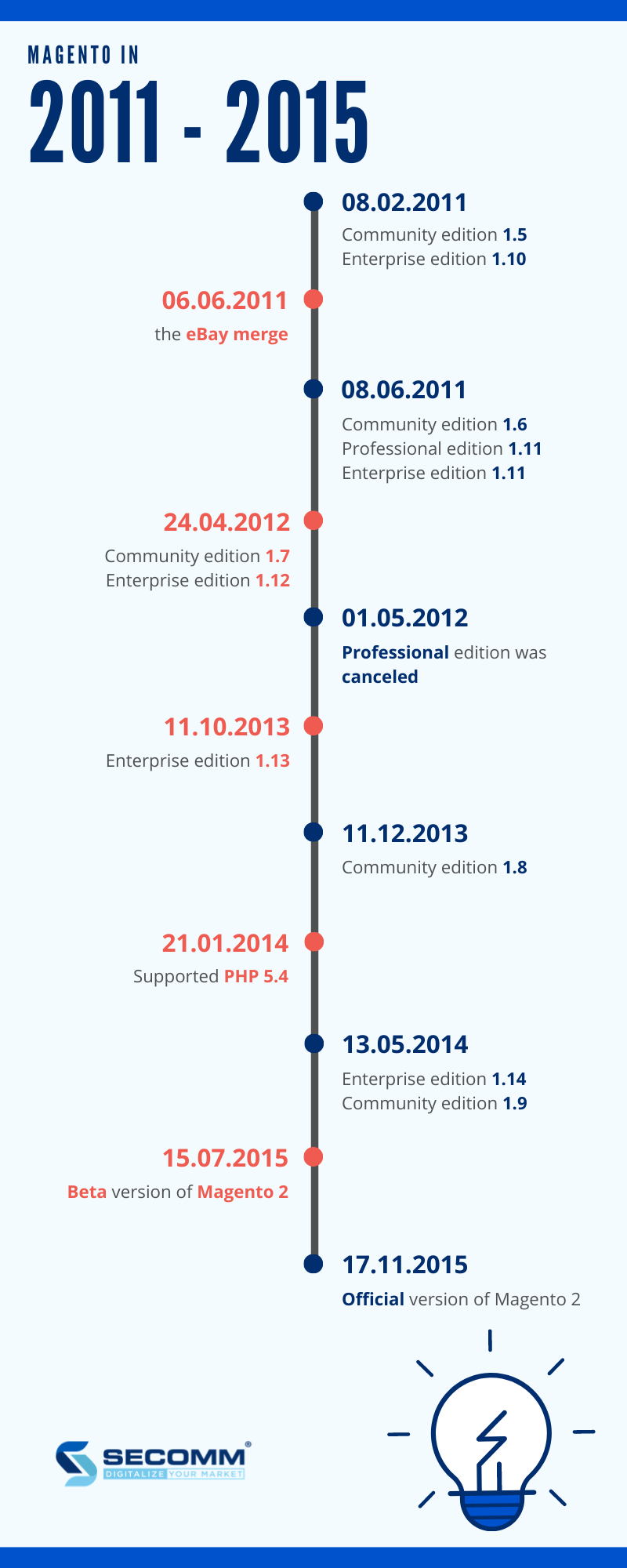
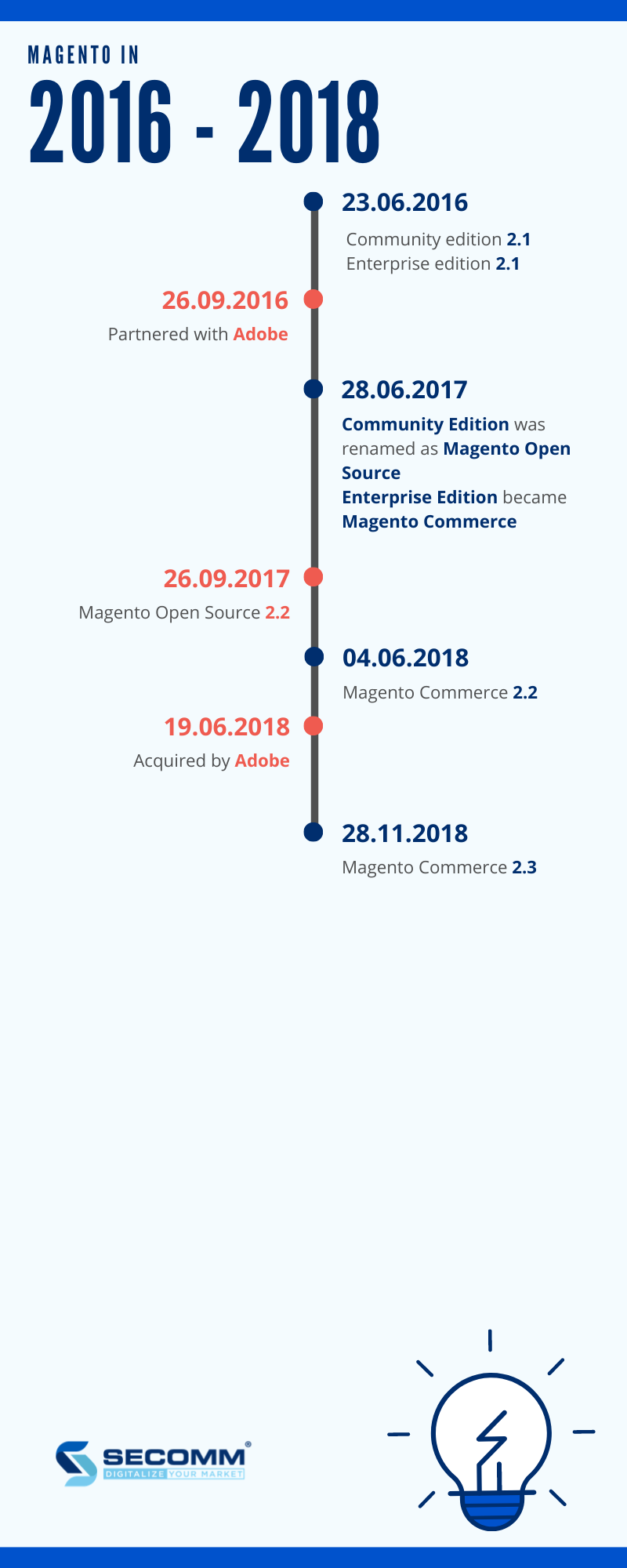
Let’s take a look at the timeline of Magento from the very first launching in 2007 to the new upgraded versions during 2011 – 2018.
Still, the platform is constantly being improved to meet the Magento user community’s diverse needs around the world. Truly, Magento has brought a lot of convenience and breakthroughs to the ecommerce website development industry. Below are magnificent facts about Magento you may not know.
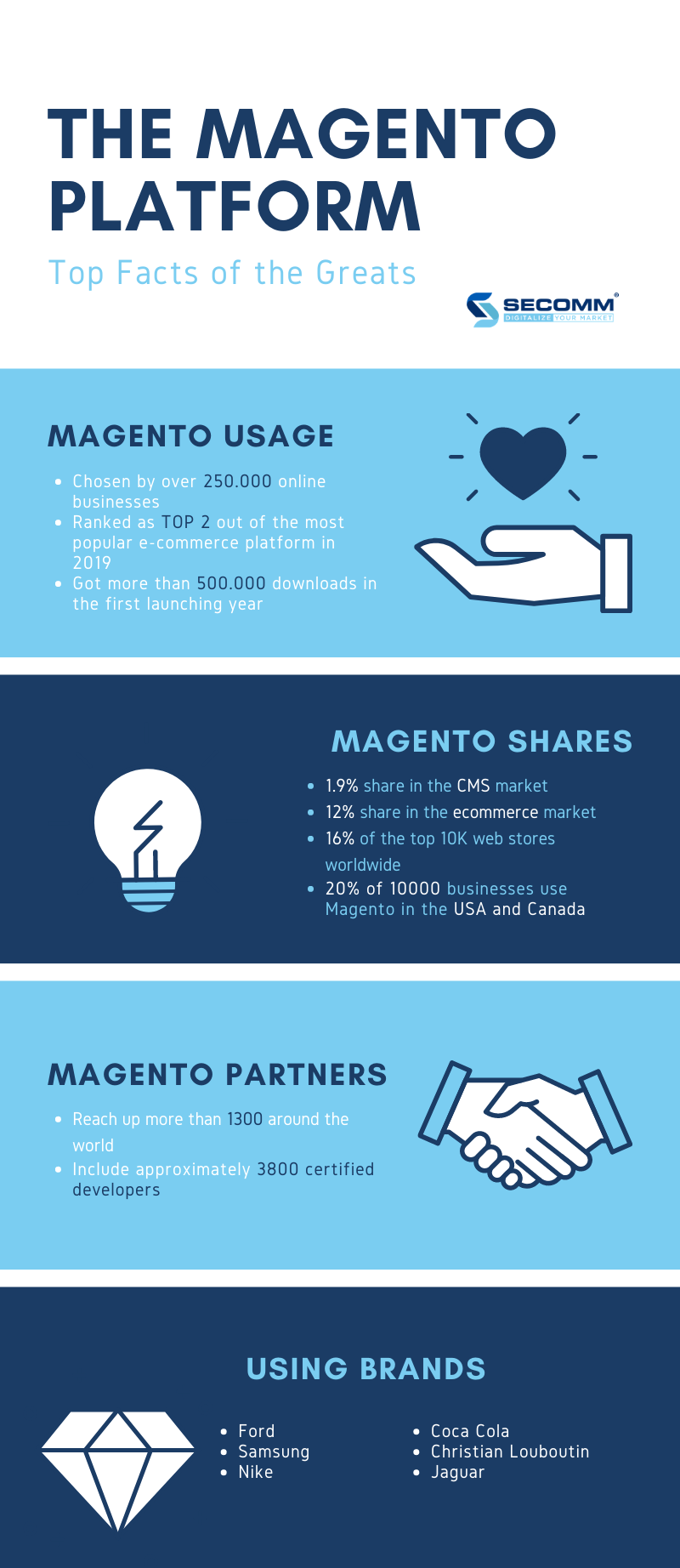
With 8-year-experience in Magento, our SECOMM team has used Magento effectively to create solutions for partners/businesses. Magento timeline includes a huge amount of needs for the user community: beautiful and diverse themes, UI/UX design, security, effective cost, and so on. Especially in Vietnam, Magento is exactly the perfect tool to help ecommerce businesses control most of the features for online stores.
2 5,548 10 1
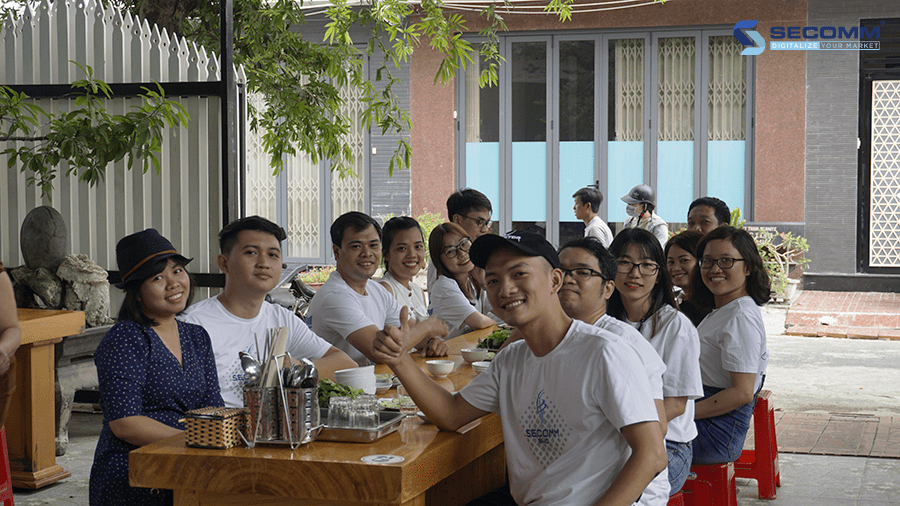
Said hello to Phu Yen at 7:30 a.m; we had gorgeous moments to enjoy the crisp, fresh air at the railway station, then followed the way leading to Mang Lang Church. The church stayed about 30km far from Tuy Hoa City to the north, was a Roman catholic construction built-in 1892 with two bells at the peak and the cross in the middle. Classic scenery created a fantastic background in many photos of us.

We continued moving to Da Dia Reef (or Ganh Da Dia in Vietnamese) on the same route. Everybody needed to walk along a small path from the entrance gate to see the basalt rock area.

As the Phu Yen natives, rock structure seemed like a giant beehive with stacking pillars from various shape-rocks, from circular looks to polygonal appearances.



In the next stopping-place, all the Secommers chose to walk together at the famous coastal land that appeared in the film “Yellow flowers on the green grass”.For ending the day-one-journey, we went to Nhan Tower in the evening. There was no particular expectation for that place, but its beauty truly caught our eyes. The tower looked mystic and fanciful under the warm light by night and was shining in the middle of the high land.

We went back to the hotel then joined an exciting SECOMM game show. It was a puzzle game for the three teams. However, what made it challenging to play was that the topic focused on everyday work and other areas of life.The atmosphere was getting more intense towards the end, and the winner finally came out to gain the worthy prize. Above all, the award could not be as crucial as the memorable moments we spent together.
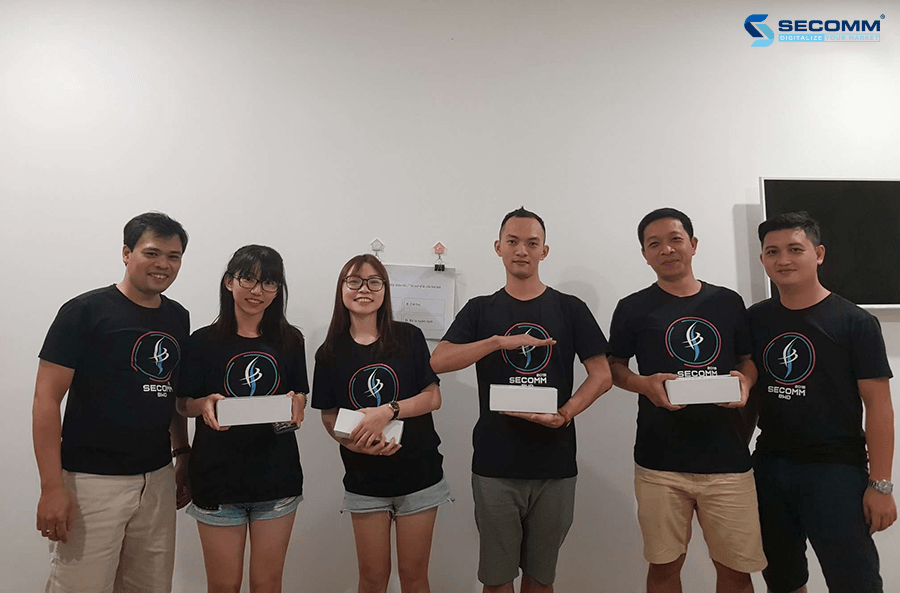
On the second day, we spent the whole morning discovering the easternmost of Vietnam – Dai Lanh Cape. Walking on a small path leading to the Cape with lots of stairs, we also caught Mon Beach’s view. It was a small beach surrounded by mountains, white sand, and clear water. What a picturesque view!




It was then lunchtime. We continued to drive to the eco-floating rafts at Vung Ro Bay to eat all kinds of seafood.

We traveled around the city at night and bought some souvenirs, then took time to relax and prepare for the flight back to Sai Gon the next morning.
Goodbye, Phu Yen, SECOMM will be back!
2 2,758 0 1Subscribe to get the latest eBook!
Hotline