



Explore the 10 Best CRM Software for Large Enterprises PT1

2
8,164
2
1

Share this post

Post image

The options for CRM solutions are expanding and becoming more diverse. In reality, some currently popular CRM software may lack the flexibility to meet the complex deployment requirements of large businesses.

Nevertheless, there are CRM software designed to offer a digital infrastructure, in-depth technical support, and exceptional features, granting significant customization freedom for large enterprises.

The article below focuses on providing important considerations when choosing CRM solutions and lists the 5 best enterprise CRM software.

1. 5 Things to consider when choosing CRM software

Determine your need

The first important step before selecting CRM software is to clarify the needs and deployment expectations. You can review and assess the pros and cons of the current tools and management programs in use. Following this, the focus should be on the aspects requiring modification or enhancement, all while estimating the customization needs.
Explore The 10 CRM Software for Large Enterprises Pt1
Determine Your Need

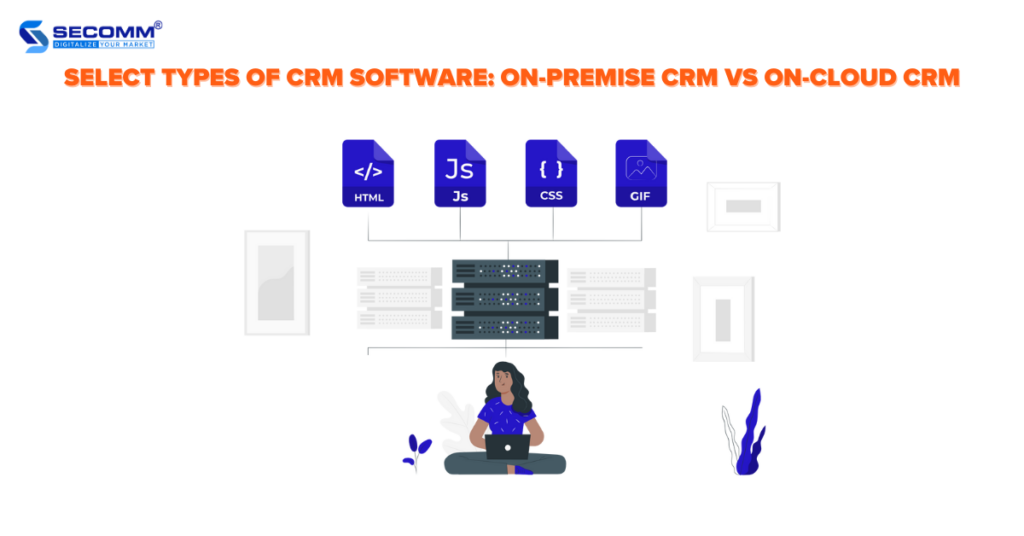
Select types of CRM software: On-premise CRM vs On-cloud CRM

Next, you need to the type of software to deploy, which may be either On-premise or On-cloud CRM software. These two software types come with key differences.
Explore The 10 CRM Software for Large Enterprises Pt1
On-premise CRM vs On-cloud CRM

For On-cloud CRM, the entire data and software system are stored and managed by a third-party service provider, allowing you to access it through a web browser or mobile application.

Some advantages of On-cloud CRM include:

  • Cost-effective usage
  • Easy to use and accessible anytime, anywhere
  • No need to perform maintenance, security, and software update processes

On the other hand, On-premise CRM stores and manages the entire data and software system locally on the company’s servers and infrastructure.

Some advantages of On-premise CRM include:

  • Internal storage ensures security for vital information.
  • You have complete control over the software, enabling you to customize the software updates.
  • Not dependent on the internet to access and maintain the CRM system’s operations.

Related Reading: On-Premise CRM vs On-Cloud CRM: Key Differences

Check the accessibility

A user-friendly CRM software accessible to users of all skill levels contributes to expediting the deployment process effectively. Specifically, the software interface should be intuitive, easy to install, and allow for seamless import and export of any data type without requiring excessive assistance.
Explore The 10 CRM Software for Large Enterprises Pt1
Check the accessibility

Moreover, businesses should opt for CRM software that is flexible enough to synchronize with their existing operational processes. Typically, the majority of CRM solutions nowadays offer a free trial period of three or four weeks. This timeframe is sufficient for businesses to understand the software’s functionality and assess whether it is the optimal choice for their deployment needs.

Evaluate the ability to customize

Customization is a vital feature of CRM software. Because each business has different models and scales, it’s essential to select CRM software that offers customization capabilities to match your business requirements and smoothly manage your sales processes.
Explore The 10 CRM Software for Large Enterprises Pt1
Evaluate the ability to customize

Most CRM software designed for large-scale businesses offers customization capabilities. Nevertheless, while CRM solutions with extensive customization features can facilitate flexible deployment to meet specific needs, they often come with a higher price point.

Pay attention to security issues

The most crucial information stored in CRM software is customer data. Therefore, when selecting a CRM solution, you need to prioritize security.
Explore The 10 CRM Software for Large Enterprises Pt1
Pay attention to security issues

Currently,  many CRM solutions are cloud-based, meaning customer data is encrypted and regularly backed up to enhance safety and security. However, you should thoroughly research the provider and understand how their data will be stored and secured in the database. This information is typically available on the CRM provider’s website.

2. 5 best enterprise CRM software

According to G2‘s and rankings based on user satisfaction, here are the top 10 CRM software solutions best suited for large-scale enterprises.

Salesforce Sales Cloud

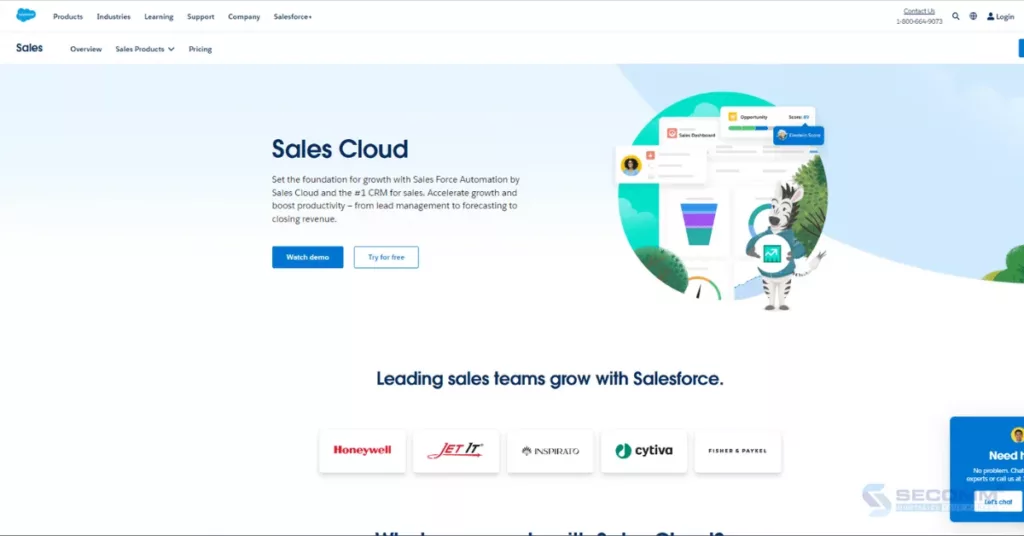
Salesforce Sales Cloud is a part of the renowned Salesforce CRM platform, developed to assist large enterprises in optimizing business operations and maintaining better customer relationships.
Explore The 10 CRM Software for Large Enterprises Pt1 - Salesforce Sales Cloud
Explore The 10 CRM Software for Large Enterprises Pt1: Salesforce Sales Cloud

Core features:

  • Opportunity Management:  Provides details about transactions, including product information, deal stages, pricing, and competitors Allows sales personnel to access real-time information for each transaction.
  • Marketing Automation: Automatically creates, deploys, and manages effective online marketing campaigns. Enables collaboration between sales and marketing teams to search, evaluate potential customers, and streamline the sales process.
  • Lightning Voice: Allows making calls to customers directly within Salesforce with just a click. Sales representatives can view all contact information updated in real-time to be prepared for any customer conversation.
  • Workflows and Approvals: Saves time and simplifies the approval of business requests by designing and automating sales processes with simple drag-and-drop actions. Approval requests include deal discounts, expense reports, purchase orders, etc.
  • File Sync and Share: This enables the sales team to quickly search and share up-to-date and accurate content such as presentations, proposals, and contracts from anywhere, helping the business close more deals in less time.
  • Reports and Dashboards: Easily create and customize dashboards and real-time data reports to support the decision-making process for the next business steps.
  • Sales Forecasting: This enables viewing sales forecasts and specific adjustments suggested for each sales team.

Costs: 

EssentialsProfessionalEnterpriseUnlimited
$25/user/month$75/user/month$150/user/month$300/user/month
For small businesses with a maximum of 10 users.For businesses of all sizes. For large enterprises with deep customization needs.For large enterprises with unlimited software usage and demanding support requirements.

Pros: 

  • Enables a 360-degree view of the customer interaction journey
  • Offers tools for automating business processes
  • Includes a demo for every deployed feature
  • High level of customization and scalability
  • Superior data security system

Cons:

  • Internet access is required to use the software.
  • While Salesforce Sales Cloud offers extensive customization, you will face additional charges for adding features or utilities, leading to increased software usage costs.
  • The platform provides advanced features, but for new users, navigating through all the features and options available on the dashboard may not be intuitive. You will need to invest significant time in training their teams to effectively utilize the software.
  • Migrating data from existing systems to Salesforce Sales Cloud can be time-consuming and may require technical expertise. Businesses can contact the Salesforce consulting team for assistance in addressing this issue.

SAP Sales Cloud

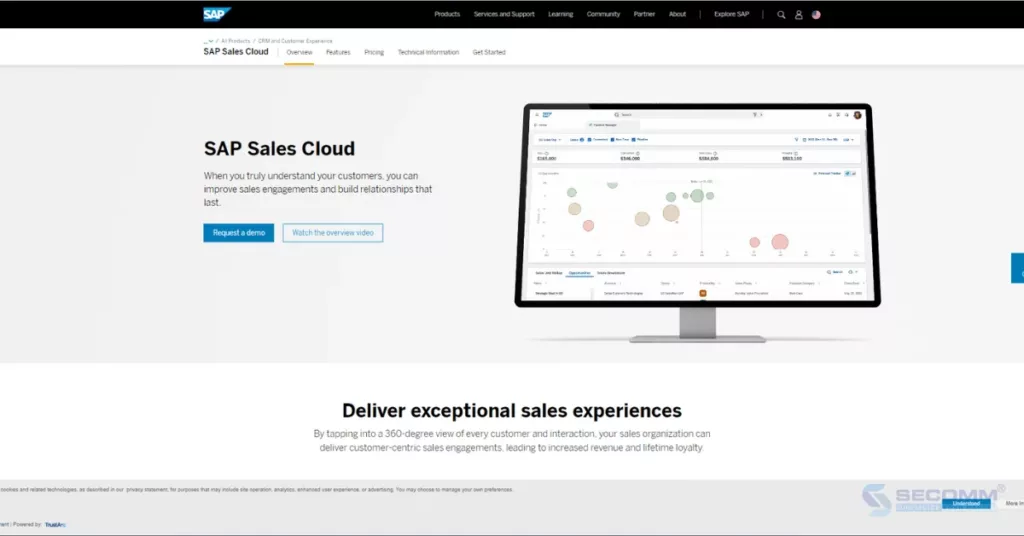
Recognized as a top on-cloud CRM software for large enterprises, SAP Sales Cloud assists businesses in creating an internal collaborative environment, optimizing business processes, and fostering efficient interactions with customers.
Explore The 10 CRM Software for Large Enterprises Pt1 - SAP Sales Cloud
Explore The 10 CRM Software for Large Enterprises Pt1: SAP Sales Cloud

Core features:

  • Omnichannel Engagement: Provides omnichannel interaction features to enhance customer engagement, streamline the sales process, and complete transactions. 
  • Email & Calendar Integration: Integrates with productivity tools like Microsoft Outlook and Google Gmail to automatically synchronize customer data and important information from the current system.
  • Predictive Analytics & Machine Learning: Real-time scoring and prediction features help businesses identify potential customers, guide them through the sales process, and offer personalized recommendations for products, sales representatives, and pricing to optimize contract opportunities.
  • Sales Performance: Offers detailed sales guidance to help businesses actualize their sales strategy while tracking progress and results with comprehensive information on each salesperson’s actions. Additionally, businesses can integrate with the SAP CX solution suite to boost business goals.
  • Productivity & Personalization: Provides features that enhance the efficiency of the sales process, such as tagging, flagging, scheduling, and personalizing fields, reports, and custom fields for easy access and use by sales representatives.
  • Back-office Integration & Connection: Integrates with SAP ERP and SAP CX solutions to leverage real-time, valuable information and details to understand sales cycles and seize transaction-closing opportunities.

Cost: SAP Sales Cloud doesn’t publicly disclose its pricing on the website. Therefore, businesses are advised to contact the provider directly for consultation and a price quote.

Pros:

  • User-friendly interface that is easy to use.
  • Seamless integration with other services in the SAP system, facilitating the sharing of information and data across departments within the business.
  • Provide demos for each deployed feature.
  • Offers advanced analytics capabilities for customer information and market trends to optimize sales strategies.
  • High customization and scalability.
  • Ensures the security, regular updates, and accuracy of customer-related information and data.
  • Automates business processes.

Cons:

  • The usage cost is not publicly disclosed, making it challenging for businesses to accurately estimate deployment expenses
  • The seamless integration capability with other SAP services, while advantageous, can be a drawback as businesses become heavily dependent on the SAP system, leading to limitations if a few services from a different provider are used.
  • Integrating SAP Sales Cloud with external services is not straightforward and requires significant expertise and resources.
  • The high customization capability of SAP Sales Cloud demands technical proficiency and a certain level of understanding of SAP, making it time-consuming for new users to familiarize themselves with the platform.

HubSpot Sales Hub

When it comes to leading CRM providers, HubSpot is a very familiar name for most businesses. The HubSpot Sales Hub solution offers businesses outstanding features to build relationships with customers, manage the sales funnel effectively, and close more deals.
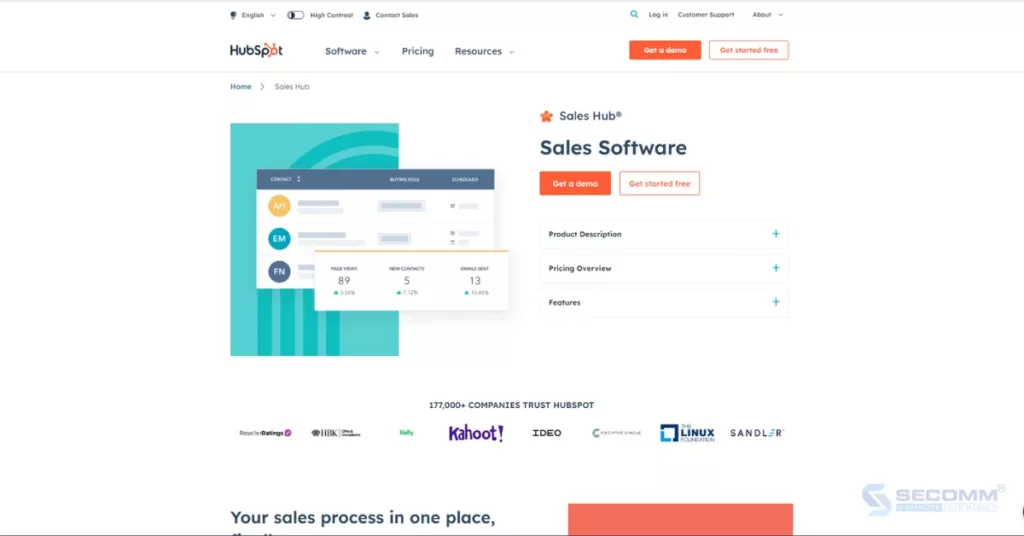
Explore The 10 CRM Software for Large Enterprises Pt1 - HubSpot Sales Hub
Explore The 10 CRM Software for Large Enterprises Pt1: HubSpot Sales Hub

Core features:

  • Sales Automation: Set up a series of automated and personalized tasks and emails to streamline the sales process and close deals.
  • Conversation Intelligence: Utilize AI tools to record calls with customers to understand how each sales representative interacts with customers and provide timely evaluations and improvement guidance.
  • Document Tracking: Support the sales team in creating and sharing sales content, while tracking which type of content customers open, view, or forward, and which content leads to deal closures
  • Email Tracking: Use tools like Gmail, Outlook, and HubSpot to send tracked emails and receive notifications for any potential customer interaction with tracked emails.
  • Call Tracking: Prioritize daily sales calls based on the HubSpot database. Automatically record call details for contacts in the CRM system.
  • Pipeline Management: Create, customize, and control the sales process visually with the “Deal Pipeline Management” feature. On the “Sales Dashboard” page, you can view detailed sales activities, track customer movement through the funnel, and identify and address issues for each customer case to quickly close deals.
  • Sales Analytics & Reporting: Choose from available reports or customize individual reports to monitor the progress and performance of the sales team with in-depth and accurate analytical data.

Costs:

FreeStarterProfessionalEnterprise
100% Free$45/month$450/month$1200/month

Pros:

  • Provides 24/7 customer support via live chat, email, and hotline.
  • Intuitive platform interface and user-friendly CRM features.
  • Offers a demo for each deployed feature.
  • Provides tools for automating business processes.
  • The ‘tracking’ features are well-designed and systematically meet the requirements for monitoring and controlling the entire sales process.

Cons:

  • Although HubSpot Sales Hub is designed to be user-friendly, the initial setup, customization, and management of the CRM system may require a significant amount of time.
  • Internet access is required to access and use the software.
  • The free trial version limits features and permissions, making it challenging for businesses to accurately assess the capabilities of this CRM system.
  • Migrating data from existing systems to HubSpot Sales Hub can be time-consuming and may require technical expertise.

Zoho CRM

Zoho is a renowned CRM solution with a variety of features designed to suit businesses of all sizes, enabling them to build and manage customer relationships and optimize sales processes.
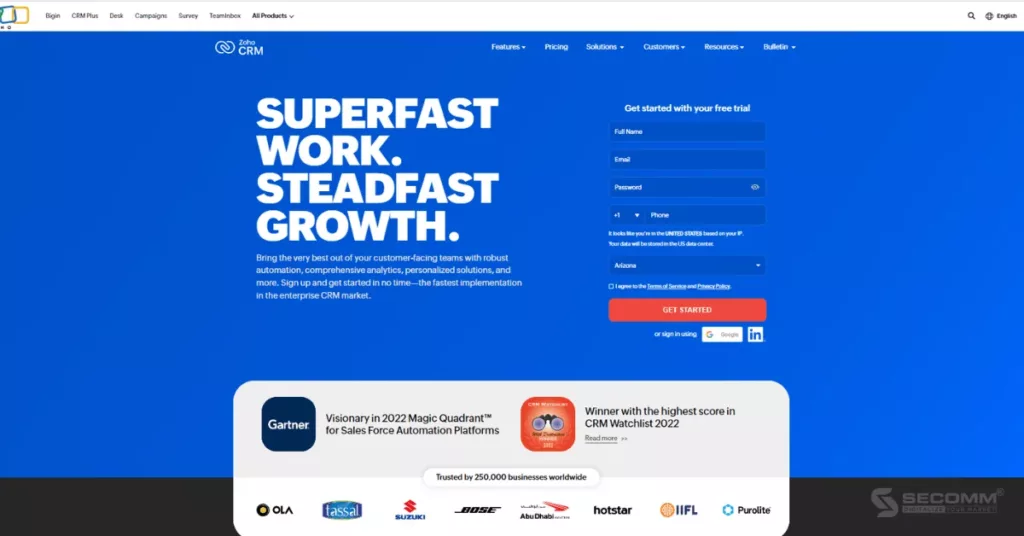
Explore The 10 CRM Software for Large Enterprises Pt1 - Zoho CRM
Explore The 10 CRM Software for Large Enterprises Pt1: Zoho CRM

Core features:

  • Sales Force Automation: Automates sales tasks such as scheduling sales appointments, sending follow-up emails, tracking leads, and updating sales opportunities.
  • Marketing Automation: Provides tools to efficiently run marketing campaigns and deliver high-quality leads to the sales department.
  • Performance Management: Streamlines business processes, and enhances sales capabilities with insights relevant to changing market trends.
  • Product Customization: Use custom fields, buttons, layouts, link data, localize language and currency, and test before deployment.
  • Omnichannel Management: Enables businesses to connect with customers across various channels while collecting essential data to support sales calls.

Costs: 

Pricing plansStandardProfessional EnterpriseUltimate
Billed Monthly$20/user/month$35/user/month$50/user/month$65/user/month
Billed Yearly$14/user/month$23/user/month$40/user/month$52/user/month

Pros: 

  • User interface is intuitive and easy to use.
  • Allows integration with multiple applications and services to create a unified CRM system.
  • Utilizes artificial intelligence to predict customer behavior and suggest relevant actions.
  • High-level security features.
  • Offers a 15-day free trial version.

Cons:

  • Customer support service is not yet fully optimized.
  • Customization process requires technical expertise and significant resources.
  • The trial version limits many features, making it challenging to evaluate the platform’s capabilities.

NetSuite CRM

Another prominent CRM software for large enterprises is NetSuite CRM. This is a cloud-based CRM platform designed to help businesses manage interactions with current and potential customers, partners, and suppliers.
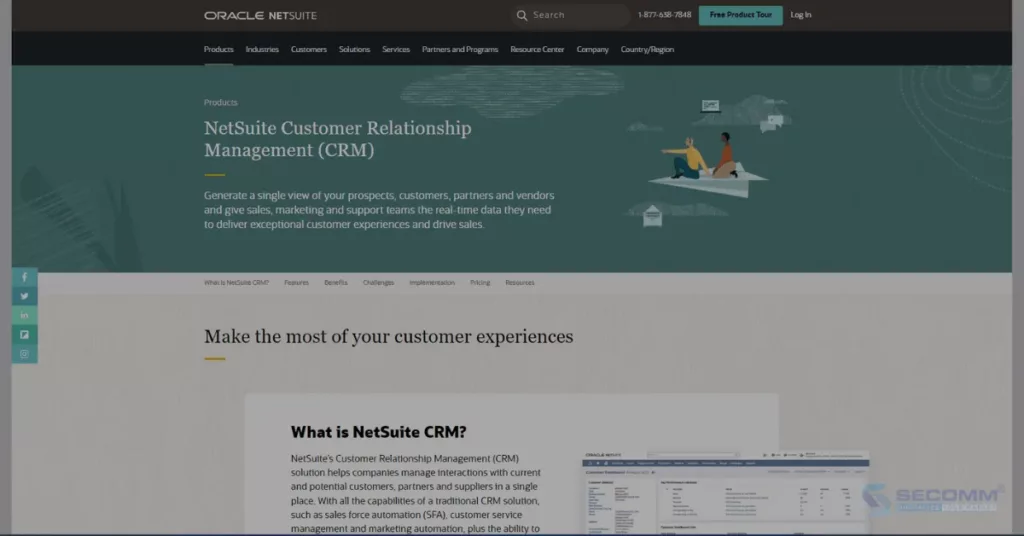
Explore The 10 CRM Software for Large Enterprises Pt1 - Oracle NetSuite CRM
Explore The 10 CRM Software for Large Enterprises Pt1: Oracle NetSuite CRM

Core features:

  • Sales Force Automation: Provides businesses with an integrated sales process, covering lead management, upselling, cross-selling, and quoting to sales forecasting, order management, order fulfillment, and commissions.
  • Marketing Automation: Builds, deploys, and measures the effectiveness of marketing campaigns. Tracks potential customers and identifies the moment they are ready to make a purchase, transferring potential customer information to the sales department.
  • Customer Service Management: Creates and automates the management process of customer cases, ensuring that customer inquiries are quickly addressed with the answers they need.
  • Partner Relationship Management: Controls all aspects of the sales and marketing process between the business and its partners with real-time updated information.

Costs: NetSuite CRM doesn’t publicly disclose its pricing on the website. Therefore, businesses are advised to contact the provider directly for consultation and a price quote.

Pros:

  • An all-in-one solution for various aspects of eCommerce such as sales, marketing, and customer service.
  • Exceptional customization capabilities to meet the specific deployment needs of each business

Cons:

  • The usage cost is not publicly disclosed, making it challenging for businesses to accurately estimate deployment costs.
  • Businesses are required to pay the entire deployment cost upfront for the initial setups.
  • Users must subscribe to an annual license, incurring additional fees before using this tool.

Related Reading: Explore the 10 best CRM software for large enterprises Pt2

The Bottom Line

Leveraging years of valuable experience supporting various businesses in the deployment of CRM solutions, SECOMM offers valuable insights to help businesses swiftly identify appropriate software and expedite the implementation process.

Contact or call directly to SECOMM’s hotline at 02871089908 for free consultation.

Ready to Maximize Your eCommerce Potential? Let’s talk

Leave a comment


Your email address will not be published. Required fields are marked *

comments (2)

EXPLORE
Related articles
What is Sustainable eCommerce? How to Become a Responsible Merchant?

eCommerce has become an integral part of our daily lives, offering unparalleled convenience and access to a vast array of products. However, as the industry continues to grow, so does its environmental footprint. From excessive packaging waste to carbon emissions from shipping, the environmental impact of eCommerce cannot be ignored. This brings us to the concept of sustainable eCommerce—a transformative approach that seeks to minimize the negative environmental effects of online retail while promoting ethical business practices.

Sustainable eCommerce is not just a trend; it’s a response to the increasing consumer demand for environmentally friendly and socially responsible products. A survey shows that 72% of respondents reported that they were actively buying more environmentally friendly products than they did five years ago, while 81% said they expected to buy even more over the next five years.

In this blog, we will delve into the essence of sustainable eCommerce, explore its importance, examine the growing demand for it, and provide practical steps on how you can become a responsible merchant.

What is sustainable eCommerce?

Sustainable eCommerce refers to the practice of conducting online business in a way that minimizes environmental impact and promotes social responsibility. At its core, it involves making mindful decisions at every stage of the business process, from product sourcing and manufacturing to packaging, shipping, and customer engagement. The goal is to reduce the carbon footprint, minimize waste, and ensure that ethical standards are upheld throughout the supply chain.

Key components of sustainable eCommerce

There are some common components in the eCommerce sustainability, including:

Eco-Friendly Products

Offering products that are made from sustainable materials, are biodegradable, or have a lower environmental impact is crucial. This means choosing materials that are renewable, such as organic cotton or bamboo, over conventional materials that may deplete natural resources or cause pollution. Additionally, promoting products that are ethically sourced ensures that they are produced under fair labor conditions, respecting workers’ rights and contributing to social sustainability.

Sustainable Packaging

Sustainable packaging involves using materials that can be recycled, are biodegradable, or are made from recycled content. For instance, using cardboard boxes made from recycled paper or packing peanuts that are biodegradable can greatly reduce the environmental footprint. This approach not only minimizes waste but also appeals to environmentally conscious consumers.

Energy Efficiency

Reducing energy consumption in the warehousing and logistics aspects of eCommerce is another critical component. This can be achieved by:

  • Using Renewable Energy: Powering warehouses and offices with solar, wind, or other renewable energy sources.
  • Optimizing Delivery Routes: Using route optimization software to minimize fuel usage and emissions during delivery.
  • Investing in Energy-Saving Technologies: Implementing LED lighting, energy-efficient HVAC systems, and other technologies that reduce overall energy consumption.

Waste Reduction

Minimizing waste throughout the entire eCommerce process is essential. This involves:

  • Efficient Inventory Management: Using systems that prevent overstocking and reduce the likelihood of unsold goods going to waste.
  • Recycling Programs: Implementing robust recycling programs in warehouses and encouraging customers to recycle packaging materials.
  • Designing Durable Products: Creating products with a longer life cycle, which reduces the need for frequent replacements and lowers the overall waste generated.

Ethical Business Practices

Ensuring that all business practices are ethical and transparent is fundamental to sustainable eCommerce. This includes:

  • Fair Labor Practices: Treating all employees and suppliers fairly, ensuring safe working conditions, and providing fair wages.
  • Supporting Fair Trade: Sourcing products that adhere to fair trade principles, which support better prices, decent working conditions, and fair terms of trade for farmers and workers in developing countries.
  • Transparency: Being open and honest with consumers about the sustainability efforts and practices of the business. This can build trust and loyalty among customers who value ethical and responsible business operations.

By integrating these key components to strategies, eCommerce businesses can significantly reduce their environmental impact, support social responsibility, and meet the growing demand from consumers for more sustainable and ethical products.

Why is eCommerce sustainability important?

Understanding the importance of eCommerce sustainability is crucial for businesses looking to thrive in today’s market. Here are several reasons why adopting sustainable practices in eCommerce is vital:

Environmental Impact

The environmental impact of traditional eCommerce practices is significant. From the excessive use of plastic packaging to the carbon emissions from shipping and logistics, the eCommerce industry contributes to environmental degradation. By adopting sustainable practices, businesses can significantly reduce their carbon footprint, decrease pollution, and help conserve natural resources. Sustainable eCommerce practices, such as using eco-friendly packaging and optimizing delivery routes, play a vital role in mitigating the industry’s environmental impact.

Consumer Behavior

Consumer behavior is shifting towards sustainability. More and more customers are becoming environmentally conscious and prefer to purchase from brands that align with their values. Studies show that a growing number of consumers are willing to pay a premium for products that are sustainably produced and packaged. By adopting sustainable practices, eCommerce businesses can meet this demand, attract a broader customer base, and enhance customer loyalty. Being a responsible and eco-friendly brand can also differentiate a business in a crowded market.

Business Benefits

Sustainable eCommerce practices can lead to significant business benefits. These include cost savings from reduced waste and energy consumption, improved brand reputation, and increased customer loyalty. Businesses that prioritize sustainability can also access new markets and opportunities, such as partnerships with other eco-friendly brands and certifications that can enhance credibility. Additionally, sustainable practices can lead to innovation, as companies find new ways to reduce their environmental impact and improve efficiency.

Regulatory Compliance

Governments and regulatory bodies are increasingly implementing stricter environmental regulations. Businesses that do not comply with these regulations risk facing fines, penalties, and damage to their reputation. By adopting sustainable practices, eCommerce businesses can stay ahead of regulatory changes, ensure compliance, and avoid potential legal issues. Proactively embracing sustainability also positions businesses as leaders in their industry, setting an example for others to follow.
Long-Term Viability

Sustainability is essential for the long-term viability of businesses. As natural resources become scarcer and environmental issues become more pressing, companies that do not adopt sustainable practices may face higher costs and supply chain disruptions. By integrating sustainability into their business model, eCommerce companies can ensure they are resilient to future challenges and are better prepared for a changing market landscape. Sustainable practices also contribute to a positive corporate image, which can attract investors and stakeholders who prioritize responsible business operations.

How to become a sustainable eCommerce business

Becoming a sustainable eCommerce business involves implementing practices that minimize environmental impact and promote social responsibility. Here are key steps to help you achieve sustainability:

Optimize Supply Chain

Optimizing your supply chain is crucial for sustainability. This involves sourcing materials and products from suppliers who adhere to ethical and environmental standards.

  • Ethical Sourcing: Choose suppliers that provide eco-friendly materials, such as recycled or renewable resources. Ensure that these suppliers follow fair labor practices and maintain high environmental standards.
  • Local Suppliers: Whenever possible, source products locally to reduce the carbon footprint associated with long-distance transportation.
  • Supplier Audits: Regularly audit your suppliers to ensure they comply with your sustainability criteria and make improvements where necessary.

Optimize Shipping Strategy

Shipping is a significant contributor to the environmental footprint of eCommerce. Optimizing your shipping strategy can help reduce emissions and improve efficiency.

  • Route Optimization: Use software to plan the most efficient delivery routes, reducing fuel consumption and emissions.
  • Eco-Friendly Shipping Options: Offer customers eco-friendly shipping options, such as slower shipping methods that are less carbon-intensive.
  • Carbon Offsetting: Invest in carbon offset programs to compensate for the emissions generated by shipping activities. This can include projects like reforestation or renewable energy initiatives.

Offer Recyclable Packaging

Packaging is a major source of waste in eCommerce. Switching to recyclable packaging can significantly reduce environmental impact.

  • Sustainable Materials: Use packaging materials that are recyclable, biodegradable, or made from recycled content, such as cardboard, paper, or compostable plastics.
  • Minimal Packaging: Design packaging to be minimal yet protective, reducing the amount of material used.
  • Customer Education: Include clear instructions on how customers can recycle or dispose of packaging materials responsibly. You can also encourage customers to reuse packaging for other purposes.

Join Environmental Charities

Supporting environmental charities and initiatives can enhance your sustainability efforts and demonstrate your commitment to making a positive impact.

  • Partnerships: Partner with environmental organizations to support projects like reforestation, conservation, or clean energy. This not only contributes to environmental sustainability but also enhances your brand image.
  • Donations: Allocate a portion of your profits to donate to environmental causes. Publicize these efforts to show customers that their purchases contribute to a greater good.
  • Employee Engagement: Encourage your employees to participate in environmental volunteer activities and promote sustainability within your organization.
By implementing these strategies, your eCommerce business can significantly reduce its environmental impact, meet the growing demand for sustainable practices, and build a loyal customer base that values social responsibility. Adopting sustainability is not only good for the planet but also beneficial for your business’s long-term success.

Final words

eCommerce sustainability is no longer a luxury but a necessity. Consumers are increasingly prioritizing eco-friendly and socially responsible brands, and businesses must adapt to meet this demand. Embracing sustainable eCommerce practices, businesses can make informed decisions that contribute to a healthier planet.

80
2,675
1
27
Top 14+ Brands Migrate from WooCommerce to Shopify Plus Pt3

Building upon the narratives in parts 1 and 2, this third part invites you to delve into the stories of the remaining brands within the series of 14 that migrate from WooCommerce to Shopify Plus. Explore how this strategic decision has led to their success in terms of sales and paved the way for sustainable growth in the future.

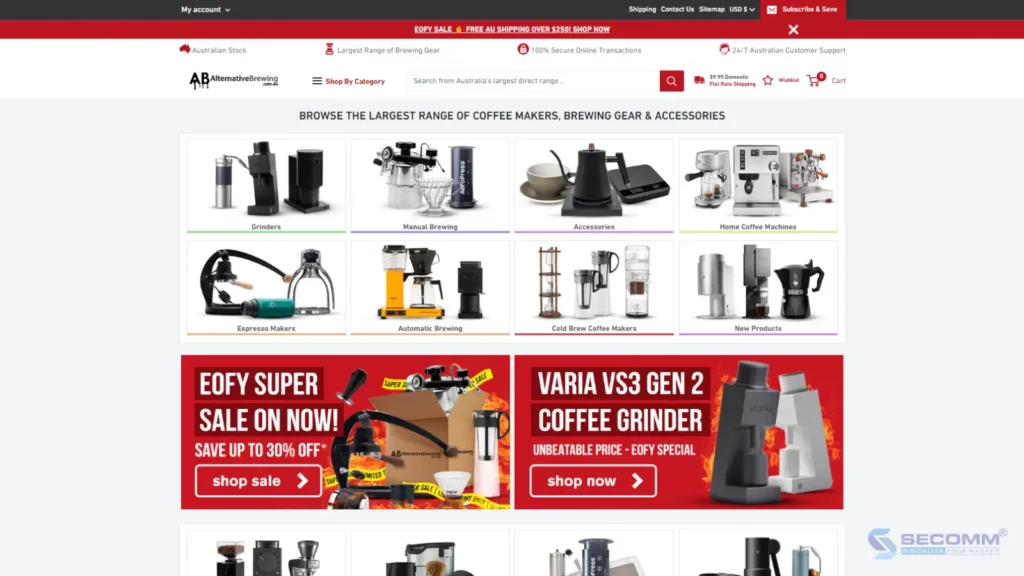
1. Alternative BrewingAlternative Brewing

Alternative Brewing is a leading brand in Australia specializing in providing high quality coffee making equipment and utensils. After operating on WooCommerce, Alternative Brewing encountered a problem. WooCommerce eCommerce websites require constant maintenance, causing a lot of worry on shopping occasions like Black Friday or Cyber Monday.

Within 4 months of converting to the Shopify Plus platform, Alternative Brewing’s new eCommerce website loaded faster and had faster checkout, helping the brand significantly increase average order value. Shopify Plus platform with an intuitive, user-friendly interface, Alternative Brewing does not need to deal with a lot of complicated code. This allows the Alternative Brewing team to focus on growing their business and make more informed decisions with Shopify’s in-depth reports and analytics.

Website: https://alternativebrewing.com.au/

Industry: FnB

Traffic: 919,295/month

Rank: #3,071 (Australia) & #144,195 (Global)

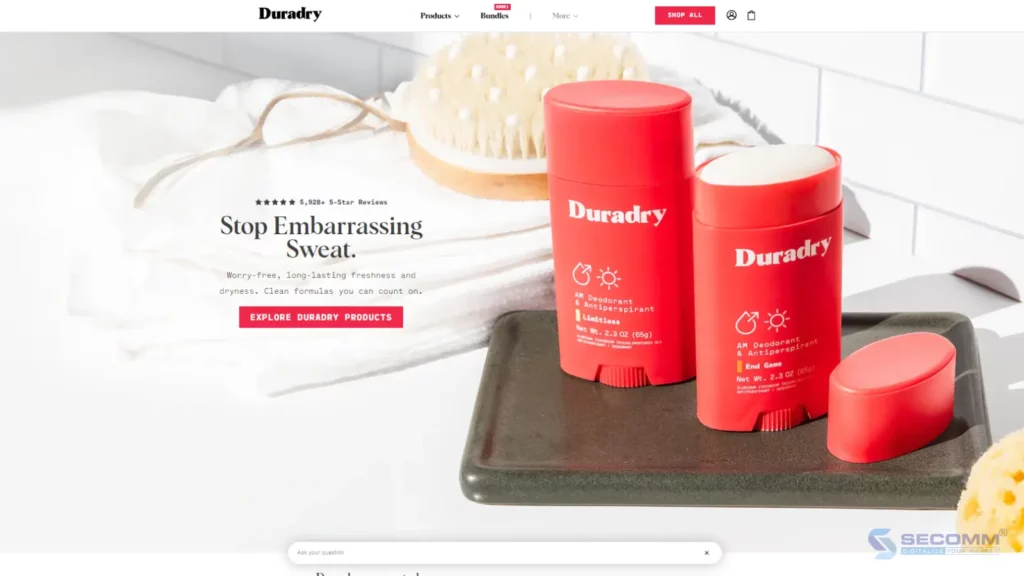
2. DuradryDuradry

Duradry is a leading personal care brand that offers effective antiperspirant products. Operating on WooCommerce costs Duradry a lot of money when testing many different marketing campaigns. The brand migrated to the Shopify Plus platform to take advantage of many exclusive tools and solutions that help them optimize operations and deploy marketing processes more effectively.

Duradry also leverages Shopify Collabs to partner with popular content creators to drive marketing success, bringing Duradry products to more potential customers. The result was 250 content creators joining Duradry’s community, $50k in sales through Shopify Collabs in less than 7 months.

Website: https://duradry.com/?view=hero-a

Industry: Beauty & Cosmetics

Traffic: 386,080/month

Rank: #119,405 (USA) & #445,775 (Global)

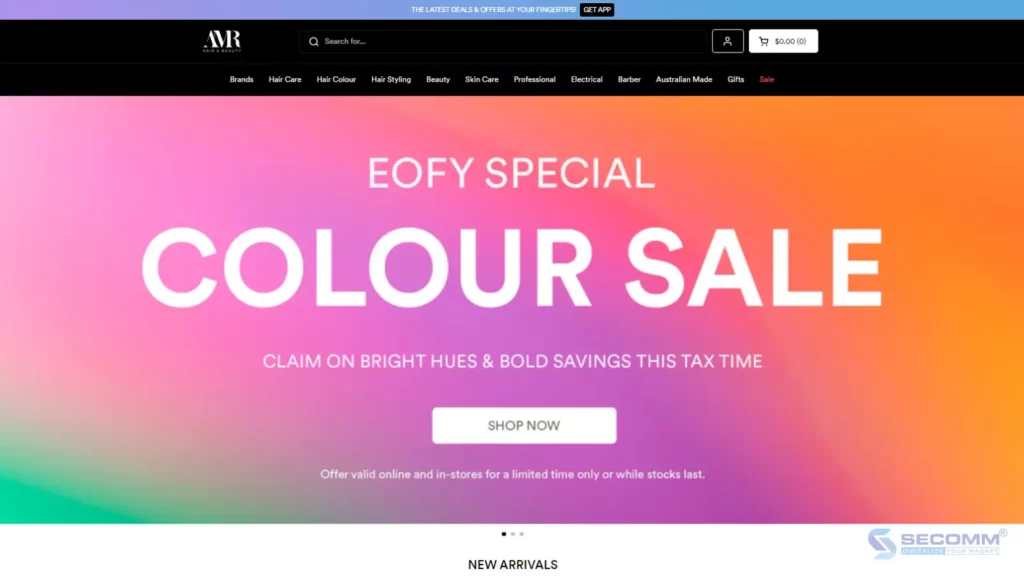
3. AMR Hair & BeautyAMR Hair & Beauty

AMR Hair & Beauty is one of the leading suppliers of hair care and beauty products in Australia. Established in 2004, AMR has quickly grown to become a trusted destination for hair salons and individual consumers.

Although WooCommerce has served AMR Hair & Beauty well for many years, with the rapid growth of the business, the platform began to show its limitations. Among them are limited scalability, difficult order management, poor security, and suboptimal customer support.

After switching to Shopify Plus, AMR Hair & Beauty leveraged the B2B on Shopify solution to build a wholesale store and further customize advanced search features and filtering options. This means AMR Hair & Beauty’s B2B customers can quickly narrow down search results and view products along with prices and offers. As a result, AMR Hair & Beauty increased sales by 200%, average B2B order value by 77%, and conversion rate by 93%.

Website: https://amr.com.au/

Industry: Beauty & Cosmetics

Traffic: 258,448/month

Rank: #8,360 (Australia) & #381,873 (Global)

4. Abode LivingAbode Living

Abode Living was founded in 1991 and since then the brand has become Australia’s leading supplier of luxury bed linen, using the highest quality European fabrics and sewing products in its own factories. I’m in Australia.

With the need to increase online sales in Australia and other markets, and upgrade customer experience. However, the previous platform the company used, WooCommerce, did not offer enough flexibility to customize advanced features. WooCommerce also doesn’t give Abode Living the ability to add international marketplaces to its existing eCommerce system. Switching to Shopify Plus met all of Abode Living’s goals. The brand saw a 15% increase in average order value, faster page load speeds, and faster responses.

Website: https://www.abodeliving.com/

Industry: Home Funishing

Traffic: 16,645/month

Rank: #57,874 (Australia) & #2,352,607 (Global)

Final Words

So, SECOMM has gathered insights from 14 representative brands that courageously stepped out of the “WooCommerce world” to revamp their eCommerce websites with Shopify Plus. These brands prioritize customer experience and streamlined processes, inspiring others to confidently opt for platform migration.
Contact SECOMM or call directly at (+84)28 7108 9908 for advice and implementation of the eCommerce migration process from WooCommerce to Shopify Plus today!

2
3,545
0
1
Top 14+ Brands Migrate from WooCommerce to Shopify Plus Pt2

When it comes to brands that re-platformed from WooCommerce to Shopify Plus, it’s good to read their success stories in sales behind.

In the second part of this series, let’s continue to delve into more brands that chose to migrate their eCommerce platforms from WooCommerce to Shopify Plus, and explore how this decision paved the way for boundless success.

1. HiSmileHiSmile Shopify Plus

HiSmile is a globally renowned brand for teeth whitening products, aiming to help customers achieve a bright, confident smile. Founded in 2014 in Australia, HiSmile quickly gained attention due to its high-quality, easy-to-use, and effective products.

In the early days of its eCommerce operations, HiSmile’s WooCommerce website performed well. However, as HiSmile gained recognition and became more popular, website traffic began to surge, especially during sales events. Page load issues and site crashes cost the HiSmile team a lot of money in repairs and maintenance. Therefore, they decided to seek a more robust and stable solution and chose Shopify Plus.

With the new Shopify Plus website, HiSmile boosted its social media sales strategy and expanded into the global market. To date, HiSmile has attracted over three million social media followers, 5.5 billion social media impressions, and over 1.5 billion views on its social media videos. These numbers demonstrate the brand’s extensive customer reach. Additionally, global sales have significantly increased since the transition.
Website: https://int.hismileteeth.com/

Industry: Beauty & Cosmetics

Traffic: 4.55M/month

Rank: #10,390 (USA) & #33,392 (Global)

2. Muscle NationMuscle Nation Shopify Plus

Muscle Nation is renowned in the fitness and sports fashion industry, established with the goal of providing high-quality products tailored to the needs of fitness enthusiasts. The Muscle Nation team focuses on delivering an optimal customer experience and implements social media sales strategies. In its first year, the brand earned $1 million in revenue. At that time, Muscle Nation only had a basic website with eCommerce integration, which led to performance issues and a decline in sales.

Since transitioning to the Shopify Plus platform, Muscle Nation has leveraged the superior ecosystem of apps and tools offered by Plus to customize customer experiences and specific features. The brand uses Shopify Flow to manage high-risk orders and tag customers, Launchpad to handle product releases and event launches, and Peoplevox for warehouse management.

As a result, Muscle Nation generated over $4 million in revenue on Black Friday 2019 and handled more than 208,000 customers shopping simultaneously without any website issues.

Website: https://musclenation.org/

Industry: Fashion

Traffic: 961,900/month

Rank: #2,676 (Australia) & #137,488 (Global)

3. JunglückJunglück Shopify Plus

Junglück is a renowned cosmetics brand in Germany, known for its natural and environmentally friendly skincare products. Initially, Junglück used WooCommerce to manage its online store. However, with the brand’s rapid growth, WooCommerce began to show limitations, including slow page load speeds, poor website performance, and restricted integration and scalability.

The cosmetics brand decided to switch to the Shopify Plus platform. This transition allowed Junglück to seamlessly integrate with various third-party systems such as CRM and ERP, enhancing operational efficiency. As a result, Junglück increased its revenue sevenfold since implementing the Shopify Plus website, boosted average order value by 22%, and improved conversion rates by 34%.

Website: https://junglueck.de/

Industry: Beauty & Cosmetics

Traffic: 355,059/month

Rank: #12,653 (Germany) & #308,899 (Global)

4. LVLYLVLY Shopify Plus

LVLY is a prominent brand in the gift and fresh flower arrangement industry, known for its sophistication and modern style. Each LVLY product is meticulously designed and delivered promptly to the recipient, perfectly conveying messages of love and care.

Previously, LVLY used the WordPress platform and WooCommerce plugin to build its eCommerce website. The brand encountered many customization limitations, and the basic features gradually failed to support expansion. Particularly during major shopping events, the system became overloaded and couldn’t handle the high traffic volume. LVLY decided to switch to the Shopify Plus platform. The platform migration took less than 90 days without reducing the conversion rate. The scalability of Shopify Plus helped LVLY achieve its biggest Valentine’s Day sales ever in 2023. Personalization options and add-ons, which LVLY could not implement on its previous platform, also played a crucial role in the cross-sell/up-sell strategy during this shopping event.
Website: https://www.lvly.com.au/

Industry: Gifts & Flowers

Traffic: 354,352/month

Rank: #6,734 (Australia) & #334,427 (Global)

5. Mandaue FoamMandaue Foam Shopify Plus

Since its establishment in 1971, Mandaue Foam has become an indispensable name in the furniture industry in the Philippines. After four years of using the standard Shopify version, Mandaue Foam upgraded to Shopify Plus to seek solutions for expansion and customization.

The brand utilized LaunchPad – an exclusive feature of Shopify Plus – to schedule marketing campaigns and automate product price updates and discounts. Because LaunchPad allows tracking the performance of each campaign in real-time, the Mandaue Foam team can understand customer behavior and adjust campaigns accordingly.

Next, with Shopify Flow, Mandaue Foam automated its order management process by creating a workflow where, as soon as an order is placed, one of the 28 physical locations with inventory for that product is notified to process the order. This process ensures order fulfillment speed while eliminating the need for manual order tracking.

The platform switch and the implementation of eCommerce automation have helped Mandaue Foam increase order volume by 200%, total sales by 151% YOY, and customer return rate by 16%.

Website: https://mandauefoam.ph/

Industry: Furniture

Traffic: 486,503/month

Rank: #2,745 (Philippines) & #170,520 (Global)

Final Words

Here are the next 5 brands in the series re-platform from WooCommerce to Shopify Plus. Throughout SECOMM’s process of executing platform conversion projects, whether from WooCommerce or any other eCommerce platform to Shopify Plus, the pivotal factor determining success is a detailed and well-structured conversion plan.

Contact SECOMM or directly call the hotline at (028 7108 9908) to collaborate on devising the optimal plan for the platform migration to Shopify Plus.

2
3,232
0
1
Explore articles by category
ECOMMERCE ECOSYSTEM
ECOMMERCE KNOW-HOW
ECOMMERCE MARKET
ECOMMERCE PLATFORM
SECOMM NEWS
What is eCommerce Integration? Foundation of eCommerce Automation

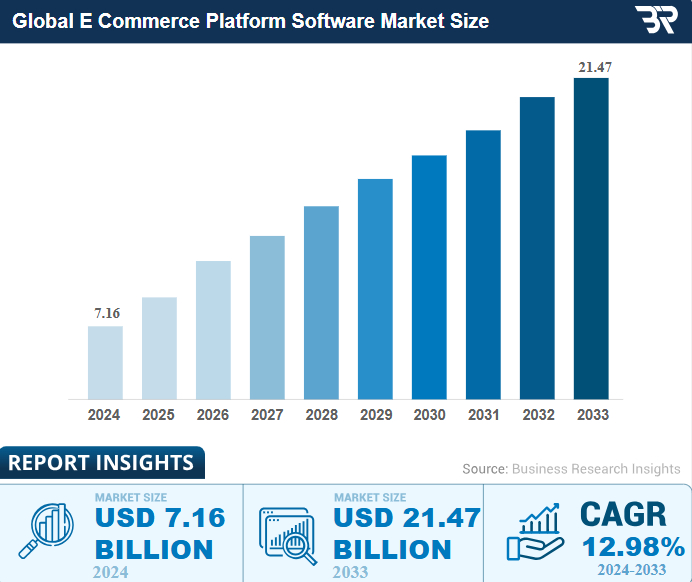
According to Business Research Insights, in 2023, the global e-commerce platform market size will exceed $7 billion, with projections to surpass $24 billion by 2031. The eCommerce market is growing fast and expected to triple by 2031. Yet, many businesses still struggle with disconnected systems that slow operations and fragment data. The solution lies in connecting everything that drives your online businesseCommerce Integration. So, What is eCommerce integration?  Foundation of eCommerce automation?  

SEOCOMM - Global eCommerce Platform Marketsize

What Is eCommerce Integration?

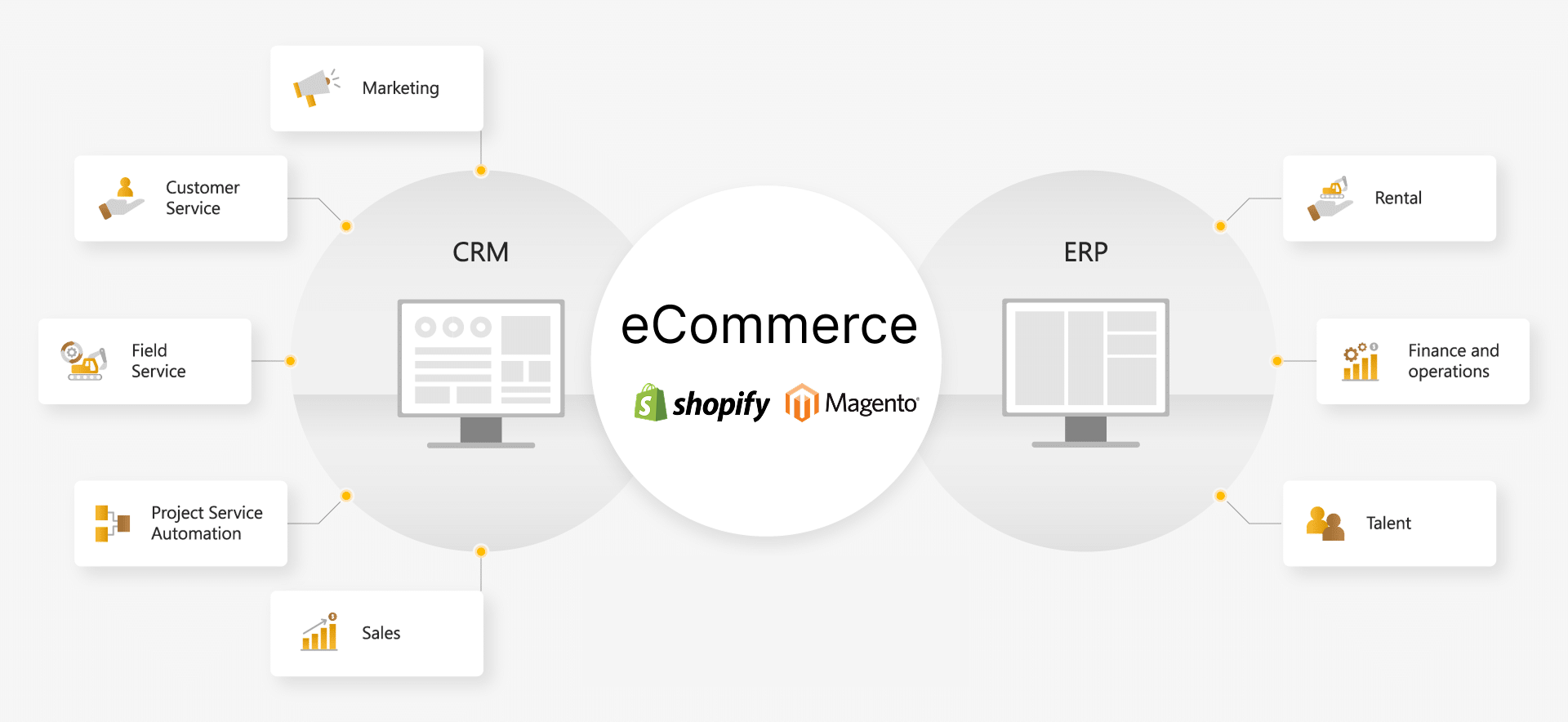
eCommerce integration is the process of connecting all digital systems that your online business relies on  from storefronts and inventory to marketing and finance. Rather than treating each tool as a standalone platform, integration transforms them into one cohesive ecosystem where data flows freely, automatically, and accurately. 

In simple terms, integration means your ERP, CRM, OMS, payment gateways, and marketing platforms can “talk” to each other, allowing your operations to run smoothly and your teams to focus on growth, not manual tasks. 

When systems are integrated properly, your business gains transparency, speed, and scalability. You no longer need to manually update stock, export customer data, or reconcile reports – the systems do that for you, in real time. 

SECOMM-ecommerce-integration

Why Integration Matters? 

Integration does more than link software; it creates the foundation for automation and intelligent decision-making.
When your eCommerce tools share data seamlessly, you can: 

  • Eliminate duplicate work and human error 
  • Offer a consistent customer experience across all channels 
  • React to real-time insights faster 
  • Scale your business efficiently 

In other words, integration transforms your operations from reactive to proactive — giving you full control over your business ecosystem. 

Core Integration Types Every eCommerce Business Should Have

To build a truly connected and future-ready eCommerce ecosystem, businesses need a few key types of integration that unify all aspects of their operations.

Let’s explore the main categories that make modern commerce run efficiently:

1. eCommerce Integration with Business Administration (ERP & CRM)

ERP and CRM systems form the operational core of any eCommerce business. ERP manages financials, products, and inventory, while CRM centralizes customer profiles, interactions, and engagement data. When integrated, these systems give your business a unified view of both operations and customers. 

Benefits: 

  • Real-time synchronization between sales, finance, and customer records. 
  • Improved forecasting and inventory control. 
  • Personalized marketing and better customer retention. 

Example: Integrating SAP Business One or Odoo ERP with Salesforce or HubSpot CRM enables automatic updates from orders to invoices and customer engagement data. 

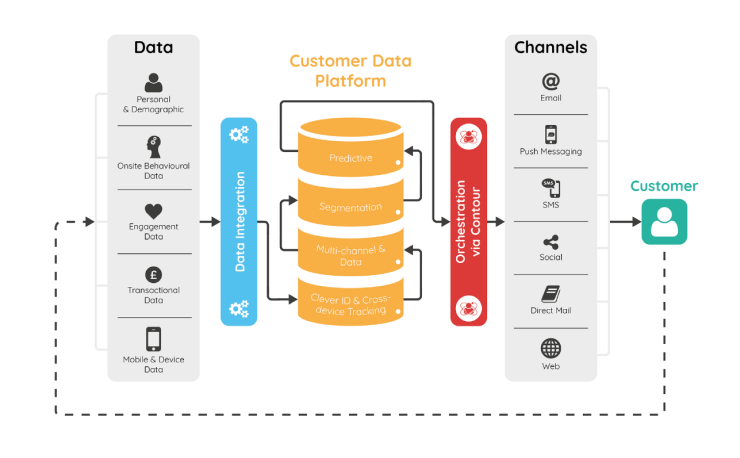
For enterprises managing massive data warehouses and fragmented data sources beyond standard CRM capabilities, implementing a Customer Data Platform (CDP) is the key to achieving a truly unified Single Customer View. Learn more about when to upgrade: What is a CDP? Comparing CDP and CRM

SECOMM-eCommerce CRM-ERP

2. eCommerce Integration with Operations & Logistics (OMS & WMS)

Order Management Systems (OMS) and Warehouse Management Systems (WMS) ensure that every order is processed efficiently and accurately. Integration between these systems automates fulfillment, reduces human error, and provides full visibility into inventory. 

Benefits: 

  • Automated order routing and warehouse synchronization. 
  • Real-time stock visibility for customers and staff. 
  • Faster, error-free order fulfillment. 

Example: Platforms like Manhattan Associates, NetSuite WMS, or ShipStation can integrate with eCommerce stores using middleware tools such as Boomi or Celigo. 

3. eCommerce Marketing Integration

Marketing integration bridges the gap between your online storefront and essential digital marketing ecosystems, such as Email Automation, CRM, and behavioral analytics platforms.

By establishing bi-directional data synchronization, businesses can move beyond manual processes to automate campaigns, hyper-personalize the customer journey, and measure marketing ROI with precision.

Key Benefits:

  • Real-Time Segmentation: Execute campaigns based on live customer data and segmentation.
  • Automated Workflows: Streamline post-purchase care chains or trigger abandoned cart reminders automatically.

  • Unified Analytics: Gain a holistic view of performance by cross-referencing sales data with marketing metrics.

Practical Application: Integrating robust platforms like Shopify or Magento with tools such as Klaviyo, Mailchimp, or HubSpot Marketing Hub allows businesses to trigger automated email flows tailored specifically to user purchasing behavior.

4. eCommerce Payment Integration

Payment integration connects your website directly with secure payment gateways, ensuring that every checkout process is swift, automated, and fully transparent.

By embedding these systems, businesses create a seamless financial workflow that enhances the customer experience while optimizing backend operations.

Key Benefits:

  • Streamlined Processing: Accelerates transaction speeds while significantly reducing manual entry errors.

  • Automated Financials: Enables automatic transaction reconciliation and real-time financial reporting.

  • Enhanced Security: Ensures strict adherence to PCI-DSS security standards, boosting brand credibility and customer trust.

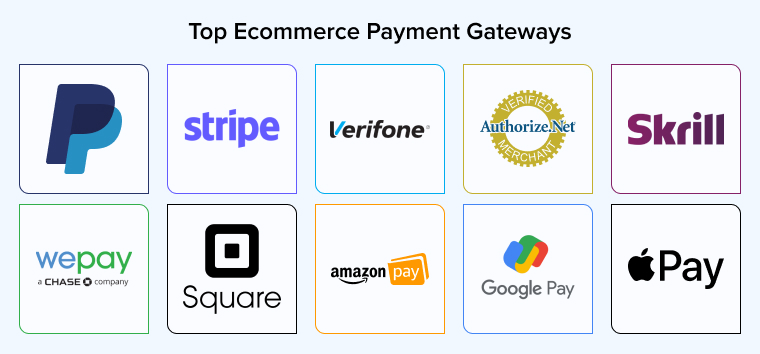
Practical Application: Connecting global and local providers like Stripe, PayPal, ZaloPay, or MoMo directly to your eCommerce system ensures that every transaction is automatically updated in your accounting software and order management system.

SECOMM-eCommerce-integration-payment

5. eCommerce Integration with Data Analytics & Reporting

Integrating analytics tools centralizes critical information, ranging from sales and marketing to logistics into a single, unified dashboard. This creates a “Single Source of Truth” for your enterprise, eliminating data silos.

By consolidating these data streams, businesses can transition from reactive reporting to proactive, data-driven decision-making.

Key Benefits:

  • 360° Business View: Gain comprehensive visibility over all operational activities.

  • Real-Time Reporting: Monitor performance metrics and KPIs as they happen, not days later.

  • Unified Data Consistency: Ensure all departments—from marketing to inventory—are aligned with the same accurate datasets.

Practical Application: Aggregating data streams from diverse sources (Websites, Marketing channels, CRM, and eCommerce platforms) into visualization tools like Google Looker Studio, Power BI, or Tableau. This enables deep, comprehensive analysis of omnichannel performance

. 

eCommerce eCommerce integration report


6. eCommerce Integration with Omnichannel Experience

Omnichannel integration bridges the gap between your branded website, physical retail locations (POS), and third-party marketplaces, delivering a truly unified experience for your customers.

By dismantling the barriers between channels, businesses ensure that the customer journey is seamless, regardless of where the transaction begins or ends.

Key Benefits:

  • Unified Synchronization: Ensure pricing, promotions, and inventory levels are identical and up-to-date across every channel.

  • Centralized Management: Consolidate orders from all sources into a single interface, simplifying fulfillment and logistics.

  • Brand Consistency: Elevate customer loyalty and brand recognition by providing a consistent standard of service everywhere.

Practical Application: Leveraging middleware solutions like Celigo or Make.com to connect core platforms (e.g., Shopify Plus, Magento) with marketplaces like Shopee or Lazada. This ensures inventory, pricing, and customer data are synchronized in real-time.

The Business Impact of eCommerce Integration 

Integration directly impacts every core metric that matters to online retailers: 

  • Efficiency: Teams spend less time on repetitive tasks. 
  • Accuracy: Data stays consistent across departments. 
  • Customer Experience: Faster, more personalized service. 
  • Scalability: Easier expansion into new channels or markets. 
  • Profitability: Reduced costs and higher operational visibility. 

Put simply, integration is no longer a technical upgrade; it’s a strategic necessity for sustainable eCommerce growth. 

Conclusion 

As the digital commerce landscape becomes more complex, integration defines how efficiently a business can operate and how quickly it can grow. It connects people, processes, and platforms into one intelligent system, laying the foundation for automation, innovation, and long-term success. 

Secomm helps businesses design, build, and optimize integrated eCommerce ecosystems, transforming disconnected operations into streamlined, automated growth engines. 

FAQ 

1. Why is integration required before automation?
Automation can only deliver value when systems share accurate, synchronized data. If your store, inventory, or CRM operate separately, automation may simply replicate existing errors at a faster scale. Integration connects every system - ensuring that when one action occurs (like a sale), all related platforms update instantly. In short, integration builds the data consistency automation needs to function correctly, preventing mismatched orders, duplicate records, or inaccurate reports.
2. Which systems should be integrated first?
Every eCommerce business should begin with the core operational systems: ERP (Enterprise Resource Planning): Manages products, stock, and financial data. CRM (Customer Relationship Management): Stores customer profiles, behaviors, and engagement history. OMS (Order Management System): Coordinates orders, fulfillment, and returns. Integrating these three first creates a unified operational core, where product updates, customer data, and order tracking flow automatically. Once this foundation is stable, you can expand integration into marketing, payments, and analytics systems for full automation.
3. How long does an integration project take?
The duration depends on system complexity, data volume, and API readiness. For smaller businesses with standard platforms (e.g., Shopify + HubSpot + Xero), integration may take 2-4 weeks. For mid- to large-scale enterprises using custom ERP or multi-store setups, timelines can extend to 3-6 months. At Secomm, integration projects follow a structured process: discovery → mapping → development → testing → optimization. This ensures stability, scalability, and security before automation is implemented.
4. Should small businesses invest in integration?
Absolutely, integration isn’t only for enterprises, it’s one of the most cost-effective growth enablers for small and mid-sized businesses. By connecting sales channels, payment gateways, and inventory systems, even small online stores can: Reduce repetitive manual work (like updating stock or customer lists). Improve order accuracy and processing speed. Gain visibility into performance across all channels. As your business grows, integrated systems make scaling seamless, without the need to rebuild your entire digital infrastructure.
50
5,506
0
20
Latest ebooks
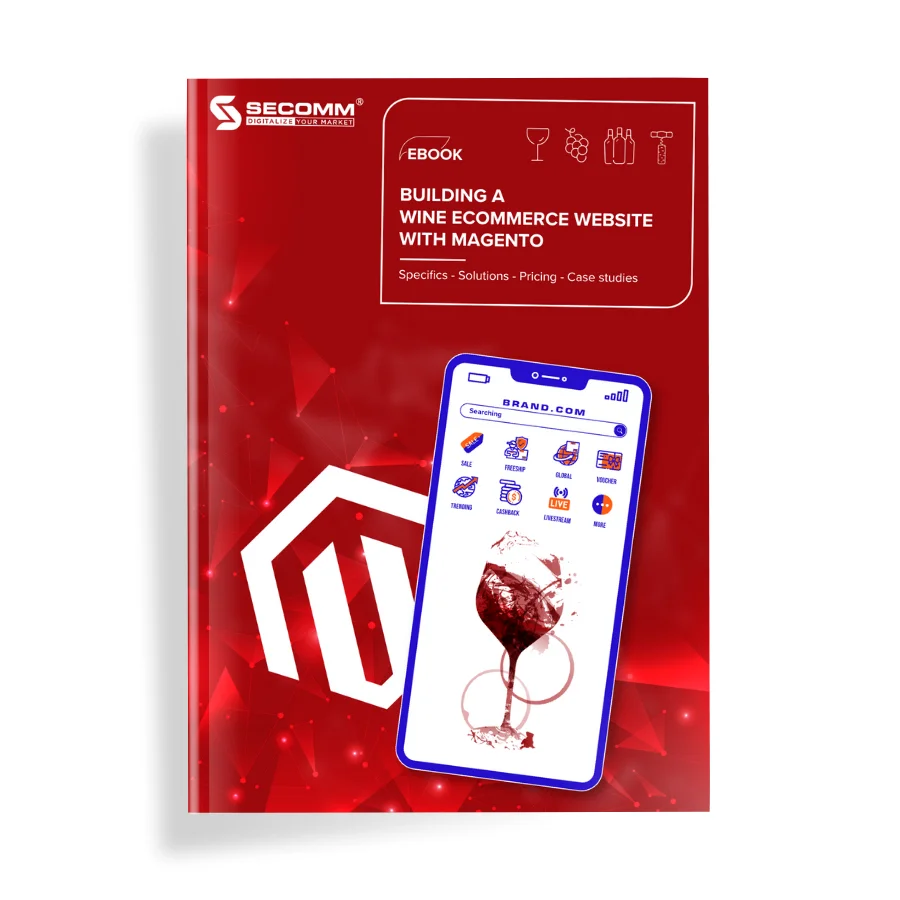
Building A Wine eCommerce Website With Magento
One of the highest requirements when implementing wine eCommerce website is a system with high complexity.
4
28
0
4
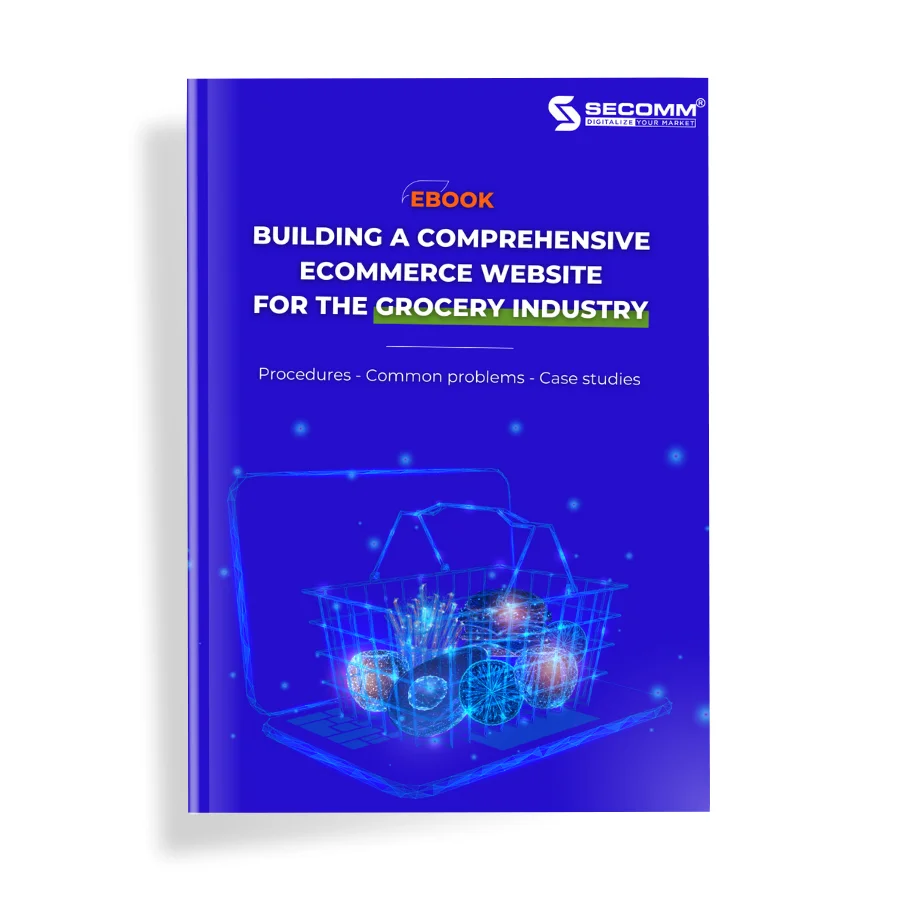
Building A Comprehensive eCommerce Website For The Grocery Industry
This eBook is a must-read for businesses looking to capitalize on the burgeoning eGrocery market and navigate its complexities with proven strategies.
4
38
0
0
The Solution Of O2O Commerce For Businesses In Vietnam
This eBook is a must-read for businesses looking to harness the power of O2O commerce in Vietnam, offering valuable strategies and real-world success stories.
4
33
0
0

    Subscribe for the latest updates and exclusive content!