












It seems we can’t find what you’re looking for. Perhaps searching can help.
Sign Up for newsletter!
Subscribe to get the latest eBook!

Hotline
(+84) 28 7108 9908





According to research from Omnisend, campaigns that use three or more channels achieve a purchase rate approximately 287% higher than single-channel campaigns. Omnichannel customers also have an average lifetime value around 30% greater than customers who shop through only one channel. In today’s highly competitive landscape, adopting AI in omnichannel retail is no longer a “nice-to-have” but a “must-have”.
This article explores how AI-driven omnichannel strategies are revolutionizing the retail landscape, offering businesses new ways to leverage technology for long-term, sustainable growth
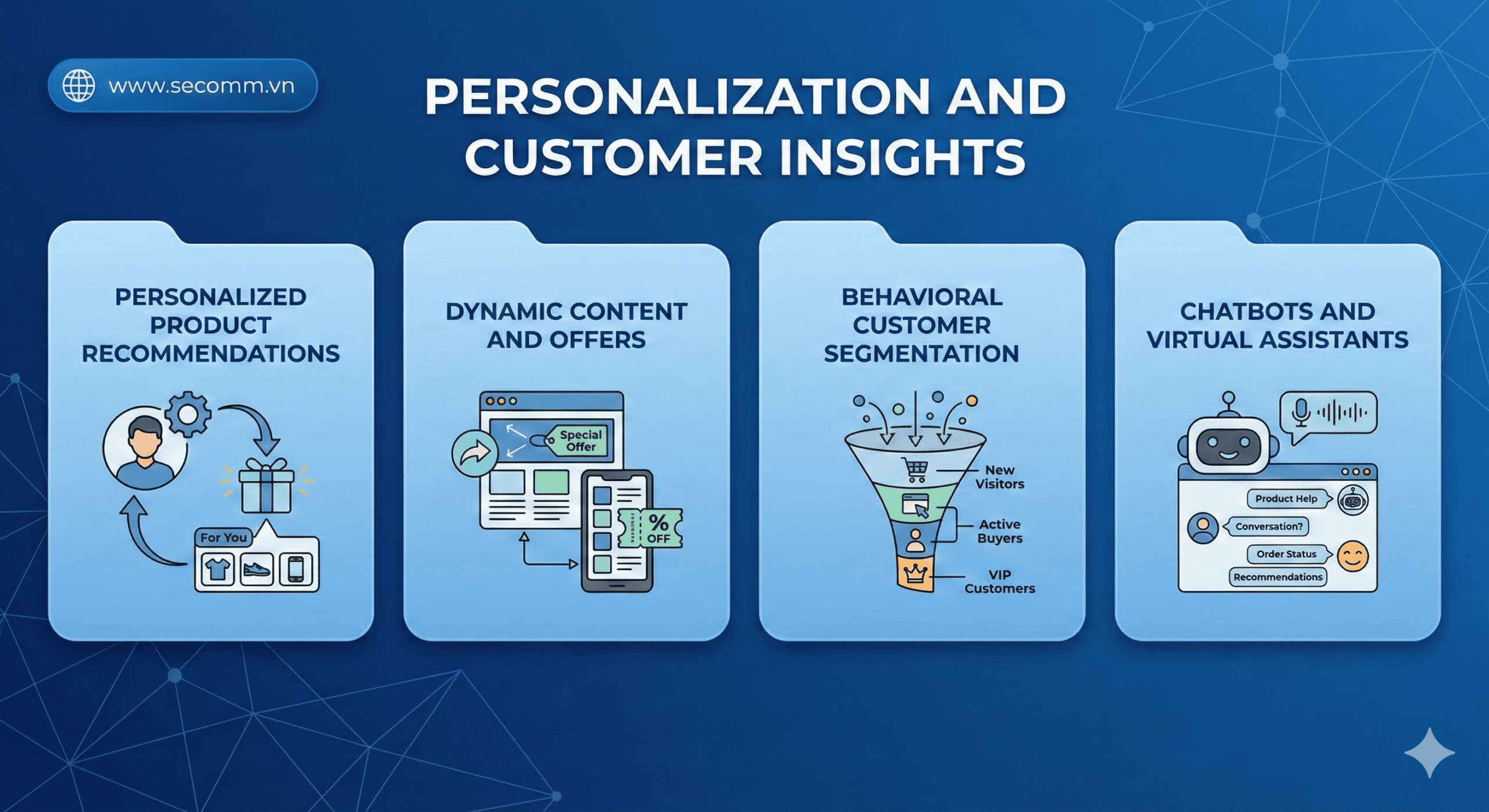
AI enables retailers to deliver personalized experiences by leveraging customer data from multiple sources. With machine learning (ML) algorithms, businesses can analyze browsing behavior, purchase history, and even social media interactions to build a comprehensive customer profile. This profile is then used to power product recommendations, services, and content tailored to each individual. Key AI applications in personalization and customer intelligence include:
AI-driven recommendation engines analyze data across all channels to suggest the most relevant products to each customer, thereby increasing conversion rates. For instance, when a shopper searches for a product on a mobile app, AI algorithms can recommend related items based on their purchase history and browsing behavior across platforms. Around 80% of consumers are willing to buy more from brands that offer a personalized experience.
With AI, retailers can trigger timely promotions for the right customer segments. If a shopper views a product on the website but leaves without purchasing, AI can automatically send a personalized discount code via email or mobile push notification to encourage them to return and complete the order. This approach boosts engagement and significantly reduces cart abandonment.
AI supports behavioral segmentation, allowing retailers to cluster customers based on how they shop and interact with the brand. Frequent shoppers can be rewarded with VIP privileges, while low-frequency customers can be targeted with limited-time offers designed to re-engage them and increase purchase frequency.
AI-powered chatbots deliver personalized support by accessing customer profiles, order history, and browsing activity. Operating 24/7, chatbots can handle FAQs, assist with product discovery, and even cross-sell or upsell complementary items to increase average order value. A survey from PwC indicates that roughly 87% of consumers believe AI has improved their shopping experience, and 73% are willing to use AI chatbots for customer service during their purchase journey.
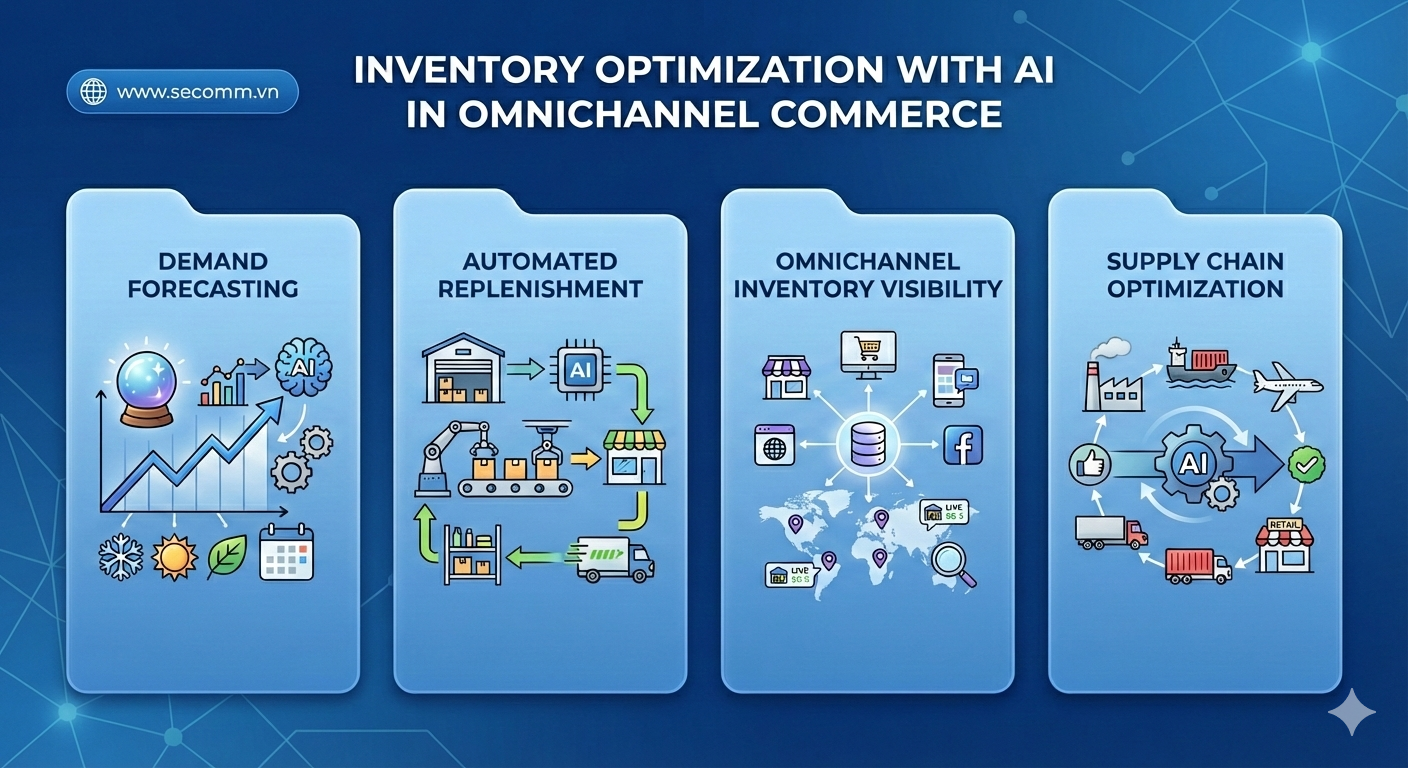
Inventory management in a traditional omnichannel environment is complex and often leads to stockouts or overstock. AI-powered inventory management systems streamline this process, enabling retailers to maintain optimal stock levels across all channels.
AI can forecast future demand by analyzing historical sales data, current trends, and external factors such as seasonality. With more accurate demand forecasting, retailers can avoid both out-of-stock situations and excess inventory, reducing markdowns and storage costs. Studies show that AI-driven demand forecasting can reduce forecast error by up to 30%.
Leveraging predictive analytics, AI can automate replenishment orders so that best-selling products are always available while minimizing the risk of dead stock. AI can also detect regional demand differences, allowing businesses to fine-tune inventory levels at each store. This creates a more responsive supply chain and can reduce stockout events by up to 40%.
AI provides real-time inventory visibility across all channels: online, in-store, and warehouse. Customers benefit from accurate stock information, while retailers can confidently implement services such as “Buy Online, Pick Up In-Store” (BOPIS) without operational friction. This level of visibility also supports more efficient inventory allocation, especially during peak demand periods.
AI-driven supply chain analytics help retailers optimize logistics and distribution. Algorithms can determine the most efficient delivery routes, streamline warehouse operations, and predict potential disruptions. This is particularly critical for retailers offering same-day or next-day delivery, where AI can identify the fastest and most cost-effective path from fulfillment centers to customers.
Read more: What is eCommerce Integration? Foundation of eCommerce Automation
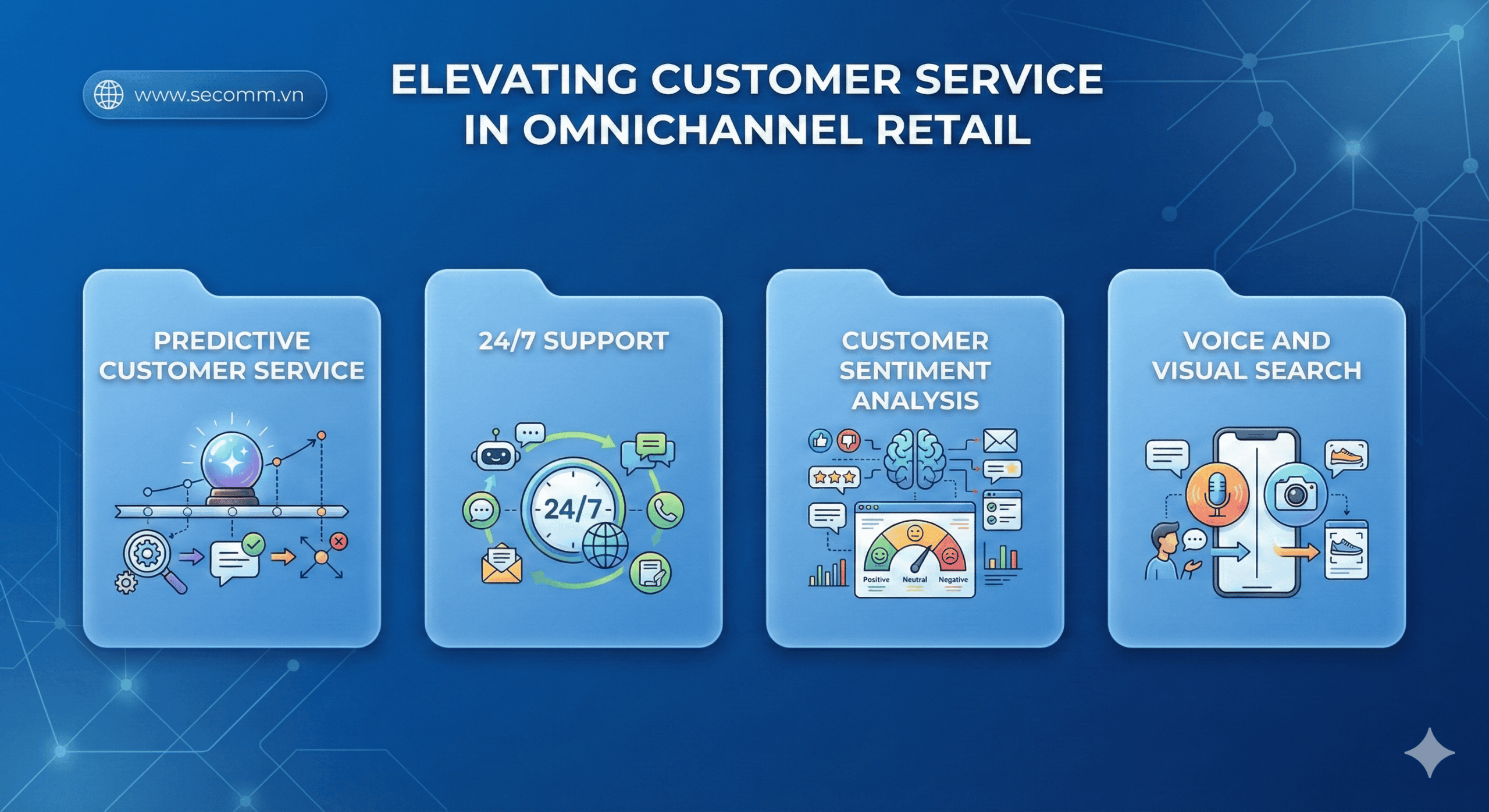
Customer service is a core component of the omnichannel experience, and AI is redefining how retailers engage with shoppers across touchpoints. From virtual assistants to AI-powered analytics, these tools ensure every interaction is more efficient and more relevant.
AI can anticipate support needs before customers submit a ticket. For example, if a customer repeatedly returns a specific product, AI can flag this pattern and alert the customer service team to proactively reach out. This level of predictive service helps reduce churn and strengthens brand loyalty.
AI-powered chatbots and virtual assistants provide round-the-clock support across all channels, reducing waiting times and enhancing customer satisfaction. These virtual agents can handle routine inquiries, track orders, and assist with returns, freeing human agents to focus on complex, high-value interactions.
AI-based sentiment analysis tools allow retailers to monitor customer satisfaction by analyzing feedback across social media, email, and support tickets. The technology can detect negative sentiment in real time, enabling teams to take immediate corrective action to protect the customer experience.
With AI, retailers can offer voice search, allowing customers to find products without typing, which is especially impactful on mobile. Visual search lets shoppers upload images to discover similar items, delivering a more intuitive and convenient product discovery experience aligned with modern consumer behavior.
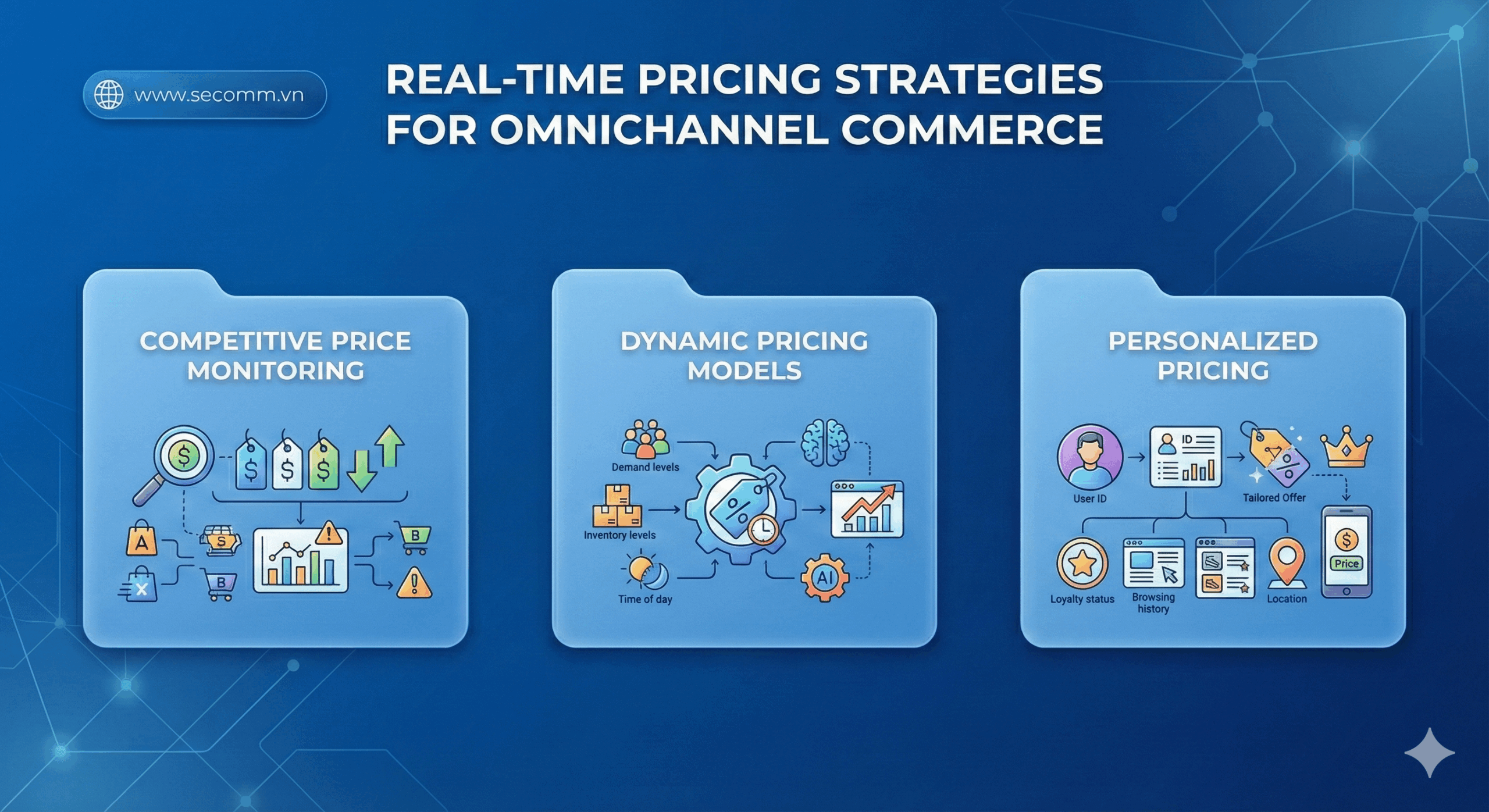
Dynamic pricing is another powerful AI use case, allowing retailers to adjust prices in real time based on demand, competition, and other market variables. This is particularly important for omnichannel retail, where price consistency and responsiveness are critical to customer trust.
AI algorithms can continuously monitor competitors’ prices and adjust a retailer’s prices accordingly, helping maintain competitiveness while protecting margins. This is essential in an environment where customers can compare prices across platforms within seconds.
By leveraging historical sales data, seasonal trends, and customer behavior, AI models can determine optimal price points to maximize both revenue and profit. For instance, AI can increase prices during peak demand periods or trigger markdowns for slow-moving inventory to accelerate sell-through.
Personalized pricing focuses on offering individual discounts or loyalty incentives based on each customer’s shopping behavior. By analyzing purchase frequency, loyalty, and spending patterns, AI can generate tailored offers that drive engagement and increase customer lifetime value.
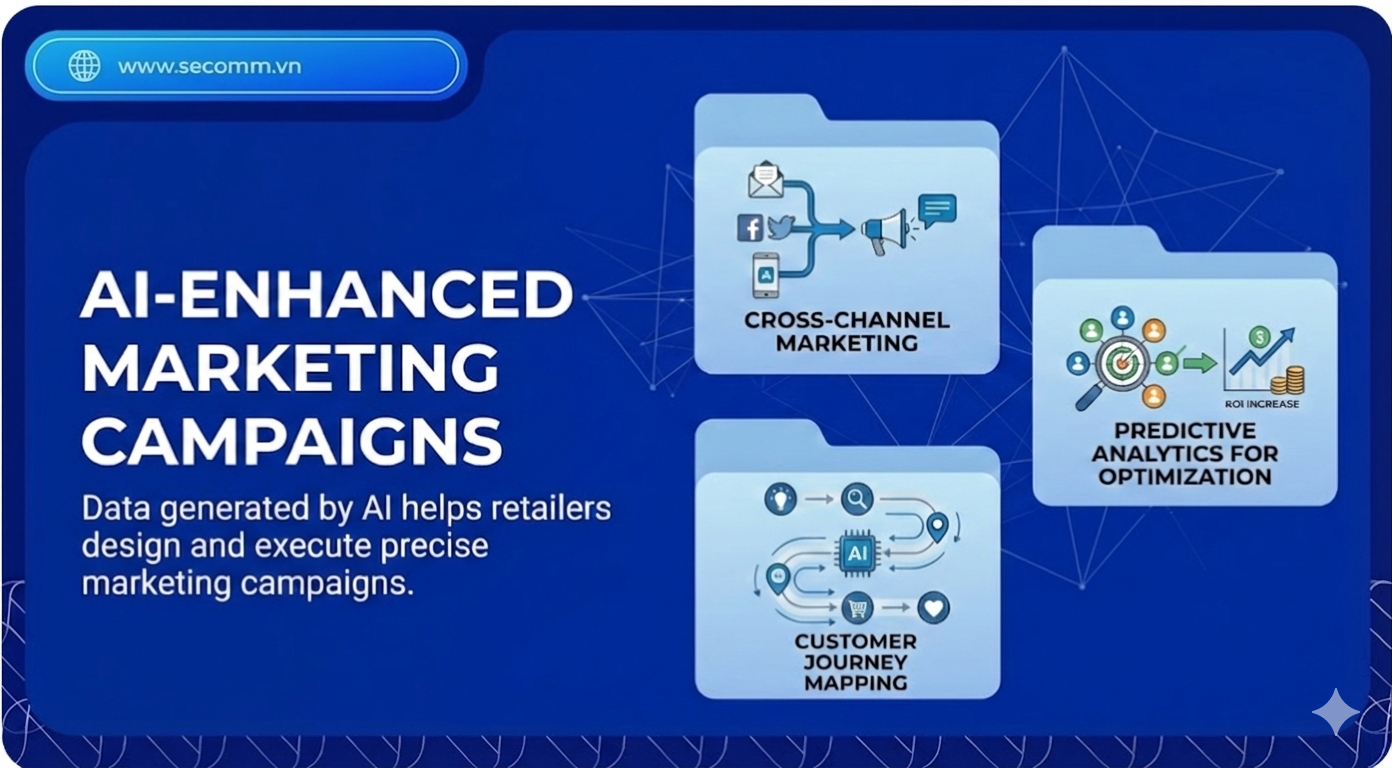
AI-generated insights empower retailers to design and execute more precise marketing campaigns, ensuring they reach the right customers at the right time. Multichannel data analysis makes marketing strategies more targeted and more efficient.
AI enables retailers to orchestrate integrated omnichannel marketing campaigns that reach customers via email, social media, mobile apps, and other digital touchpoints. This integration ensures consistent messaging, regardless of where customers interact with the brand.
Predictive analytics can identify which customer segments are most likely to respond to a given promotion, allowing marketers to optimize budget allocation. Campaigns can be adjusted in real time based on performance metrics, increasing ROI and engagement rates.
With AI, retailers can build detailed customer journey maps to understand how each touchpoint influences purchase decisions. This data supports hyper-targeted marketing at every stage-from awareness and consideration to conversion-enabling businesses to design strategies aligned with customer needs at each step.
While AI offers transformative advantages for Omnichannel retail, practical implementation remains fraught with strategic hurdles. To fully harness the potential of this technology, enterprises must identify and resolve four core challenges:
Faced with complex operational and data architecture challenges, businesses require a partner with proven technical expertise. With extensive experience in deploying complex eCommerce systems, SECOMM stands as a reliable partner, helping enterprises mitigate technical risks, optimize costs, and accelerate time-to-market.
Read more: Strategies for Applying AI in eCommerce to Enhance Operational Efficiency and Sales
AI is transforming omnichannel retail by enabling seamless integration across all customer touchpoints, from personalized recommendations to intelligent inventory management. As retailers continue to innovate, AI-driven omnichannel strategies will sit at the heart of superior shopping experiences, stronger brand loyalty, and sustainable profitability.
Are you ready for a new wave of retail transformation in 2026? With more than 10 years of experience delivering specialized eCommerce solutions for leading enterprises in Vietnam and overseas markets, SECOMM is ready to partner with you to build a secure, scalable, and high-performing omnichannel ecosystem.
Contact SECOMM today for tailored omnichannel consulting that aligns with your business model and long-term growth strategy.
 50
50
 5,905
5,905 2
2 20
20
Artificial Intelligence is no longer a distant technological concept or a temporary trend. According to the annual Future of Commerce Report by Shopify, 41% of retail businesses are actively integrating AI into their core systems to optimize operations in 2024. Businesses are no longer asking, “Should we use AI?”, but rather, “How can we convert this technology into tangible profit?”.
In this article, SECOMM will deeply analyze the role of AI through practical data, detailing Strategies for Applying AI in eCommerce to Enhance Operational Efficiency and Sales
One of the biggest challenges for retail and manufacturing businesses is managing thousands, or even tens of thousands, of SKUs (Stock Keeping Units). Manually writing descriptions for each product is not only costly in terms of human resources but also lengthens the time it takes to bring a product to market.
Practical Data:
Proposed Solutions:
Suggested AI Tools:
Customers today don’t just buy products; they buy a “validated and understood experience”. Displaying generic content is increasingly becoming the main reason for high bounce rates.
Practical Data:
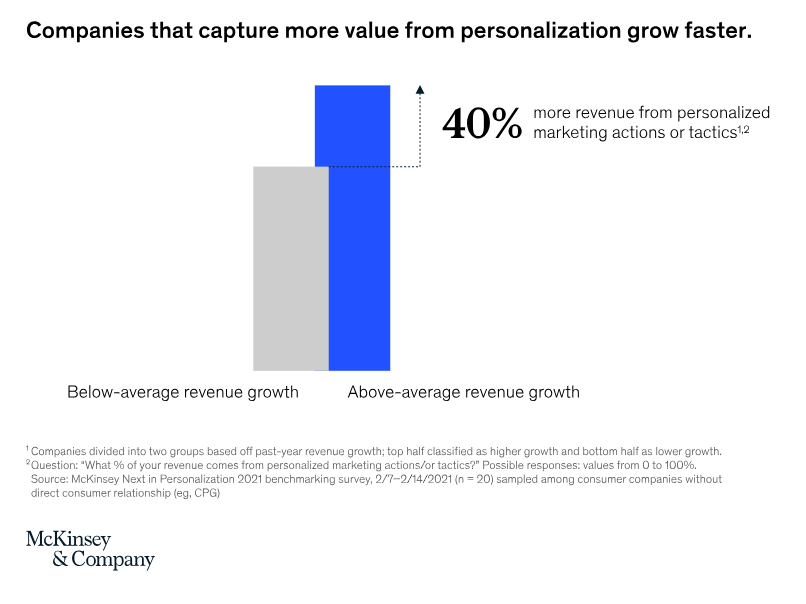
Proposed Solutions:
Suggested AI Tools:
This is the “submerged part of the iceberg” that is less often mentioned but determines the success of the eCommerce system. Messy product data lacking attributes will cause the AI tools mentioned above to perform poorly or yield incorrect results.
Practical Data:
Proposed Solutions:
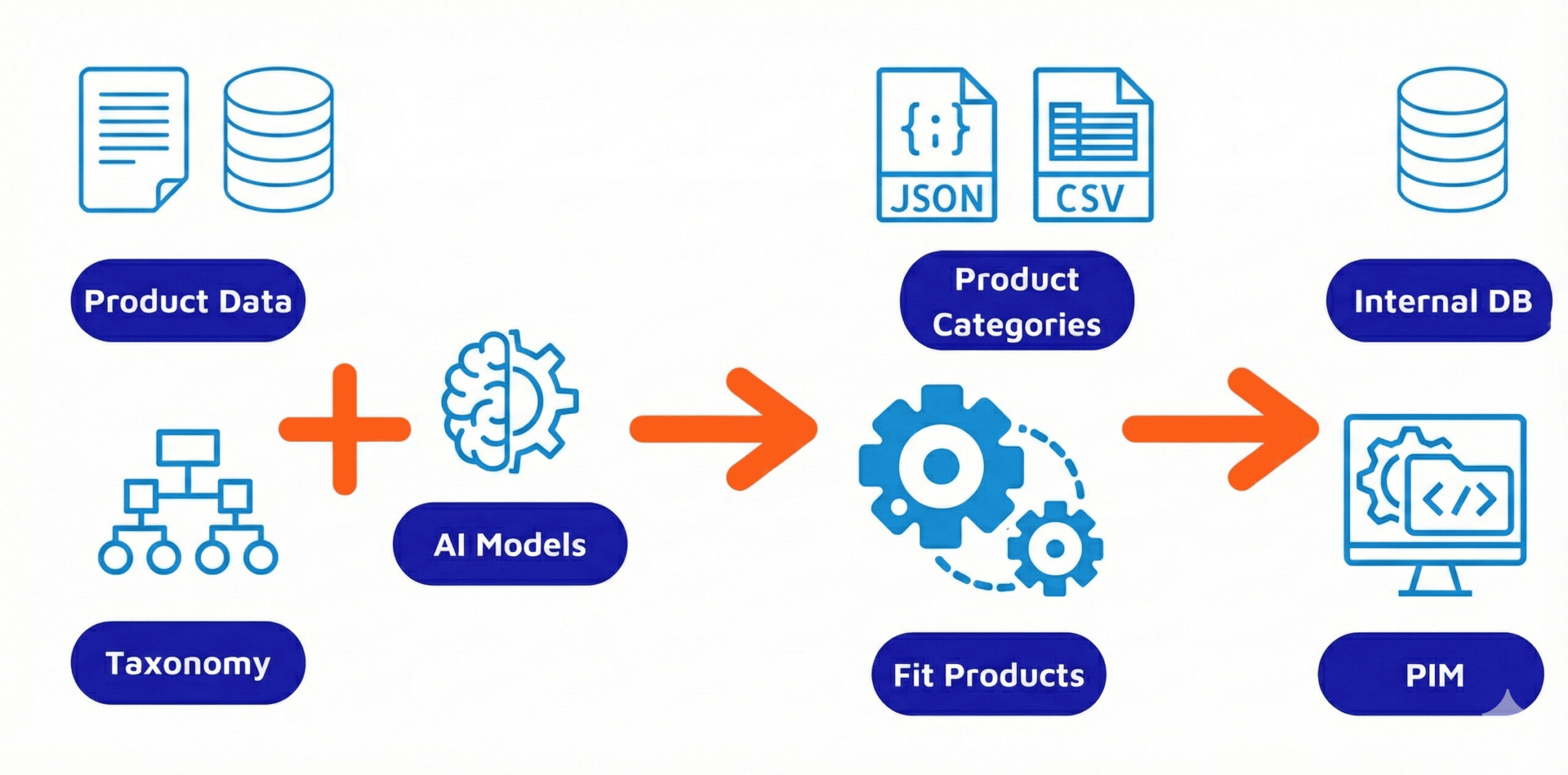
Suggested AI Tools:
Although the benefits are immense, AI deployment is not a “magic spell” without the right strategy.
The application of AI in eCommerce is no longer a fleeting trend, but a strategic lever for businesses to break through in a fiercely competitive landscape. From content automation to customer experience optimization, AI helps businesses achieve more with fewer resources. However, this journey requires a solid technology foundation and a long-term strategic mindset.
Is your business ready for the AI eCommerce era?
Contact SECOMM today for a consultation on your digital transformation roadmap, building a robust eCommerce system, and integrating the latest technology solutions.
 Should Small and Medium-sized Enterprises (SMEs) invest in AI, or is it only for large corporations? Is integrating AI into existing eCommerce systems (like Magento, Shopify) complicated? Are there risks related to customer data security when using AI? How does Secomm help businesses apply AI? 107 452 0 24
Subscribe to get the latest eBook!
Hotline