



Top 5 Magento Developers In South East Asia (SEA)

2
8,058
0
1

Share this post

Post image

The eCommerce landscape in SEA is experiencing robust growth, with a CAGR of 11.43%. The anticipated total revenue for 2023 is projected to reach USD 109 billion, as reported by Statista. Moreover, there are over 2000 eCommerce websites built on the Magento platform within this market. 

For most Magento deployment projects, collaboration with experienced developers on this platform is crucial. This partnership ensures joint planning, design, and development of customized websites tailored to the specific requirements of each business. 

This article will delve into why Magento remains the preferred platform for eCommerce website development and spotlight the top 5 Magento developers in the SEA region, including Kemana (Indonesia), Lime Commerce (Indonesia), SECOMM (Vietnam), Sweetmag (Malaysia), and 1902 Software (Philippines).

1. What is Magento?

Magento is an open-source eCommerce platform built using the PHP programming language and the Zend Framework. In 2018, Adobe officially acquired Magento and rebranded it as Adobe Commerce, aiming to integrate this platform into Adobe’s suite of digital solutions.

This merger has enhanced Magento’s capabilities and provided businesses with a more comprehensive eCommerce solution powered by Adobe. 

Magento has two main versions: Magento Open Source – a free version (formerly known as Magento Community Edition) and the paid version called Adobe Commerce (formerly Magento Commerce).

The paid version offers users two options: on-premise and on-cloud, with numerous upgraded features and enhancements to meet higher demands for customization and scalability.

2. Why do brands choose Magento?

Customization & Scalability

Being an open-source platform, Magento provides businesses with the flexibility to access and modify source code, functionalities, themes, and extensions. Moreover, Magento can efficiently handle up to 500,000 daily visits and imposes no restrictions on annual sales volumes.

According to BuiltWith, there are currently over 144,000 active Magento websites including several global brands experiencing significant traffic, such as:

  • Samsung – 1 billion/month (USA)
  • Walmart – 394 million/month (USA)
  • Nike – 141 million/month (USA)
  • Adidas – 29.2 million/month (USA)
  • Levi’s – 10.6 million/month (USA)

Notably, some high-traffic eCommerce websites in the Southeast Asian market are also using Magento, such as:

  • Didongviet – 4.4 million/month (Vietnam)
  • Abenson – 1 million/month (Philippines)
  • Klik Indomaret – 3.8 million/month (Indonesia)

These leading brands leverage the Magento platform to execute complex customizations for their eCommerce systems, enhancing their capabilities in handling high traffic, extensive product catalogs, and substantial sales volumes. Therefore, for any business seeking a highly customizable and scalable eCommerce platform, Magento is likely the first name that comes to mind.

Headless Commerce

Headless Commerce is an eCommerce trend with 80% of businesses planning to adopt this approach within the next two years, according to Salesforce’s “State of Commerce” report. 

For the demands of Headless architecture, the open-source Magento platform stands out as an optimal choice. Unlike traditional Magento architecture, Headless Magento utilizes GraphQL API to support various frontend designs for different devices and screens. This setup is optimized and integrated into the existing backend system to deliver a seamless omnichannel experience. 

Moreover, Adobe offers enterprises an advanced suite to enhance the efficiency of Headless Commerce operations. This suite includes Adobe Experience Manager (Content Management), Adobe Analytics (In-depth analytics reporting), and Adobe Marketo Engage (Marketing automation).

PWA Studio

According to Emergen Research, the global Progressive Web App (PWA) market is expected to reach 10.44 billion USD by 2027. Therefore, it’s not surprising that many businesses are turning to Magento’s PWA Studio features. This toolkit facilitates the rapid development, launch, and maintenance of PWAs.

Moreover, businesses adopting Headless Commerce can seamlessly integrate with PWA Studio to customize frontend designs. PWAs are often combined with Headless architecture to create Headless PWAs, replacing conventional frontends with PWA storefronts to enhance website performance.

Moreover, Magento PWA utilizes Service Worker technology for device caching, significantly boosting page load speeds by 2 to 3 times.

Magento Global Community

Magento boasts a thriving and engaged community comprising developers, designers, and users. This community consistently generates modules, themes, plugins, and integrated add-ons for the Magento platform.

Moreover, there are many Magento developers in the market, making it easy for businesses to find a suitable partner. 

In addition, prominent forums like Reddit, Quora, Substack, Slack Groups, and online conferences provide platforms for Magento users to exchange knowledge and experiences.

Hence, beyond direct support from collaborative partners, these forums serve as invaluable resources whenever businesses face challenges or require assistance throughout the Magento deployment journey.

3. Top 5 Magento Developers in SEA

Magento is designed to meet almost every need when it comes to creating professional and custom eCommerce websites.

However, not all businesses have the technical expertise and understanding of Magento to start and successfully implement this platform. This is why many businesses seek to collaborate with Magento developers to bring their ideas and business goals to life. 

Below are 5 Magento agencies in South East Asia, boasting exceptional experience and expertise.

SECOMM (Vietnam)

SECOMM is known as a provider of comprehensive and specialized eCommerce solutions tailored to each business model and requirement.

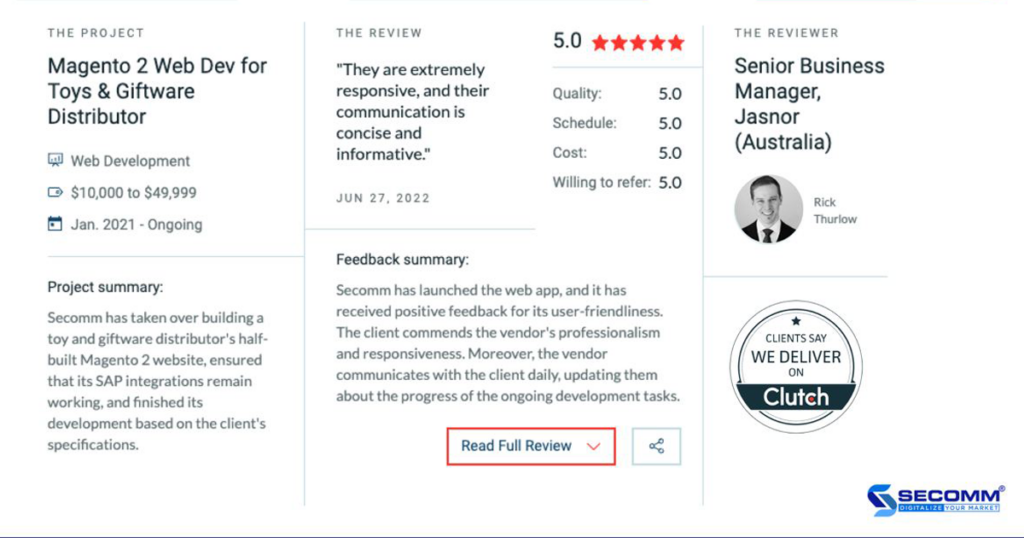
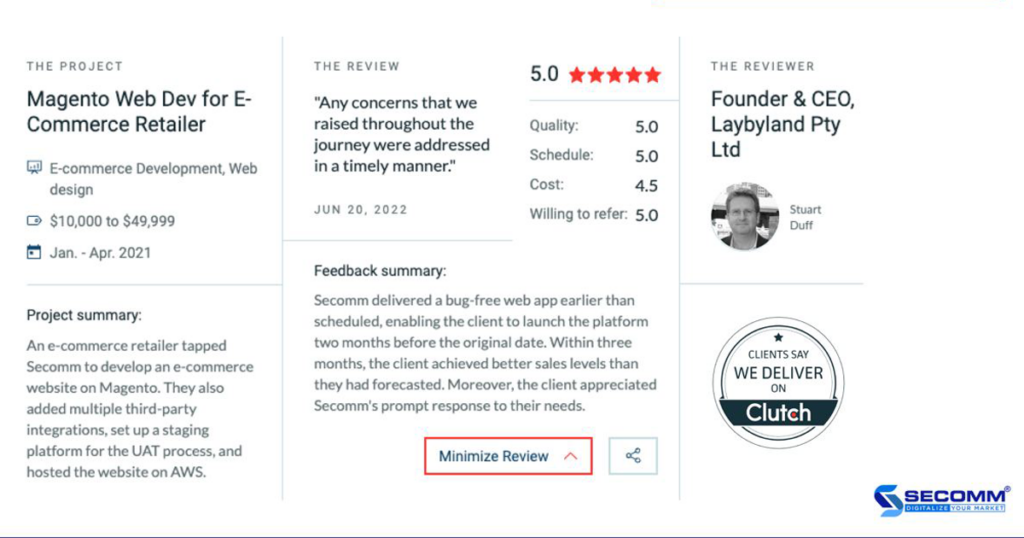
Established in 2014, SECOMM has successfully collaborated on and developed Magento eCommerce websites for numerous major clients spanning from Australia, Singapore, Hong Kong to Vietnam, including LaybyLand, Changi Airport Group, My Market, Annam Group, and Vinamilk.

Going beyond Magento website development collaborations, SECOMM and its clients strategically outline sustainable short and long-term development plans, ensuring continued leadership in the targeted markets. 

With vast experience in executing over 300 custom Magento website development projects for clients worldwide, SECOMM has firmly established itself as a premier professional Magento developer in Vietnam.
Top 5 Magento Developers In South East Asia (SEA)-SECOMM (Vietnam)
Top 5 Magento Developers In South East Asia (SEA): SECOMM (Vietnam)

Kemana Technology (Indonesia)

Established in 2011, Kemana Technology is a private company consisting of a team of experts with over a decade of experience in the eCommerce industry. Recognized as an official Silver partner of Adobe, Kemana stands out as a leading Magento developer in the broader APAC region and specifically in Indonesia. 

When it comes to eCommerce website development services, Magento is the core technology solution that the company suggests to its clients.

Moreover, Kemana leverages Magento’s exceptional customization capabilities to deliver Omnichannel deployment solutions for retailers, offering two primary services: Click & Collect (Pick Up In-store) and Ship From Store.

Top 5 Magento Developers In South East Asia (SEA)-Kemana Technology (Indonesia)
Top 5 Magento Developers In South East Asia (SEA): Kemana Technology (Indonesia)

Lime Commerce (Indonesia)

Similar to Kemana Technology, Lime Commerce is also among the top Magento developers in Indonesia. Established in 2014, the company holds the Bronze partnership status in the Adobe Solution Partner Program. Lime Commerce provides personalized solutions tailored to meet the deployment needs of each customer segment. 

As a dedicated eCommerce development company focusing on Magento, Lime Commerce offers a range of comprehensive services and solutions related to the Magento platform.

This includes custom design and development of Magento eCommerce websites, system maintenance and updates, optimization of website performance and security, and implementation of various crucial integrations.
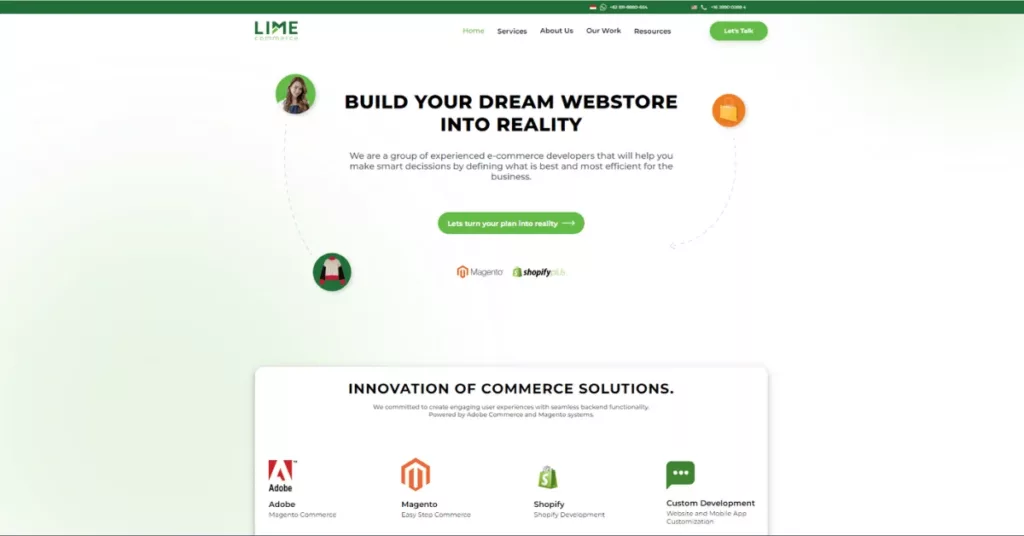
Top 5 Magento Developers In South East Asia (SEA)-Lime Commerce (Indonesia)
Top 5 Magento Developers In South East Asia (SEA): Lime Commerce (Indonesia)

Sweetmag Solutions (Malaysia)

Established in 2008, Sweetmag Solutions has distinguished itself as a premier provider of Magento website development solutions in Malaysia, offering a range of associated web services. Over the years, Sweetmag has achieved Bronze-level partnership status in the Adobe Solution Partner program.

Sweetmag provides a seasoned team to build Magento eCommerce websites to meet specific requirements and objectives related to customer experience and conversion.

Through collaborations with prominent brands like Padini, Innisfree Malaysia, Parkson Online, and Caring Pharmacy, the company has firmly established its position in the Malaysian eCommerce market.  
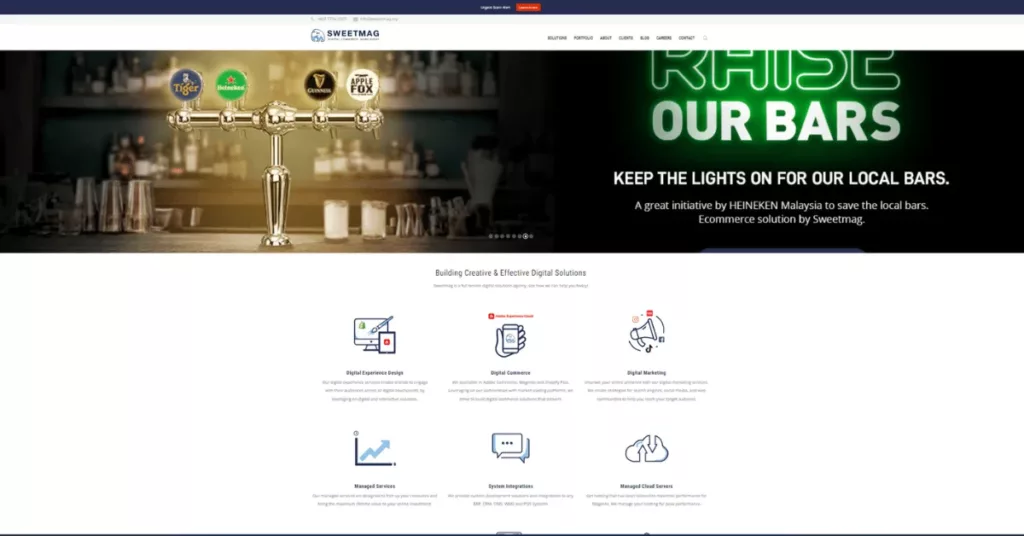
Top 5 Magento Developers In South East Asia (SEA)-Sweetmag Solutions (Malaysia)
Top 5 Magento Developers In South East Asia (SEA): Sweetmag Solutions (Malaysia)

1902 Software (Philippines)

Founded and operated since 1998 by Danish programmer Peter, 1902 Software has evolved into a prominent software development and eCommerce solutions company in the Philippines. Their key services include AI development, eCommerce solutions, custom software development, and innovative design, all of which contribute to their notable reputation. 

In the realm of eCommerce development, the company excels in delivering solutions for creating powerful, flexible, and scalable Magento websites. With a track record of successful projects, 1902 Software has earned positive reviews from satisfied clients.
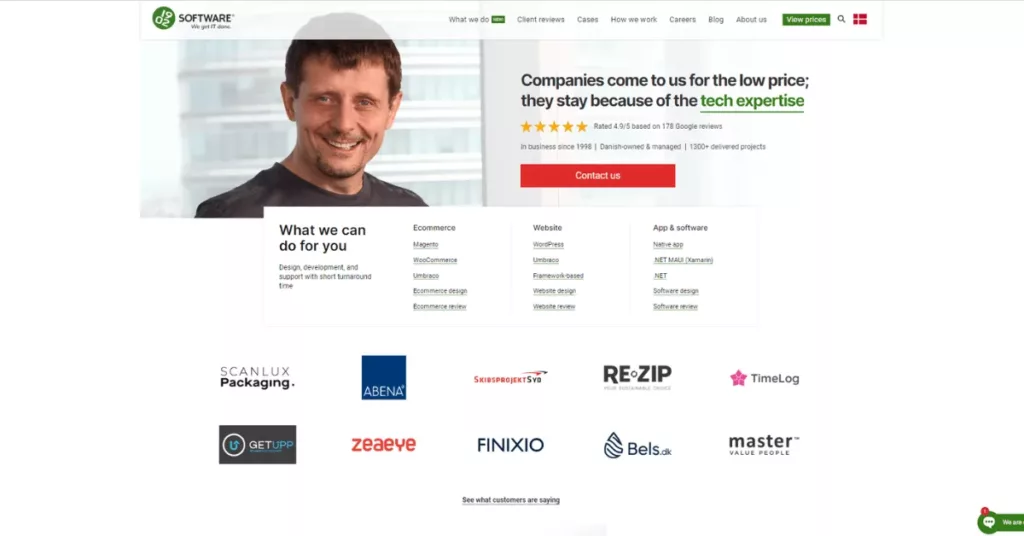
Top 5 Magento Developers In South East Asia (SEA)-1902 Software (Philippines)
Top 5 Magento Developers In South East Asia (SEA): 1902 Software (Philippines)

Start Your eCommerce Journey with Magento Today!

The effectiveness and popularity of Magento are demonstrated by the numerous businesses, spanning from medium-sized enterprises to large corporations, that have successfully implemented and operated their eCommerce websites on this platform. Moreover, the global Magento developer community is extensive, and the Southeast Asian region is no exception, featuring top-notch specialists with high technical expertise and extensive experience in Magento, as mentioned in the article.

Contact or call SECOMM’s hotline at (+84)28 7108 9908 to build your Magento eCommerce website today!

Ready to Maximize Your eCommerce Potential? Let’s talk

Leave a comment


Your email address will not be published. Required fields are marked *

Comment (0)

No comments yet. Be the first to comment.
EXPLORE
Related articles
AI-Driven Omnichannel: The Strategy Shaping the Future of Retail in 2026

According to research from Omnisend, campaigns that use three or more channels achieve a purchase rate approximately 287% higher than single-channel campaigns. Omnichannel customers also have an average lifetime value around 30% greater than customers who shop through only one channel. In today’s highly competitive landscape, adopting AI in omnichannel retail is no longer a “nice-to-have” but a “must-have”.

This article explores how AI-driven omnichannel strategies are revolutionizing the retail landscape, offering businesses new ways to leverage technology for long-term, sustainable growth

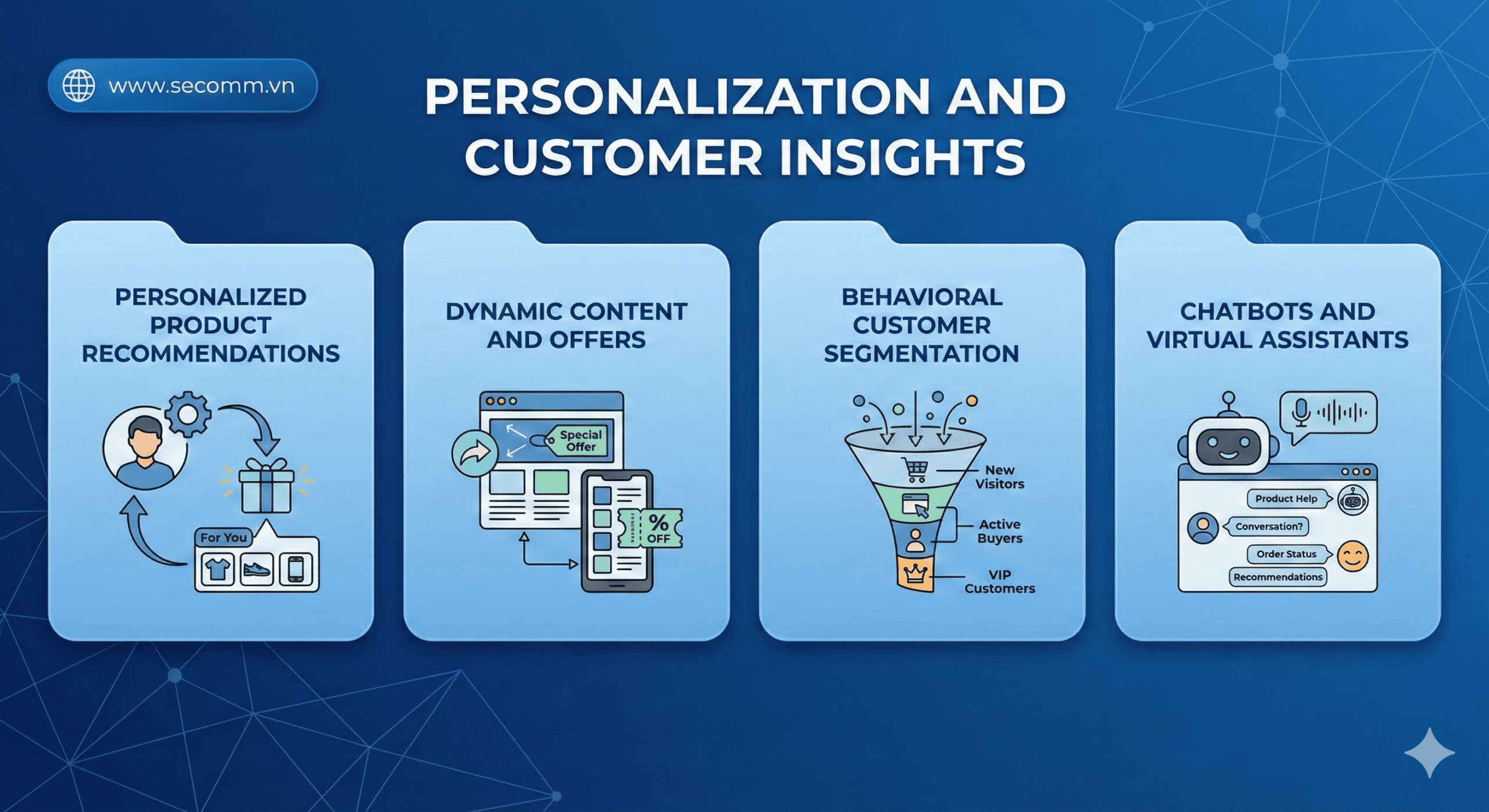
Personalization and Customer Insights 

Personalization and Customer Insights

AI enables retailers to deliver personalized experiences by leveraging customer data from multiple sources. With machine learning (ML) algorithms, businesses can analyze browsing behavior, purchase history, and even social media interactions to build a comprehensive customer profile. This profile is then used to power product recommendations, services, and content tailored to each individual. Key AI applications in personalization and customer intelligence include: 

Personalized Product Recommendations 

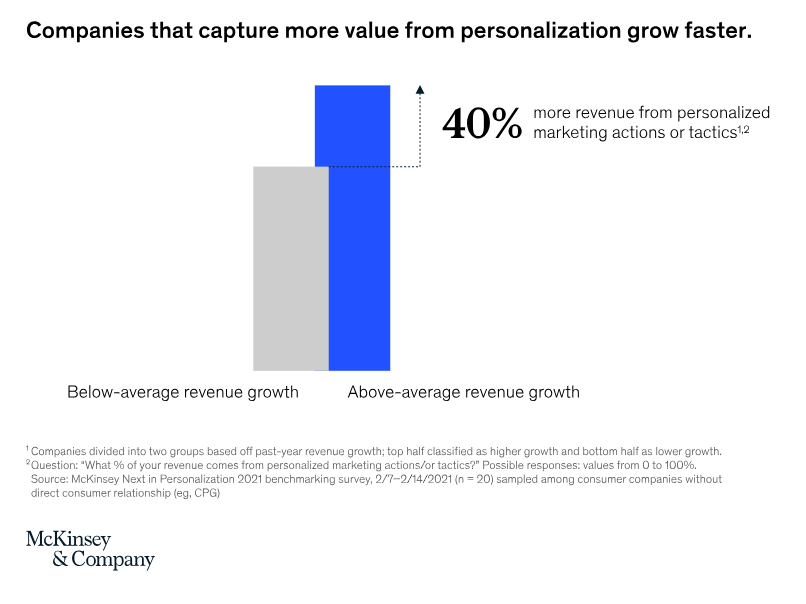
AI-driven recommendation engines analyze data across all channels to suggest the most relevant products to each customer, thereby increasing conversion rates. For instance, when a shopper searches for a product on a mobile app, AI algorithms can recommend related items based on their purchase history and browsing behavior across platforms. Around 80% of consumers are willing to buy more from brands that offer a personalized experience. 

Dynamic Content and Offers 

With AI, retailers can trigger timely promotions for the right customer segments. If a shopper views a product on the website but leaves without purchasing, AI can automatically send a personalized discount code via email or mobile push notification to encourage them to return and complete the order. This approach boosts engagement and significantly reduces cart abandonment. 

Behavioral Customer Segmentation 

AI supports behavioral segmentation, allowing retailers to cluster customers based on how they shop and interact with the brand. Frequent shoppers can be rewarded with VIP privileges, while low-frequency customers can be targeted with limited-time offers designed to re-engage them and increase purchase frequency. 

Chatbots and Virtual Assistants 

AI-powered chatbots deliver personalized support by accessing customer profiles, order history, and browsing activity. Operating 24/7, chatbots can handle FAQs, assist with product discovery, and even cross-sell or upsell complementary items to increase average order value. A survey from PwC indicates that roughly 87% of consumers believe AI has improved their shopping experience, and 73% are willing to use AI chatbots for customer service during their purchase journey. 

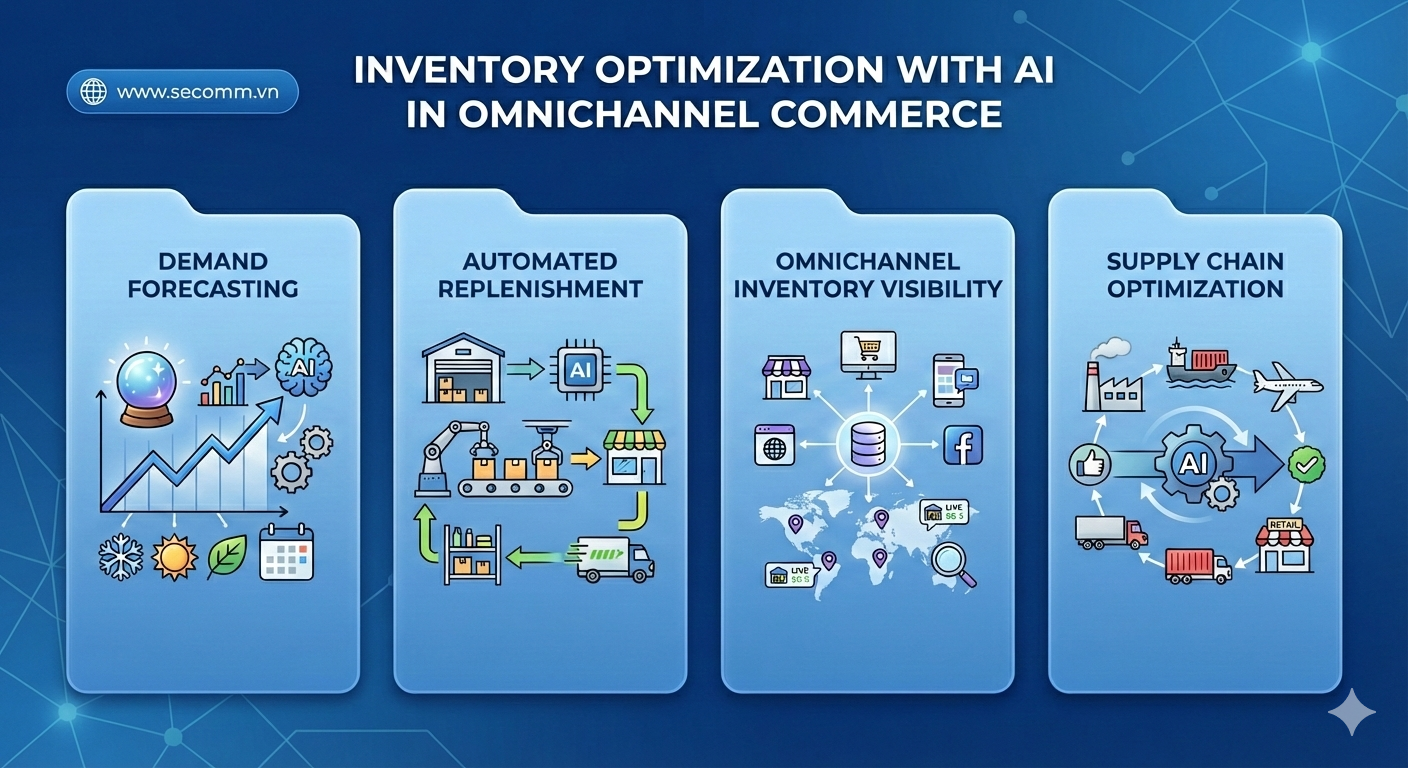
Inventory Optimization with AI in Omnichannel Commerce 

Inventory Optimization with AI in Omnichannel Commerce

Inventory management in a traditional omnichannel environment is complex and often leads to stockouts or overstock. AI-powered inventory management systems streamline this process, enabling retailers to maintain optimal stock levels across all channels. 

Demand Forecasting 

AI can forecast future demand by analyzing historical sales data, current trends, and external factors such as seasonality. With more accurate demand forecasting, retailers can avoid both out-of-stock situations and excess inventory, reducing markdowns and storage costs. Studies show that AI-driven demand forecasting can reduce forecast error by up to 30%. 

Automated Replenishment 

Leveraging predictive analytics, AI can automate replenishment orders so that best-selling products are always available while minimizing the risk of dead stock. AI can also detect regional demand differences, allowing businesses to fine-tune inventory levels at each store. This creates a more responsive supply chain and can reduce stockout events by up to 40%. 

Omnichannel Inventory Visibility 

AI provides real-time inventory visibility across all channels: online, in-store, and warehouse. Customers benefit from accurate stock information, while retailers can confidently implement services such as “Buy Online, Pick Up In-Store” (BOPIS) without operational friction. This level of visibility also supports more efficient inventory allocation, especially during peak demand periods. 

Supply Chain Optimization 

AI-driven supply chain analytics help retailers optimize logistics and distribution. Algorithms can determine the most efficient delivery routes, streamline warehouse operations, and predict potential disruptions. This is particularly critical for retailers offering same-day or next-day delivery, where AI can identify the fastest and most cost-effective path from fulfillment centers to customers. 

Read more: What is eCommerce Integration? Foundation of eCommerce Automation

Elevating Customer Service in Omnichannel Retail 

Elevating Customer Service in Omnichannel Retail

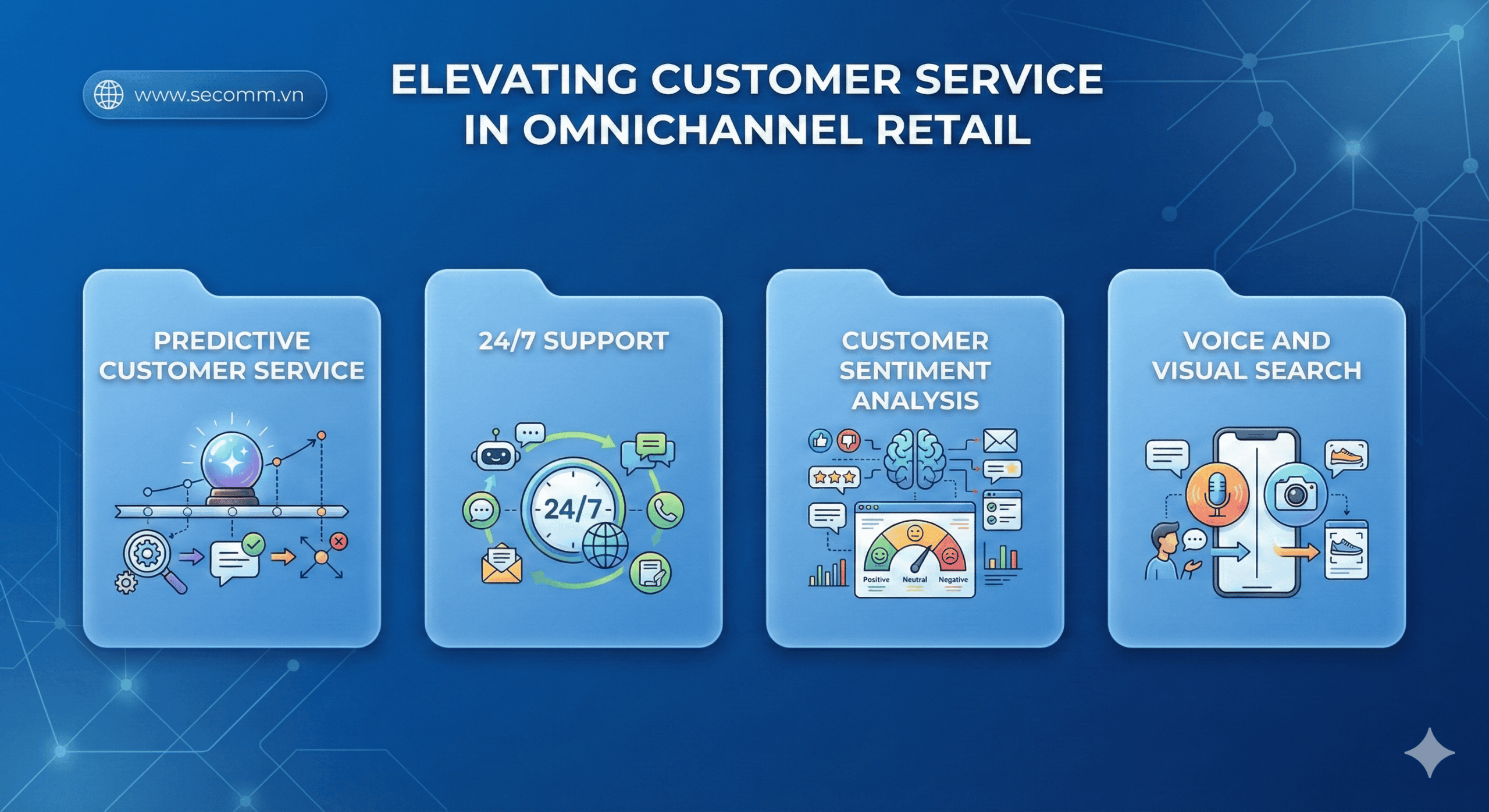
Customer service is a core component of the omnichannel experience, and AI is redefining how retailers engage with shoppers across touchpoints. From virtual assistants to AI-powered analytics, these tools ensure every interaction is more efficient and more relevant. 

Predictive Customer Service 

AI can anticipate support needs before customers submit a ticket. For example, if a customer repeatedly returns a specific product, AI can flag this pattern and alert the customer service team to proactively reach out. This level of predictive service helps reduce churn and strengthens brand loyalty. 

24/7 Support 

AI-powered chatbots and virtual assistants provide round-the-clock support across all channels, reducing waiting times and enhancing customer satisfaction. These virtual agents can handle routine inquiries, track orders, and assist with returns, freeing human agents to focus on complex, high-value interactions. 

Customer Sentiment Analysis 

AI-based sentiment analysis tools allow retailers to monitor customer satisfaction by analyzing feedback across social media, email, and support tickets. The technology can detect negative sentiment in real time, enabling teams to take immediate corrective action to protect the customer experience. 

Voice and Visual Search 

With AI, retailers can offer voice search, allowing customers to find products without typing, which is especially impactful on mobile. Visual search lets shoppers upload images to discover similar items, delivering a more intuitive and convenient product discovery experience aligned with modern consumer behavior. 

Real-Time Pricing Strategies for Omnichannel Commerce 

Real-Time Pricing Strategies for Omnichannel Commerce

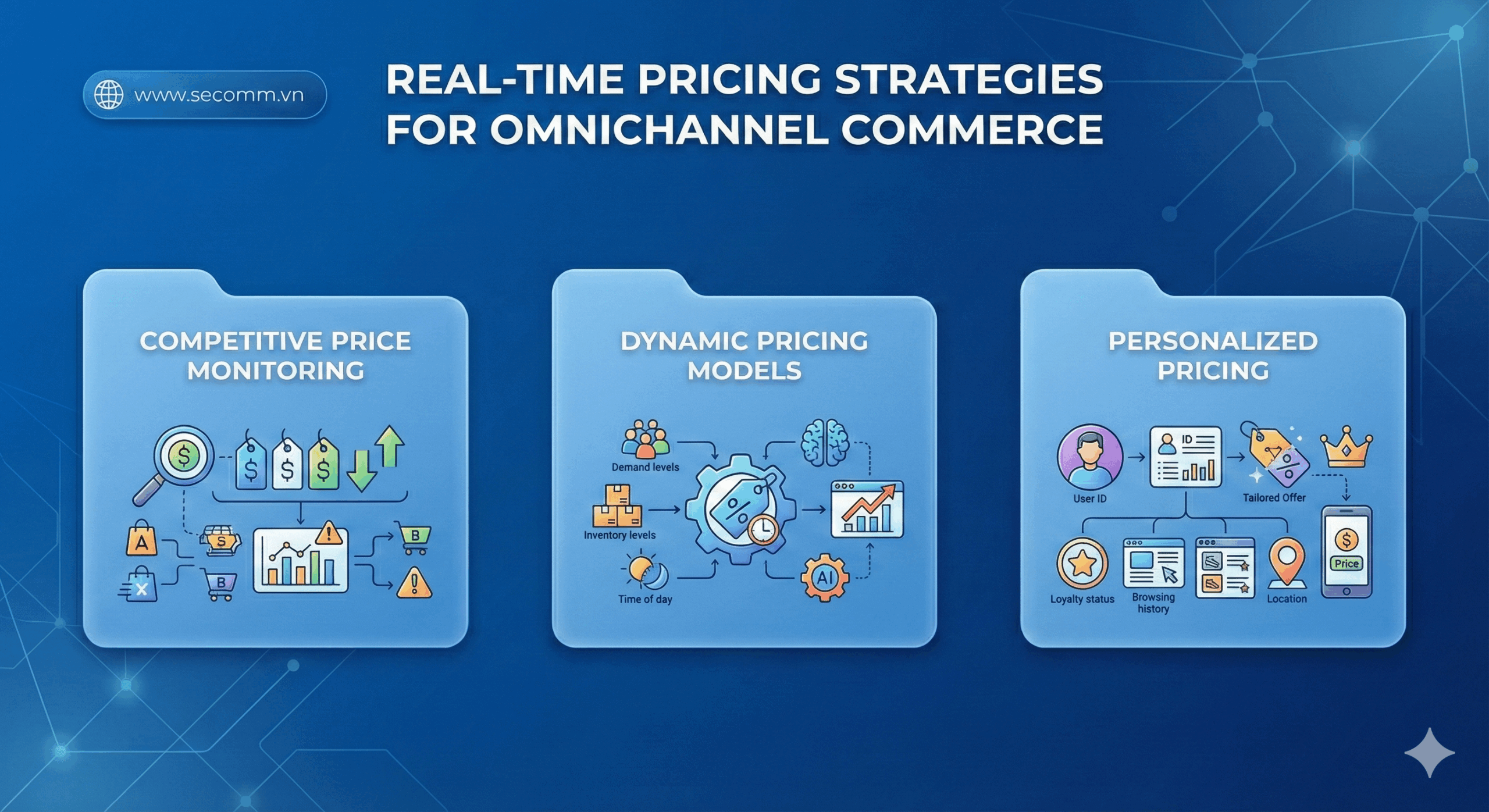
Dynamic pricing is another powerful AI use case, allowing retailers to adjust prices in real time based on demand, competition, and other market variables. This is particularly important for omnichannel retail, where price consistency and responsiveness are critical to customer trust. 

Competitive Price Monitoring 

AI algorithms can continuously monitor competitors’ prices and adjust a retailer’s prices accordingly, helping maintain competitiveness while protecting margins. This is essential in an environment where customers can compare prices across platforms within seconds. 

Dynamic Pricing Models 

By leveraging historical sales data, seasonal trends, and customer behavior, AI models can determine optimal price points to maximize both revenue and profit. For instance, AI can increase prices during peak demand periods or trigger markdowns for slow-moving inventory to accelerate sell-through. 

Personalized Pricing 

Personalized pricing focuses on offering individual discounts or loyalty incentives based on each customer’s shopping behavior. By analyzing purchase frequency, loyalty, and spending patterns, AI can generate tailored offers that drive engagement and increase customer lifetime value. 

AI-Enhanced Omnichannel Marketing Campaigns

AI-Enhanced Omnichannel Marketing Campaigns

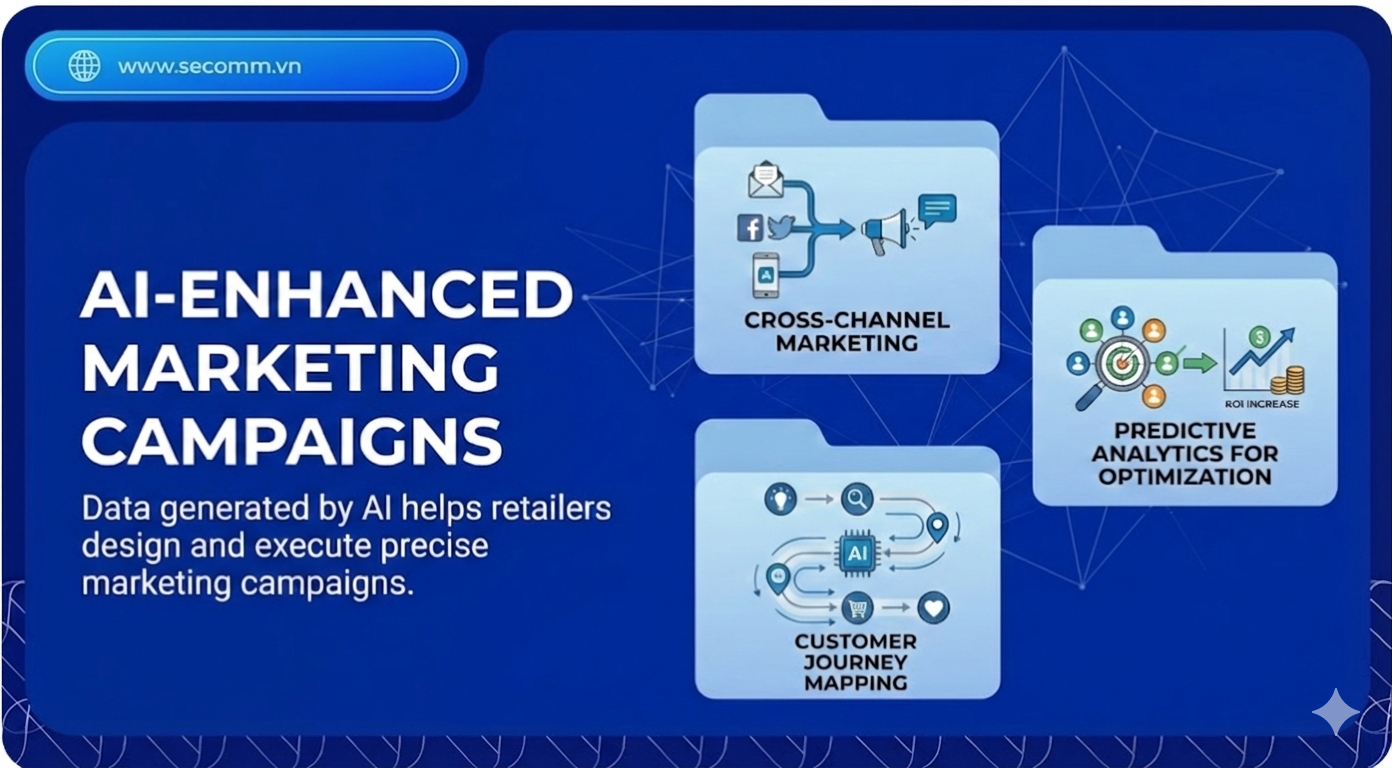
AI-generated insights empower retailers to design and execute more precise marketing campaigns, ensuring they reach the right customers at the right time. Multichannel data analysis makes marketing strategies more targeted and more efficient. 

Omnichannel Marketing Campaigns 

AI enables retailers to orchestrate integrated omnichannel marketing campaigns that reach customers via email, social media, mobile apps, and other digital touchpoints. This integration ensures consistent messaging, regardless of where customers interact with the brand. 

Predictive Analytics for Campaign Optimization 

Predictive analytics can identify which customer segments are most likely to respond to a given promotion, allowing marketers to optimize budget allocation. Campaigns can be adjusted in real time based on performance metrics, increasing ROI and engagement rates. 

Customer Journey Mapping 

With AI, retailers can build detailed customer journey maps to understand how each touchpoint influences purchase decisions. This data supports hyper-targeted marketing at every stage-from awareness and consideration to conversion-enabling businesses to design strategies aligned with customer needs at each step. 

Challenges of Applying AI in Omnichannel Retail 

While AI offers transformative advantages for Omnichannel retail, practical implementation remains fraught with strategic hurdles. To fully harness the potential of this technology, enterprises must identify and resolve four core challenges: 

  • Data Ethics and Security: Data privacy, cybersecurity, and algorithmic bias are paramount concerns. AI applications must ensure transparency, ethical integrity, and strict compliance with global legal regulations.  
  • Operational Adaptation: Transitioning from traditional models to AI integrated systems requires high agility in operational processes across all customer touchpoints.  
  • Resources and Governance: Maximizing AI’s utility demands structured investment in staff training, standardized data management systems, and continuous system maintenance.  
  • System Innovation: The most significant barrier lies in the seamless synchronization of data between legacy systems and modern platforms to create a centralized, consistent data architecture. 

Faced with complex operational and data architecture challenges, businesses require a partner with proven technical expertise. With extensive experience in deploying complex eCommerce systems, SECOMM stands as a reliable partner, helping enterprises mitigate technical risks, optimize costs, and accelerate time-to-market. 

Read more: Strategies for Applying AI in eCommerce to Enhance Operational Efficiency and Sales

Conclusion: Are You Ready for the Omnichannel AI Era? 

AI is transforming omnichannel retail by enabling seamless integration across all customer touchpoints, from personalized recommendations to intelligent inventory management. As retailers continue to innovate, AI-driven omnichannel strategies will sit at the heart of superior shopping experiences, stronger brand loyalty, and sustainable profitability. 

Are you ready for a new wave of retail transformation in 2026? With more than 10 years of experience delivering specialized eCommerce solutions for leading enterprises in Vietnam and overseas markets, SECOMM is ready to partner with you to build a secure, scalable, and high-performing omnichannel ecosystem. 

Contact SECOMM today for tailored omnichannel consulting that aligns with your business model and long-term growth strategy. 

50
5,719
0
20
Top 10 Leading eCommerce Development Companies in Vietnam

Vietnam’s eCommerce market is growing rapidly, driven by the rising demand for digitalization and automation among both local and international businesses. Along with this trend, many Vietnamese eCommerce Development companies have emerged as strategic partners in eCommerce platform development, offering end-to-end solutions from consulting and system development to operations and marketing. Below is a list of the top 10 leading eCommerce solution providers in Vietnam for 2025. 

1. SECOMM

SECOMM logo

SECOMM is a full-service provider of eCommerce solutions, developing bespoke suits that work in any complex system. With deep expertise across B2B and B2C sectors, SECOMM helps brands build scalable, conversion-focused platforms on Magento, Shopify, Headless Commerce, and more. Their services deliver full-circle ecommerce solutions from initial consulting to complete product deployment.  

What sets SECOMM apart is their commitment to agile execution, dedicated development teams, and a strong client-centric approach. Trusted by leading enterprises like Changi Airport Group, Vinamilk, Annam Group, Landnow, Suzuverse, My Market,… which across Vietnam, Singapore, Australia, and beyond. 

Key Services: 

  • Ecommerce Consulting: Activate your eCommerce business with a clear and strategic roadmap. They provide in-depth business analysis, platform evaluation, and system architecture planning tailored to your goals. 
  • Ecommerce Development: Develop high-efficiency eCommerce systems across websites, mobile apps, and headless platforms. Their solutions are scalable, customizable, and quality assured to fit diverse business models. 
  • Ecommerce Operations: Ensure optimal system performance with ongoing maintenance, 24/7 monitoring, data security, and incremental updates to keep your platform running smoothly. 
  • Ecommerce Marketing: Scale your business with integrated strategies including content marketing, SEO, and social media. They focus on data-driven performance to elevate brand visibility and engagement. 
  • Management System Development: Integrate ERP, CRM, OMS, CDP and POS systems to streamline operations and improve cross-functional efficiency, all tailored to your business processes. 
  • Customer Experience Solutions: Design and implement loyalty programs and omnichannel strategies that enhance engagement and build long-term customer relationships. 
  • Team Outsourcing: build an in-house team or deploy a dedicated team for a specific project. They manage recruitment, training, and ongoing coordination

2. Kyanon Digital  

Top 10 Leading eCommerce Development Companies in Vietnam - Kyanon Digital

Kyanon Digital a digital transformation solution consulting and implementation company, especially solutions related to e-commerce and omnichannel experience platform. With an experienced team, Kyanon Digital is gradually becoming a reliable tech partner of many large retail corporations in the region from consulting on digital transformation models, choosing and implementing appropriate technology solutions to e-commerce logistics operations. In addition, Kyanon Digital is also chosen to be a strategic partner of many international technology companies in the same field. 

Key services: 

  • Consulting on digital transformation and omnichannel experience. 
  • Consulting on solutions for e-commerce technology and customer experience. 
  • Develop and upgrade website/mobile application/super app. 
  • E-commerce & logistics operation, customer service and system management. 

3. MAGENEST

Top 10 Leading eCommerce Development Companies in Vietnam - Magenest

Magenest is one of Vietnam’s most recognized eCommerce solution providers, focusing on digital transformation and enterprise integration. As an official Adobe (Magento) and Odoo partner, Magenest helps global brands build scalable, secure, and data-driven eCommerce systems. Magenest stands out for its holistic approach, bridging the gap between technology, operations, and marketing for medium to large enterprises. 

Key Services: 

  • B2B & B2C eCommerce website development (Magento/Adobe Commerce, Shopify) 
  • ERP and CRM integration (Odoo, Salesforce, HubSpot) 
  • Cloud infrastructure and DevOps solutions (AWS, Google Cloud) 
  • Digital marketing and automation 

4. BSS Commerce 

Top 10 Leading eCommerce Development Companies in Vietnam - BSS Commerce

BSS Commerce is a powerhouse in the Magento ecosystem, offering a full suite of B2B extensions, custom development, and integration services. With years of experience serving international clients, BSS Commerce is known for delivering highly functional and scalable B2B commerce systems. Their B2B suite for Magento is widely adopted by enterprises seeking to enhance their online business workflows and customer experience. 

Key Services: 

  • Commerce website development (Magento, Shopify) 
  • B2B eCommerce solutions and extensions 
  • Headless commerce and PWA development 
  • System maintenance and optimization 

5. TECHVIFY Software 

Top 10 Leading eCommerce Development Companies in Vietnam - Techvify

TECHVIFY Software is a rapidly growing software development company providing custom eCommerce, web, and mobile solutions for global clients. Their strength lies in combining cutting-edge technologies with an agile development approach. TECHVIFY’s solutions are tailored for scalability, enabling businesses to optimize efficiency while enhancing user engagement. 

Key Services: 

  • Custom B2B/B2C eCommerce website development 
  • Mobile app development and integration 
  • Cloud-based SaaS and automation solutions 
  • AI-powered personalization and analytics 

6. CMC Software Solution 

Top 10 Leading eCommerce Development Companies in Vietnam - CMC Technology

Part of CMC Corporation, one of Vietnam’s largest IT groups, CMC Software Solution provides enterprise-grade digital transformation and eCommerce services. Their expertise covers complex system integration and high-level cybersecurity. CMC’s ability to integrate technology into large organizations makes them a preferred partner for enterprises transitioning into digital commerce. 

Key Services: 

  • B2B and B2C eCommerce platform development 
  • Enterprise software integration (ERP, CRM, SCM) 
  • Cloud and cybersecurity solutions 
  • Data analytics and business intelligence 

7. SmartOSC 

Top 10 Leading eCommerce Development Companies in Vietnam - SmartOSC

Founded in 2006, SmartOSC is an award-winning eCommerce agency with a global presence across Asia, Europe, and the U.S. They provide comprehensive digital commerce services that help brands scale internationally. SmartOSC is trusted by major global brands for its technical excellence, customer-centric approach, and strategic execution. 

Key Services: 

  • Enterprise-level eCommerce development (Adobe, Shopify Plus, BigCommerce) 
  • Experience design and UX optimization 
  • Cloud infrastructure, DevOps, and system integration 
  • B2B commerce strategy and digital transformation consulting 

8. OnPoint E-commerce 

Top 10 Leading eCommerce Development Companies in Vietnam - OnPoint

OnPoint is Vietnam’s leading eCommerce enabler, helping brands manage and grow their online presence across multiple marketplaces and platforms. Unlike pure tech developers, OnPoint provides full eCommerce operation services tailored for B2B and B2C brands. With a strong local market presence, OnPoint enables global and domestic brands to succeed in Vietnam’s fast-growing eCommerce landscape. 

Key Services: 

  • E-commerce operations and store management 
  • Digital marketing and performance optimization 
  • Fulfillment, warehousing, and logistics support 
  • Marketplace and omnichannel management 

9. SotaTek 

Top 10 Leading eCommerce Development Companies in Vietnam - Sotatek

SotaTek is a global software development company offering blockchain, web, and eCommerce solutions. Their development team delivers tailored B2B commerce platforms powered by modern technologies. SotaTek’s versatility and deep tech expertise make it a solid partner for businesses looking to build advanced, future-ready eCommerce ecosystems. 

Key Services: 

  • Custom eCommerce website and app development 
  • Blockchain integration for eCommerce 
  • ERP/CRM integration and API development 
  • Cloud-based solutions and AI automation 

10. Tigren 

Top 10 Leading eCommerce Development Companies in Vietnam - Tigren

Tigren is a specialized Magento development company with extensive experience in B2B and B2C eCommerce solutions. Known for its cost-effective and high-quality services, Tigren caters to clients worldwide. Tigren’s focus on performance and usability makes it ideal for businesses seeking reliable and affordable Magento-based eCommerce solutions. 

Key Services: 

  • E-Commerce Website development 
  • Progressive Web App Development 
  • Hybrid Mobile App Development 
  • Website Enhancements 

Final words 

Vietnam’s eCommerce industry is entering a booming phase, marked by the rise of reputable technology companies with international standards. Companies like SECOMM, SmartOSC, Magenest, BSS Commerce, TECHVIFY, and Kyanon Digital not only empower businesses to build robust eCommerce platforms but also accompany them on their journey of digital transformation, market expansion, and customer experience enhancement. 

If your business is looking to develop a fully optimized eCommerce system tailored to your needs, don’t hesitate to contact SECOMM, our team is always ready to support you every step of the way. 

2
1,281
0
1
Top 8 Most-Visited Cosmetics eCommerce Websites in Singapore

The cosmetics eCommerce industry in Singapore is witnessing explosive growth and continuous innovation, becoming one of the most promising and dynamic markets in the Southeast Asia region. With the increasing demand for beauty and personal care products from consumers, coupled with support from advanced technology and digital infrastructure, online cosmetics businesses in Singapore have been seizing opportunities to expand market share and enhance customer experiences.

Below are cosmetics 8 eCommerce websites trusted by Singaporean consumers for shopping.

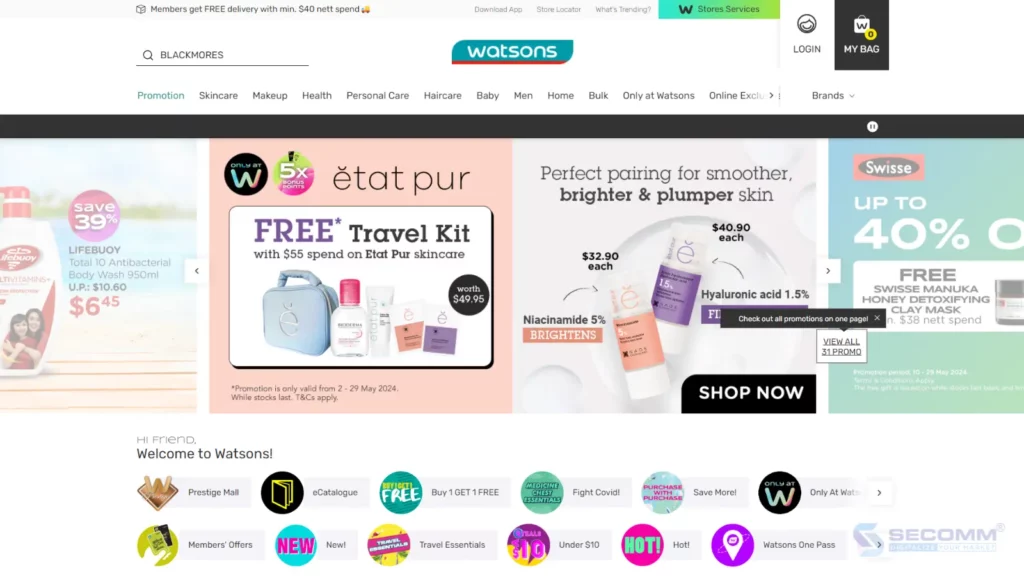
1. Watsons Singapore

eCommerce website: Watson Singapore

The cosmetics and healthcare retail chain Watsons has gained fame across Asia, and Singapore is no exception. As a member of the A.S. Watson Group, Watsons has solidified its position with thousands of stores worldwide and a robust eCommerce website.

Watsons Singapore is renowned for its extensive product portfolio, ranging from cosmetics and skincare to haircare and healthcare products. The eCommerce website of Watsons Singapore is built on the SAP Commerce Cloud platform, providing customers with a smooth and diverse shopping experience. Search, product filtering, and cart features are optimized and customized, while encouraging customers to create accounts to enjoy exclusive benefits. This helps track and measure customer behavior on the website, leading to the most effective sales and marketing strategies.

  • Website: watsons.com.sg
  • Platform: SAP Commerce Cloud
  • Traffic: 1.852M/month
  • Ranking: #322 (Singapore) & #69,750 (Global)

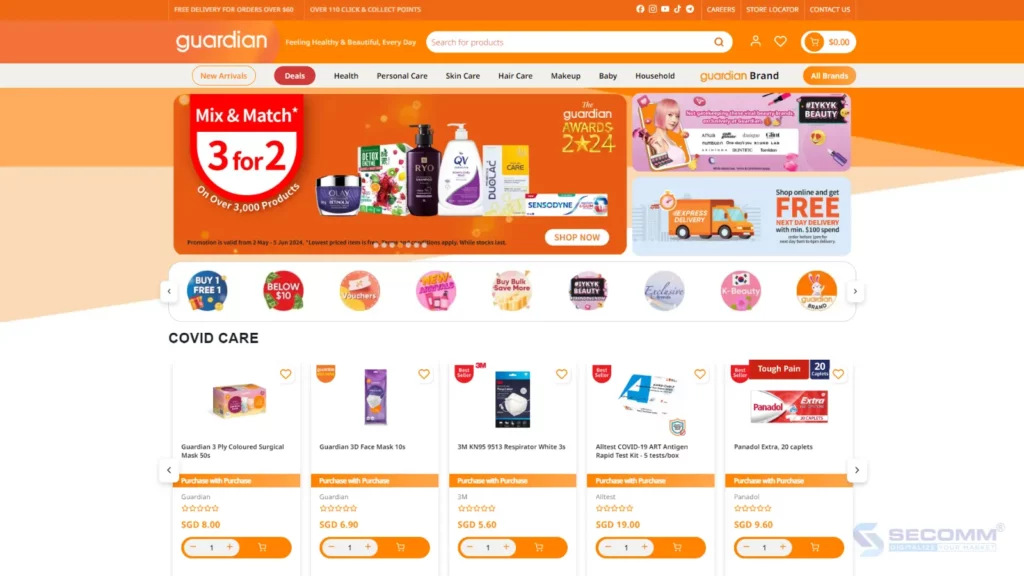
2. Guardian Singapore

eCommerce website: Guardian Singapore

Guardian is a retail chain specializing in healthcare, cosmetics, and other consumer products. Guardian has a presence in many countries and regions worldwide, including Singapore, offering a range of products from renowned and reliable brands.

The eCommerce website of Guardian is built on the SAP Commerce Cloud platform, providing many useful features for users. Customers can easily search for and purchase products, manage their shopping carts, and make convenient payments. Additionally, the website offers promotions and online support services to help customers have a comfortable and secure online shopping experience. Furthermore, customers can also review and provide feedback on products, providing useful information for other users.

  • Website: https://guardian.com.sg/
  • Platform: SAP Commerce Cloud
  • Traffic: 1.349M/month
  • Ranking: #676 (Singapore) & #126,366 (Global)

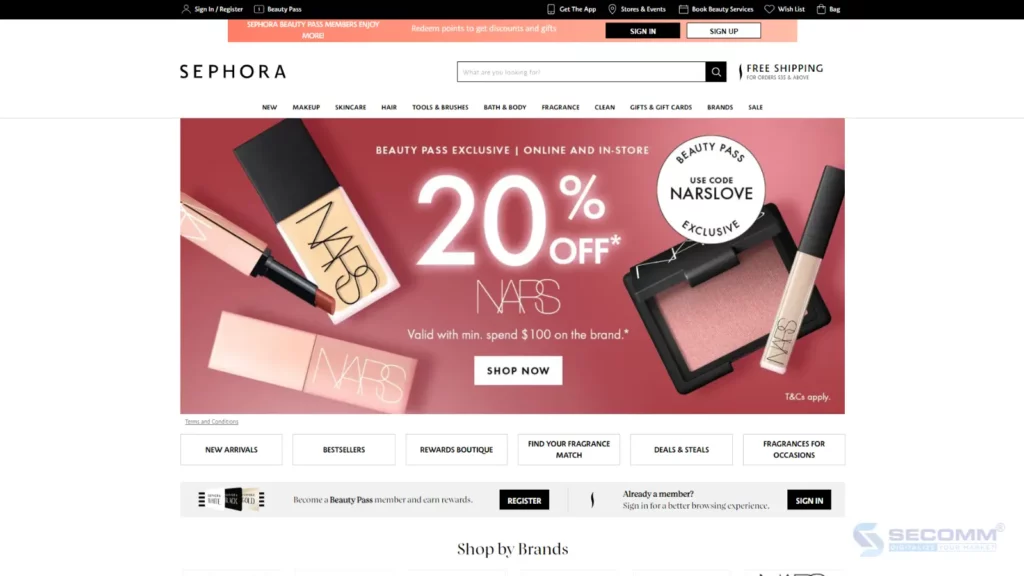
3. Sephora Singapore

eCommerce website: Sephora Singapore

Similar to Guardian, Sephora is a global retail chain specializing in cosmetics and beauty, known for offering a variety of beauty products from leading brands worldwide. Currently, Sephora has a presence in the Singapore market with physical stores in major shopping centers and an eCommerce system, including a website and app for customers. Sephora is loved for its product diversity, customer care services, and innovation in the online cosmetics shopping experience.

Sephora’s eCommerce system in Singapore is built on Vue.js and Nuxt.js programming languages. With this system, Sephora’s customers can quickly search for and explore products through smart search bars and diverse filters. The online shopping experience is optimized with detailed product information, crisp images, and customer reviews.

The Sephora app is also highly regarded, making shopping easier for customers with features like “Virtual Artist” and receiving notifications about promotions. Overall, Sephora provides a range of features and services to meet customers’ cosmetics shopping needs, creating a professional and convenient online shopping experience.

  • Website: https://www.sephora.sg/
  • Programming language: Vue.js, Nuxt.js
  • Traffic: 1.287M/month
  • Ranking: #605 (Singapore) & #93,279 (Global)

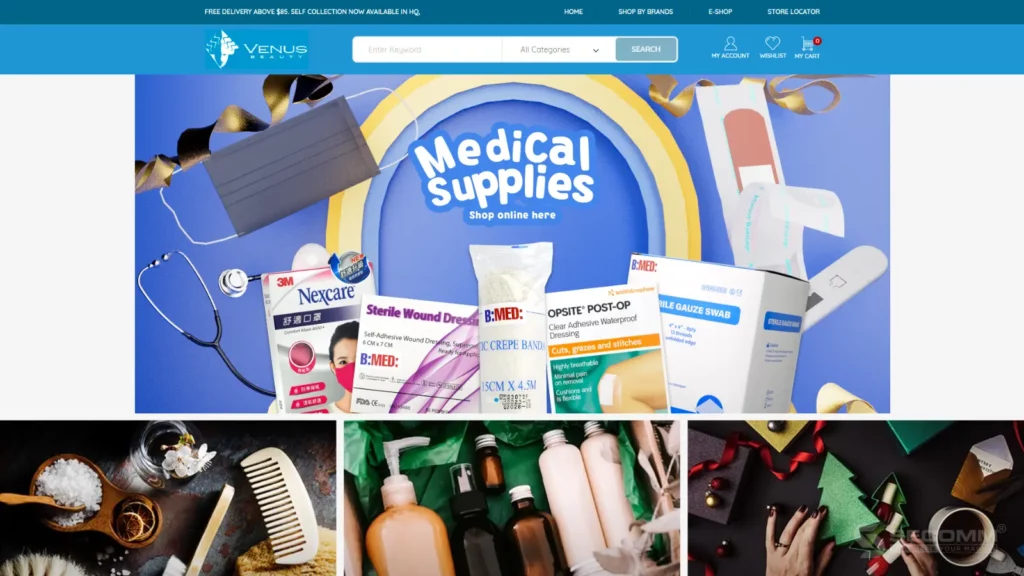
4. Venus Beauty

eCommerce website: Venus Beauty

Venus Beauty is one of the retail chains for cosmetics and personal care present in most shopping centers across Singapore, beloved for its product diversity and quality. Since its establishment in 2002, Venus Beauty has continuously grown and expanded, becoming a familiar destination for many local consumers.

The eCommerce website of Venus Beauty is built and developed on the Magento platform, with superior customization and scalability. Customers can easily search for and purchase products thanks to the intuitive and user-friendly website interface. Venus Beauty also regularly offers attractive promotional programs to attract customers to shop more on the website and app.

  • Website: venusbeauty.com.sg
  • Platform: Magento Open Source
  • Traffic: 325,090/month
  • Ranking: #2,211 (Singapore) & #321,368 (Global)

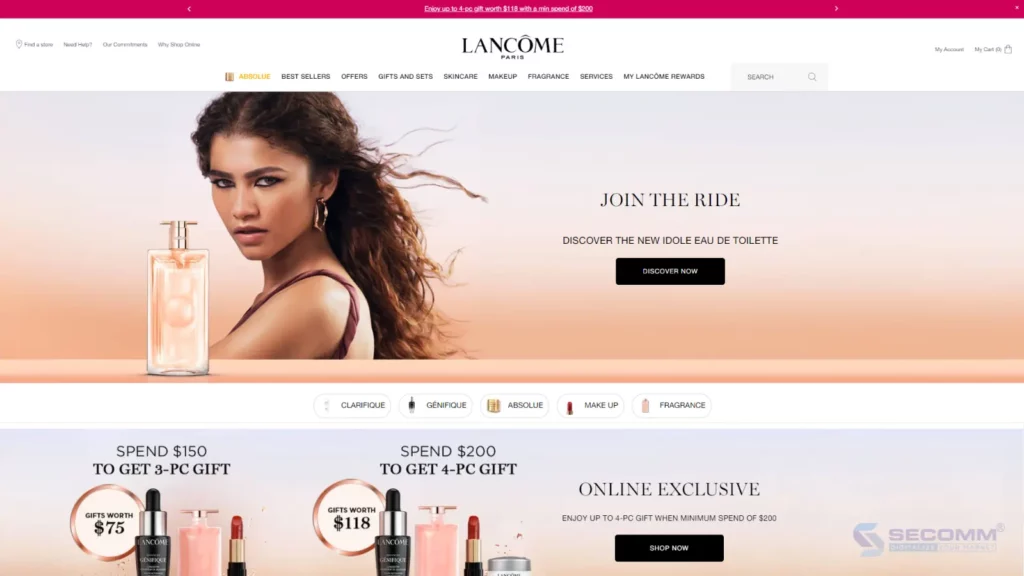
5. LanCôme Singapore

eCommerce website: LanCôme

Lancôme Singapore is the branch of the renowned cosmetics brand Lancôme, part of the globally famous L’Oréal Group. Lancôme is known for its high-quality skincare products, makeup, and fragrances, always endorsed by beauty experts and celebrities. In Singapore, Lancôme not only offers premium products suitable for various skin types but also provides optimal online shopping experiences for customers.

The Lancôme website is developed on the Salesforce Commerce Cloud infrastructure with a user-friendly interface, allowing customers to browse, search, view products, and make purchases easily and quickly. The website also integrates AR technology to provide a “Virtual Try-On” experience, allowing customers to try on lipsticks, eyeshadows, and other products realistically before making purchasing decisions.

  • Website: lancome.com.sg
  • Platform: Salesforce Commerce Cloud
  • Traffic: 170,443/month
  • Ranking: #7,671 (Singapore) & #1,007,547 (Global)

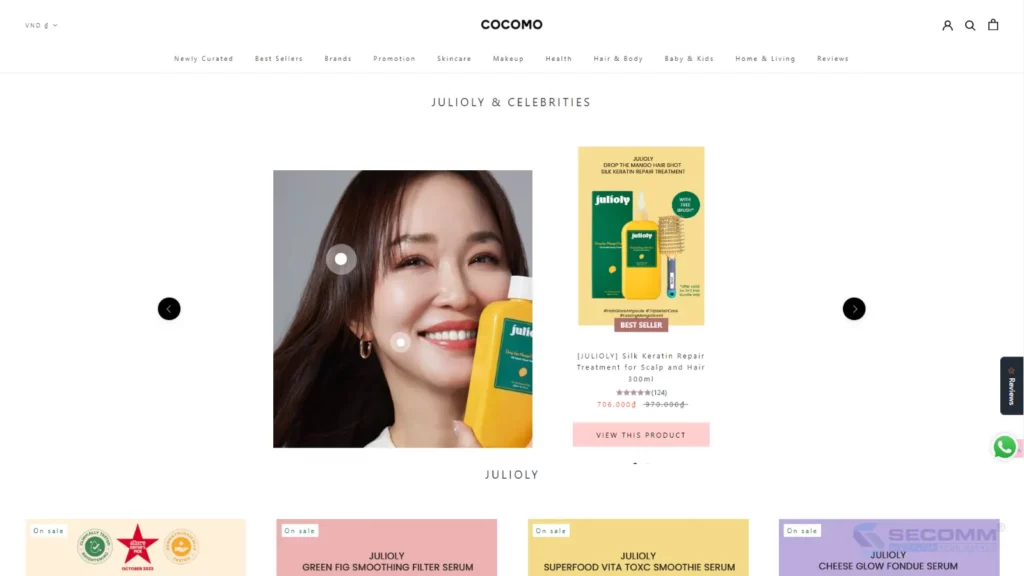
6. Cocomo Singapore

eCommerce website: Cocomo Singapore

Cocomo is an eCommerce website specializing in beauty and personal care products from Korean brands. Cocomo boasts a rich product portfolio, including cosmetics, skincare products, haircare, and various other beauty items, catering to all customer beauty needs.

The Shopify website of Cocomo Singapore is designed with a clear, intuitive interface, making it easy for users to search for and select products. Product categories are organized logically, along with efficient search tools, making shopping quick and convenient. Cocomo frequently offers promotions, discounts, and special deals, helping customers save money. These promotional offers are regularly updated and can be easily found on the homepage or product category pages.

  • Website: https://www.cocomo.sg/
  • Platform: Shopify
  • Traffic: 138,532/month
  • Ranking: #13,831 (Singapore) & #1,356,641 (Global)

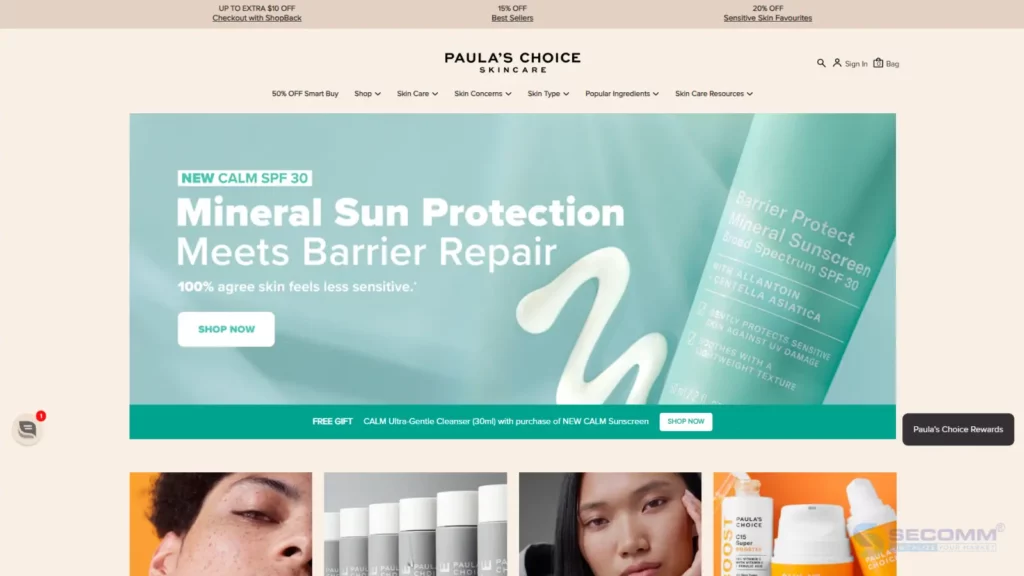
7. Paula’s Choice

eCommerce website: Paula's Choice Singapore

In Singapore, the skincare brand Paula’s Choice is just as renowned as in other markets. Founded by skincare expert Paula Begoun, the brand is famous for its science-backed skincare products, known to be safe and effective, free from harmful ingredients like fragrances or dyes.

Paula’s Choice eCommerce website is built on Shopify Plus. The website offers a range of skincare products, including cleansers, toners, serums, moisturizers, sunscreens, and specialized treatments like BHA, AHA, and retinol. These products cater to all skin types, from oily, dry, sensitive, acne-prone to aging skin. Each product on the website comes with detailed descriptions of ingredients, usage instructions, benefits, and supporting scientific research.

Paula’s Choice Singapore regularly runs discount programs, bundled gifts, and special offers for customers. Additionally, customers can easily access support from the customer service team via hotline, email, or live chat.

  • Website: https://paulaschoice.sg/
  • Platform: Shopify Plus
  • Traffic: 132,171/month
  • Ranking: #7,064 (Singapore) & #839,402 (Global)

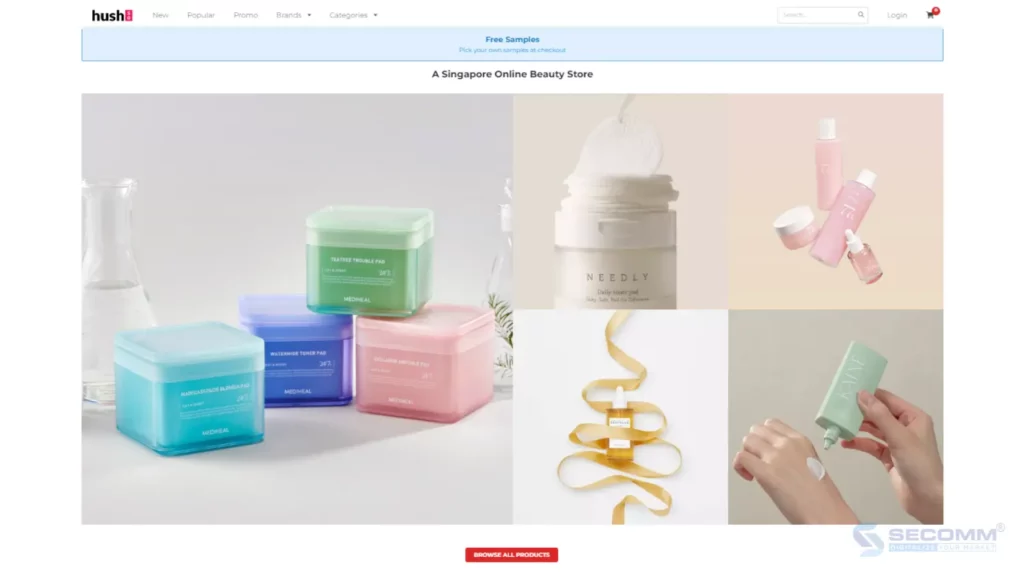
8. Hush Singapore

eCommerce website: Hush Singapore

Hush is a familiar destination for Singaporean consumers when they need to shop for cosmetics online. This retail giant specializes in providing beauty and personal care products from various leading brands worldwide such as Laneige, Aveeno, Bioderma, CeraVe, and more.

The Hush website is designed to be simple, modern, and user-friendly. Customers can easily search and browse through products thanks to clear categories and efficient search tools. Additionally, customers can make payments by registering an account or as a guest. Hush also offers fast and free delivery services, allowing customers to track their orders and estimated delivery times.

  • Website: https://hush.sg/
  • Programming language: Ruby
  • Traffic: 77,937/month
  • Ranking: #10,733 (Singapore) & #1,548,638 (Global)

Lời kết

In summary, the cosmetics eCommerce industry in Singapore has seen significant growth over the years with the presence of many reputable and well-known names. From international brands like Watsons, Lancôme, and Paula’s Choice to local eCommerce platforms like Cocomo and Hush, consumers have countless options to search for and purchase high-quality beauty and personal care products. Each website offers unique and convenient shopping experiences, catering to the increasingly diverse needs of customers.

Hopefully, the list above will help motivate many other beauty businesses to confidently build their own eCommerce websites.

Need more in-depth advice? Contact SECOMM today!

2
3,945
0
1
Explore articles by category
DIGITAL TRANSFORMATION
ECOMMERCE ECOSYSTEM
ECOMMERCE KNOW-HOW
ECOMMERCE PLATFORM
SECOMM NEWS
AI-Driven Omnichannel: The Strategy Shaping the Future of Retail in 2026

According to research from Omnisend, campaigns that use three or more channels achieve a purchase rate approximately 287% higher than single-channel campaigns. Omnichannel customers also have an average lifetime value around 30% greater than customers who shop through only one channel. In today’s highly competitive landscape, adopting AI in omnichannel retail is no longer a “nice-to-have” but a “must-have”.

This article explores how AI-driven omnichannel strategies are revolutionizing the retail landscape, offering businesses new ways to leverage technology for long-term, sustainable growth

Personalization and Customer Insights 

Personalization and Customer Insights

AI enables retailers to deliver personalized experiences by leveraging customer data from multiple sources. With machine learning (ML) algorithms, businesses can analyze browsing behavior, purchase history, and even social media interactions to build a comprehensive customer profile. This profile is then used to power product recommendations, services, and content tailored to each individual. Key AI applications in personalization and customer intelligence include: 

Personalized Product Recommendations 

AI-driven recommendation engines analyze data across all channels to suggest the most relevant products to each customer, thereby increasing conversion rates. For instance, when a shopper searches for a product on a mobile app, AI algorithms can recommend related items based on their purchase history and browsing behavior across platforms. Around 80% of consumers are willing to buy more from brands that offer a personalized experience. 

Dynamic Content and Offers 

With AI, retailers can trigger timely promotions for the right customer segments. If a shopper views a product on the website but leaves without purchasing, AI can automatically send a personalized discount code via email or mobile push notification to encourage them to return and complete the order. This approach boosts engagement and significantly reduces cart abandonment. 

Behavioral Customer Segmentation 

AI supports behavioral segmentation, allowing retailers to cluster customers based on how they shop and interact with the brand. Frequent shoppers can be rewarded with VIP privileges, while low-frequency customers can be targeted with limited-time offers designed to re-engage them and increase purchase frequency. 

Chatbots and Virtual Assistants 

AI-powered chatbots deliver personalized support by accessing customer profiles, order history, and browsing activity. Operating 24/7, chatbots can handle FAQs, assist with product discovery, and even cross-sell or upsell complementary items to increase average order value. A survey from PwC indicates that roughly 87% of consumers believe AI has improved their shopping experience, and 73% are willing to use AI chatbots for customer service during their purchase journey. 

Inventory Optimization with AI in Omnichannel Commerce 

Inventory Optimization with AI in Omnichannel Commerce

Inventory management in a traditional omnichannel environment is complex and often leads to stockouts or overstock. AI-powered inventory management systems streamline this process, enabling retailers to maintain optimal stock levels across all channels. 

Demand Forecasting 

AI can forecast future demand by analyzing historical sales data, current trends, and external factors such as seasonality. With more accurate demand forecasting, retailers can avoid both out-of-stock situations and excess inventory, reducing markdowns and storage costs. Studies show that AI-driven demand forecasting can reduce forecast error by up to 30%. 

Automated Replenishment 

Leveraging predictive analytics, AI can automate replenishment orders so that best-selling products are always available while minimizing the risk of dead stock. AI can also detect regional demand differences, allowing businesses to fine-tune inventory levels at each store. This creates a more responsive supply chain and can reduce stockout events by up to 40%. 

Omnichannel Inventory Visibility 

AI provides real-time inventory visibility across all channels: online, in-store, and warehouse. Customers benefit from accurate stock information, while retailers can confidently implement services such as “Buy Online, Pick Up In-Store” (BOPIS) without operational friction. This level of visibility also supports more efficient inventory allocation, especially during peak demand periods. 

Supply Chain Optimization 

AI-driven supply chain analytics help retailers optimize logistics and distribution. Algorithms can determine the most efficient delivery routes, streamline warehouse operations, and predict potential disruptions. This is particularly critical for retailers offering same-day or next-day delivery, where AI can identify the fastest and most cost-effective path from fulfillment centers to customers. 

Read more: What is eCommerce Integration? Foundation of eCommerce Automation

Elevating Customer Service in Omnichannel Retail 

Elevating Customer Service in Omnichannel Retail

Customer service is a core component of the omnichannel experience, and AI is redefining how retailers engage with shoppers across touchpoints. From virtual assistants to AI-powered analytics, these tools ensure every interaction is more efficient and more relevant. 

Predictive Customer Service 

AI can anticipate support needs before customers submit a ticket. For example, if a customer repeatedly returns a specific product, AI can flag this pattern and alert the customer service team to proactively reach out. This level of predictive service helps reduce churn and strengthens brand loyalty. 

24/7 Support 

AI-powered chatbots and virtual assistants provide round-the-clock support across all channels, reducing waiting times and enhancing customer satisfaction. These virtual agents can handle routine inquiries, track orders, and assist with returns, freeing human agents to focus on complex, high-value interactions. 

Customer Sentiment Analysis 

AI-based sentiment analysis tools allow retailers to monitor customer satisfaction by analyzing feedback across social media, email, and support tickets. The technology can detect negative sentiment in real time, enabling teams to take immediate corrective action to protect the customer experience. 

Voice and Visual Search 

With AI, retailers can offer voice search, allowing customers to find products without typing, which is especially impactful on mobile. Visual search lets shoppers upload images to discover similar items, delivering a more intuitive and convenient product discovery experience aligned with modern consumer behavior. 

Real-Time Pricing Strategies for Omnichannel Commerce 

Real-Time Pricing Strategies for Omnichannel Commerce

Dynamic pricing is another powerful AI use case, allowing retailers to adjust prices in real time based on demand, competition, and other market variables. This is particularly important for omnichannel retail, where price consistency and responsiveness are critical to customer trust. 

Competitive Price Monitoring 

AI algorithms can continuously monitor competitors’ prices and adjust a retailer’s prices accordingly, helping maintain competitiveness while protecting margins. This is essential in an environment where customers can compare prices across platforms within seconds. 

Dynamic Pricing Models 

By leveraging historical sales data, seasonal trends, and customer behavior, AI models can determine optimal price points to maximize both revenue and profit. For instance, AI can increase prices during peak demand periods or trigger markdowns for slow-moving inventory to accelerate sell-through. 

Personalized Pricing 

Personalized pricing focuses on offering individual discounts or loyalty incentives based on each customer’s shopping behavior. By analyzing purchase frequency, loyalty, and spending patterns, AI can generate tailored offers that drive engagement and increase customer lifetime value. 

AI-Enhanced Omnichannel Marketing Campaigns

AI-Enhanced Omnichannel Marketing Campaigns

AI-generated insights empower retailers to design and execute more precise marketing campaigns, ensuring they reach the right customers at the right time. Multichannel data analysis makes marketing strategies more targeted and more efficient. 

Omnichannel Marketing Campaigns 

AI enables retailers to orchestrate integrated omnichannel marketing campaigns that reach customers via email, social media, mobile apps, and other digital touchpoints. This integration ensures consistent messaging, regardless of where customers interact with the brand. 

Predictive Analytics for Campaign Optimization 

Predictive analytics can identify which customer segments are most likely to respond to a given promotion, allowing marketers to optimize budget allocation. Campaigns can be adjusted in real time based on performance metrics, increasing ROI and engagement rates. 

Customer Journey Mapping 

With AI, retailers can build detailed customer journey maps to understand how each touchpoint influences purchase decisions. This data supports hyper-targeted marketing at every stage-from awareness and consideration to conversion-enabling businesses to design strategies aligned with customer needs at each step. 

Challenges of Applying AI in Omnichannel Retail 

While AI offers transformative advantages for Omnichannel retail, practical implementation remains fraught with strategic hurdles. To fully harness the potential of this technology, enterprises must identify and resolve four core challenges: 

  • Data Ethics and Security: Data privacy, cybersecurity, and algorithmic bias are paramount concerns. AI applications must ensure transparency, ethical integrity, and strict compliance with global legal regulations.  
  • Operational Adaptation: Transitioning from traditional models to AI integrated systems requires high agility in operational processes across all customer touchpoints.  
  • Resources and Governance: Maximizing AI’s utility demands structured investment in staff training, standardized data management systems, and continuous system maintenance.  
  • System Innovation: The most significant barrier lies in the seamless synchronization of data between legacy systems and modern platforms to create a centralized, consistent data architecture. 

Faced with complex operational and data architecture challenges, businesses require a partner with proven technical expertise. With extensive experience in deploying complex eCommerce systems, SECOMM stands as a reliable partner, helping enterprises mitigate technical risks, optimize costs, and accelerate time-to-market. 

Read more: Strategies for Applying AI in eCommerce to Enhance Operational Efficiency and Sales

Conclusion: Are You Ready for the Omnichannel AI Era? 

AI is transforming omnichannel retail by enabling seamless integration across all customer touchpoints, from personalized recommendations to intelligent inventory management. As retailers continue to innovate, AI-driven omnichannel strategies will sit at the heart of superior shopping experiences, stronger brand loyalty, and sustainable profitability. 

Are you ready for a new wave of retail transformation in 2026? With more than 10 years of experience delivering specialized eCommerce solutions for leading enterprises in Vietnam and overseas markets, SECOMM is ready to partner with you to build a secure, scalable, and high-performing omnichannel ecosystem. 

Contact SECOMM today for tailored omnichannel consulting that aligns with your business model and long-term growth strategy. 

50
5,719
0
20
What is Sustainable eCommerce? How to Become a Responsible Merchant?

eCommerce has become an integral part of our daily lives, offering unparalleled convenience and access to a vast array of products. However, as the industry continues to grow, so does its environmental footprint. From excessive packaging waste to carbon emissions from shipping, the environmental impact of eCommerce cannot be ignored. This brings us to the concept of sustainable eCommerce—a transformative approach that seeks to minimize the negative environmental effects of online retail while promoting ethical business practices.

Sustainable eCommerce is not just a trend; it’s a response to the increasing consumer demand for environmentally friendly and socially responsible products. A survey shows that 72% of respondents reported that they were actively buying more environmentally friendly products than they did five years ago, while 81% said they expected to buy even more over the next five years.

In this blog, we will delve into the essence of sustainable eCommerce, explore its importance, examine the growing demand for it, and provide practical steps on how you can become a responsible merchant.

What is sustainable eCommerce?

Sustainable eCommerce refers to the practice of conducting online business in a way that minimizes environmental impact and promotes social responsibility. At its core, it involves making mindful decisions at every stage of the business process, from product sourcing and manufacturing to packaging, shipping, and customer engagement. The goal is to reduce the carbon footprint, minimize waste, and ensure that ethical standards are upheld throughout the supply chain.

Key components of sustainable eCommerce

There are some common components in the eCommerce sustainability, including:

Eco-Friendly Products

Offering products that are made from sustainable materials, are biodegradable, or have a lower environmental impact is crucial. This means choosing materials that are renewable, such as organic cotton or bamboo, over conventional materials that may deplete natural resources or cause pollution. Additionally, promoting products that are ethically sourced ensures that they are produced under fair labor conditions, respecting workers’ rights and contributing to social sustainability.

Sustainable Packaging

Sustainable packaging involves using materials that can be recycled, are biodegradable, or are made from recycled content. For instance, using cardboard boxes made from recycled paper or packing peanuts that are biodegradable can greatly reduce the environmental footprint. This approach not only minimizes waste but also appeals to environmentally conscious consumers.

Energy Efficiency

Reducing energy consumption in the warehousing and logistics aspects of eCommerce is another critical component. This can be achieved by:

  • Using Renewable Energy: Powering warehouses and offices with solar, wind, or other renewable energy sources.
  • Optimizing Delivery Routes: Using route optimization software to minimize fuel usage and emissions during delivery.
  • Investing in Energy-Saving Technologies: Implementing LED lighting, energy-efficient HVAC systems, and other technologies that reduce overall energy consumption.

Waste Reduction

Minimizing waste throughout the entire eCommerce process is essential. This involves:

  • Efficient Inventory Management: Using systems that prevent overstocking and reduce the likelihood of unsold goods going to waste.
  • Recycling Programs: Implementing robust recycling programs in warehouses and encouraging customers to recycle packaging materials.
  • Designing Durable Products: Creating products with a longer life cycle, which reduces the need for frequent replacements and lowers the overall waste generated.

Ethical Business Practices

Ensuring that all business practices are ethical and transparent is fundamental to sustainable eCommerce. This includes:

  • Fair Labor Practices: Treating all employees and suppliers fairly, ensuring safe working conditions, and providing fair wages.
  • Supporting Fair Trade: Sourcing products that adhere to fair trade principles, which support better prices, decent working conditions, and fair terms of trade for farmers and workers in developing countries.
  • Transparency: Being open and honest with consumers about the sustainability efforts and practices of the business. This can build trust and loyalty among customers who value ethical and responsible business operations.

By integrating these key components to strategies, eCommerce businesses can significantly reduce their environmental impact, support social responsibility, and meet the growing demand from consumers for more sustainable and ethical products.

Why is eCommerce sustainability important?

Understanding the importance of eCommerce sustainability is crucial for businesses looking to thrive in today’s market. Here are several reasons why adopting sustainable practices in eCommerce is vital:

Environmental Impact

The environmental impact of traditional eCommerce practices is significant. From the excessive use of plastic packaging to the carbon emissions from shipping and logistics, the eCommerce industry contributes to environmental degradation. By adopting sustainable practices, businesses can significantly reduce their carbon footprint, decrease pollution, and help conserve natural resources. Sustainable eCommerce practices, such as using eco-friendly packaging and optimizing delivery routes, play a vital role in mitigating the industry’s environmental impact.

Consumer Behavior

Consumer behavior is shifting towards sustainability. More and more customers are becoming environmentally conscious and prefer to purchase from brands that align with their values. Studies show that a growing number of consumers are willing to pay a premium for products that are sustainably produced and packaged. By adopting sustainable practices, eCommerce businesses can meet this demand, attract a broader customer base, and enhance customer loyalty. Being a responsible and eco-friendly brand can also differentiate a business in a crowded market.

Business Benefits

Sustainable eCommerce practices can lead to significant business benefits. These include cost savings from reduced waste and energy consumption, improved brand reputation, and increased customer loyalty. Businesses that prioritize sustainability can also access new markets and opportunities, such as partnerships with other eco-friendly brands and certifications that can enhance credibility. Additionally, sustainable practices can lead to innovation, as companies find new ways to reduce their environmental impact and improve efficiency.

Regulatory Compliance

Governments and regulatory bodies are increasingly implementing stricter environmental regulations. Businesses that do not comply with these regulations risk facing fines, penalties, and damage to their reputation. By adopting sustainable practices, eCommerce businesses can stay ahead of regulatory changes, ensure compliance, and avoid potential legal issues. Proactively embracing sustainability also positions businesses as leaders in their industry, setting an example for others to follow.

Long-Term Viability

Sustainability is essential for the long-term viability of businesses. As natural resources become scarcer and environmental issues become more pressing, companies that do not adopt sustainable practices may face higher costs and supply chain disruptions. By integrating sustainability into their business model, eCommerce companies can ensure they are resilient to future challenges and are better prepared for a changing market landscape. Sustainable practices also contribute to a positive corporate image, which can attract investors and stakeholders who prioritize responsible business operations.

How to become a sustainable eCommerce business

Becoming a sustainable eCommerce business involves implementing practices that minimize environmental impact and promote social responsibility. Here are key steps to help you achieve sustainability:

Optimize Supply Chain

Optimizing your supply chain is crucial for sustainability. This involves sourcing materials and products from suppliers who adhere to ethical and environmental standards.

  • Ethical Sourcing: Choose suppliers that provide eco-friendly materials, such as recycled or renewable resources. Ensure that these suppliers follow fair labor practices and maintain high environmental standards.
  • Local Suppliers: Whenever possible, source products locally to reduce the carbon footprint associated with long-distance transportation.
  • Supplier Audits: Regularly audit your suppliers to ensure they comply with your sustainability criteria and make improvements where necessary.

Optimize Shipping Strategy

Shipping is a significant contributor to the environmental footprint of eCommerce. Optimizing your shipping strategy can help reduce emissions and improve efficiency.

  • Route Optimization: Use software to plan the most efficient delivery routes, reducing fuel consumption and emissions.
  • Eco-Friendly Shipping Options: Offer customers eco-friendly shipping options, such as slower shipping methods that are less carbon-intensive.
  • Carbon Offsetting: Invest in carbon offset programs to compensate for the emissions generated by shipping activities. This can include projects like reforestation or renewable energy initiatives.

Offer Recyclable Packaging

Packaging is a major source of waste in eCommerce. Switching to recyclable packaging can significantly reduce environmental impact.

  • Sustainable Materials: Use packaging materials that are recyclable, biodegradable, or made from recycled content, such as cardboard, paper, or compostable plastics.
  • Minimal Packaging: Design packaging to be minimal yet protective, reducing the amount of material used.
  • Customer Education: Include clear instructions on how customers can recycle or dispose of packaging materials responsibly. You can also encourage customers to reuse packaging for other purposes.

Join Environmental Charities

Supporting environmental charities and initiatives can enhance your sustainability efforts and demonstrate your commitment to making a positive impact.

  • Partnerships: Partner with environmental organizations to support projects like reforestation, conservation, or clean energy. This not only contributes to environmental sustainability but also enhances your brand image.
  • Donations: Allocate a portion of your profits to donate to environmental causes. Publicize these efforts to show customers that their purchases contribute to a greater good.
  • Employee Engagement: Encourage your employees to participate in environmental volunteer activities and promote sustainability within your organization.

By implementing these strategies, your eCommerce business can significantly reduce its environmental impact, meet the growing demand for sustainable practices, and build a loyal customer base that values social responsibility. Adopting sustainability is not only good for the planet but also beneficial for your business’s long-term success.

Final words

eCommerce sustainability is no longer a luxury but a necessity. Consumers are increasingly prioritizing eco-friendly and socially responsible brands, and businesses must adapt to meet this demand. Embracing sustainable eCommerce practices, businesses can make informed decisions that contribute to a healthier planet.

80
3,133
1
27
Top 14+ Brands Migrate from WooCommerce to Shopify Plus Pt3

Building upon the narratives in parts 1 and 2, this third part invites you to delve into the stories of the remaining brands within the series of 14 that migrate from WooCommerce to Shopify Plus. Explore how this strategic decision has led to their success in terms of sales and paved the way for sustainable growth in the future.

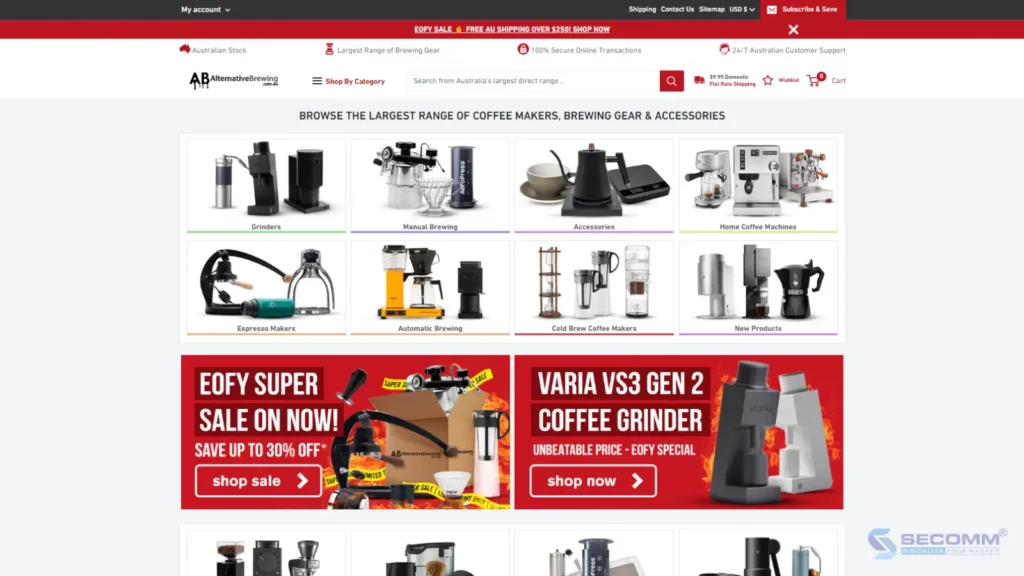
1. Alternative BrewingAlternative Brewing

Alternative Brewing is a leading brand in Australia specializing in providing high quality coffee making equipment and utensils. After operating on WooCommerce, Alternative Brewing encountered a problem. WooCommerce eCommerce websites require constant maintenance, causing a lot of worry on shopping occasions like Black Friday or Cyber Monday.

Within 4 months of converting to the Shopify Plus platform, Alternative Brewing’s new eCommerce website loaded faster and had faster checkout, helping the brand significantly increase average order value. Shopify Plus platform with an intuitive, user-friendly interface, Alternative Brewing does not need to deal with a lot of complicated code. This allows the Alternative Brewing team to focus on growing their business and make more informed decisions with Shopify’s in-depth reports and analytics.

Website: https://alternativebrewing.com.au/

Industry: FnB

Traffic: 919,295/month

Rank: #3,071 (Australia) & #144,195 (Global)

2. DuradryDuradry

Duradry is a leading personal care brand that offers effective antiperspirant products. Operating on WooCommerce costs Duradry a lot of money when testing many different marketing campaigns. The brand migrated to the Shopify Plus platform to take advantage of many exclusive tools and solutions that help them optimize operations and deploy marketing processes more effectively.

Duradry also leverages Shopify Collabs to partner with popular content creators to drive marketing success, bringing Duradry products to more potential customers. The result was 250 content creators joining Duradry’s community, $50k in sales through Shopify Collabs in less than 7 months.

Website: https://duradry.com/?view=hero-a

Industry: Beauty & Cosmetics

Traffic: 386,080/month

Rank: #119,405 (USA) & #445,775 (Global)

3. AMR Hair & BeautyAMR Hair & Beauty

AMR Hair & Beauty is one of the leading suppliers of hair care and beauty products in Australia. Established in 2004, AMR has quickly grown to become a trusted destination for hair salons and individual consumers.

Although WooCommerce has served AMR Hair & Beauty well for many years, with the rapid growth of the business, the platform began to show its limitations. Among them are limited scalability, difficult order management, poor security, and suboptimal customer support.

After switching to Shopify Plus, AMR Hair & Beauty leveraged the B2B on Shopify solution to build a wholesale store and further customize advanced search features and filtering options. This means AMR Hair & Beauty’s B2B customers can quickly narrow down search results and view products along with prices and offers. As a result, AMR Hair & Beauty increased sales by 200%, average B2B order value by 77%, and conversion rate by 93%.

Website: https://amr.com.au/

Industry: Beauty & Cosmetics

Traffic: 258,448/month

Rank: #8,360 (Australia) & #381,873 (Global)

4. Abode LivingAbode Living

Abode Living was founded in 1991 and since then the brand has become Australia’s leading supplier of luxury bed linen, using the highest quality European fabrics and sewing products in its own factories. I’m in Australia.

With the need to increase online sales in Australia and other markets, and upgrade customer experience. However, the previous platform the company used, WooCommerce, did not offer enough flexibility to customize advanced features. WooCommerce also doesn’t give Abode Living the ability to add international marketplaces to its existing eCommerce system. Switching to Shopify Plus met all of Abode Living’s goals. The brand saw a 15% increase in average order value, faster page load speeds, and faster responses.

Website: https://www.abodeliving.com/

Industry: Home Funishing

Traffic: 16,645/month

Rank: #57,874 (Australia) & #2,352,607 (Global)

Final Words

So, SECOMM has gathered insights from 14 representative brands that courageously stepped out of the “WooCommerce world” to revamp their eCommerce websites with Shopify Plus. These brands prioritize customer experience and streamlined processes, inspiring others to confidently opt for platform migration.

Contact SECOMM or call directly at (+84)28 7108 9908 for advice and implementation of the eCommerce migration process from WooCommerce to Shopify Plus today!

2
4,080
0
1
Latest ebooks
Building A Wine eCommerce Website With Magento
One of the highest requirements when implementing wine eCommerce website is a system with high complexity.
4
28
0
4
Building A Comprehensive eCommerce Website For The Grocery Industry
This eBook is a must-read for businesses looking to capitalize on the burgeoning eGrocery market and navigate its complexities with proven strategies.
4
38
0
2
The Solution Of O2O Commerce For Businesses In Vietnam
This eBook is a must-read for businesses looking to harness the power of O2O commerce in Vietnam, offering valuable strategies and real-world success stories.
4
33
0
0

    Subscribe for the latest updates and exclusive content!